
Marketplace vs Dropshipping: Two Popular Business Models That Are Far Less Similar Than They Appear
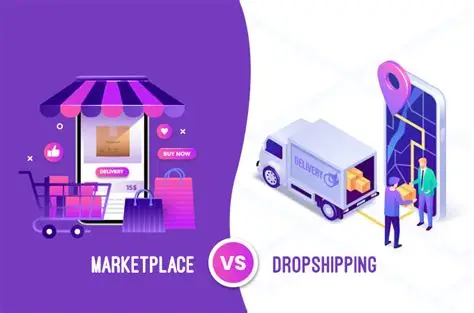
At a distance, they look remarkably alike.
Neither requires owning a warehouse.
Neither demands manufacturing products.
Neither forces entrepreneurs to purchase truckloads of inventory before making a single sale.
And because of those similarities, marketplace businesses and dropshipping operations are frequently discussed in the same conversations.
Aspiring entrepreneurs compare them.
Business influencers debate them.
Investors evaluate them.
Yet placing marketplaces and dropshipping side by side is a little like comparing a shopping mall with a retail kiosk.
Both participate in commerce.
Both facilitate transactions.
But the mechanics, economics, risks, and long-term opportunities differ dramatically.
One is fundamentally a platform business.
The other is fundamentally a retail business.
One scales through participation.
The other scales through product sales.
One creates an ecosystem.
The other creates a storefront.
Understanding that distinction can save entrepreneurs years of frustration and thousands of dollars.
Because choosing the wrong model often leads businesses to optimize for the wrong outcomes.
And in commerce, strategic confusion is expensive.
Understanding the Core Difference
Before exploring complexities, it helps to establish a simple foundation.
What Is a Marketplace?
A marketplace connects buyers and sellers.
The platform itself typically does not own the products being sold.
Instead, it facilitates transactions between participants.
Examples include:
- Product marketplaces
- Service marketplaces
- Rental marketplaces
- Freelance marketplaces
The marketplace creates the environment.
Participants create the inventory.
What Is Dropshipping?
Dropshipping is a retail fulfillment model.
A business sells products through its own store.
When a customer places an order, a supplier fulfills that order directly.
The retailer never physically handles inventory.
Customers buy from the store.
Suppliers ship the products.
The retailer manages the customer relationship.
This distinction seems small.
It is not.
The Fundamental Business Model Difference
Everything begins here.
Marketplaces Are Platform Businesses
A marketplace generates value by facilitating interactions.
Its success depends on participation.
The more buyers and sellers involved, the stronger the platform often becomes.
Growth comes from network effects.
Dropshipping Businesses Are Retail Businesses
A dropshipping store generates value through product sales.
Customers purchase products directly from the retailer.
Growth comes from:
- Marketing
- Product selection
- Customer acquisition
The model resembles traditional retail.
Only the fulfillment process changes.
Who Owns the Customer Relationship?
Ownership matters.
Especially in commerce.
Dropshipping Stores Own the Customer
Customers purchase directly from the store.
The retailer controls:
- Branding
- Marketing
- Customer communication
This creates significant control.
Marketplaces Share Customer Relationships
Customers often interact with multiple sellers.
The marketplace controls part of the experience.
Sellers control another part.
Relationships become distributed.
Control becomes less centralized.
Comparing Marketplace vs Dropshipping
| Factor | Marketplace | Dropshipping |
|---|---|---|
| Business Type | Platform | Retail |
| Inventory Ownership | Sellers | Suppliers |
| Customer Relationship | Shared | Direct |
| Revenue Source | Fees and commissions | Product margins |
| Scalability | Potentially very high | Moderate to high |
| Startup Complexity | Higher | Lower |
| Network Effects | Strong potential | Limited |
| Operational Focus | Participation management | Marketing and sales |
| Growth Driver | Buyers and sellers | Customer acquisition |
| Primary Challenge | Liquidity | Profitability |
The similarities are superficial.
The differences are structural.
Startup Costs: The Myth of “Cheap”
Both models are often promoted as low-cost opportunities.
Reality tends to be more nuanced.
Marketplace Startup Costs
Marketplaces frequently require:
- Platform development
- Trust systems
- Seller onboarding
- Buyer acquisition
Technology costs can be significant.
So can growth costs.
Dropshipping Startup Costs
Dropshipping often begins with:
- Ecommerce software
- Product sourcing
- Advertising
Entry costs may be lower.
Competition frequently increases customer acquisition expenses.
Cheap entry does not always mean inexpensive growth.
Complexity Arrives in Different Forms
Every business becomes difficult eventually.
The challenge is identifying which difficulties you prefer.
Marketplace Complexity
Marketplace operators must manage:
- Supply
- Demand
- Trust
- Participation
The platform succeeds only when both sides succeed.
This creates constant balancing acts.
Dropshipping Complexity
Dropshipping operators focus on:
- Product selection
- Advertising
- Conversion optimization
- Customer service
The complexity is narrower.
But it remains substantial.
Why Marketplaces Can Scale So Aggressively
This is where marketplaces become fascinating.
Participation Creates Value
Every additional seller increases selection.
Every additional buyer increases demand.
The ecosystem becomes stronger.
This dynamic can produce extraordinary growth.
Network Effects Matter
Network effects occur when users create value for other users.
Few business models benefit from this phenomenon as strongly as marketplaces.
Once momentum develops, growth can become self-reinforcing.
Not automatic.
But increasingly efficient.
Why Dropshipping Became So Popular
Dropshipping exploded in popularity for understandable reasons.
Low Initial Barriers
Entrepreneurs can launch quickly.
Without inventory.
Without warehouses.
Without logistics infrastructure.
This dramatically lowers the cost of experimentation.
Product Flexibility
Stores can test products rapidly.
Winning products receive attention.
Poor performers disappear.
Flexibility becomes a competitive advantage.
Speed
Many businesses can launch within days.
That accessibility continues attracting entrepreneurs.
The Customer Acquisition Challenge
Regardless of business model, customers remain essential.
No customers.
No revenue.
Dropshipping Depends Heavily on Advertising
Many dropshipping businesses rely on:
- Paid social advertising
- Search traffic
- Influencer marketing
Customer acquisition often determines profitability.
Marketplaces Depend on Participation Growth
Marketplaces need:
- Sellers
- Buyers
Acquiring only one side rarely works.
Growth becomes more complicated.
Yet potentially more durable.
Profit Margins Tell Different Stories
Revenue is important.
Margins are transformative.
Dropshipping Margins
Margins often face pressure.
Competition can be intense.
Suppliers are frequently accessible to competitors.
Differentiation becomes difficult.
Marketplace Margins
Successful marketplaces often generate attractive economics.
They avoid inventory ownership.
Participants create much of the value.
This can improve scalability significantly.
Provided the marketplace reaches meaningful participation levels.
A Lesson I Learned Watching Both Models Up Close
Several years ago, I observed two entrepreneurs launch businesses at nearly the same time.
One built a dropshipping store.
The other built a niche marketplace.
Initially, the dropshipping business looked like the obvious winner.
Sales appeared quickly.
Customers arrived.
Revenue flowed.
The marketplace struggled.
Finding buyers proved difficult.
Finding sellers proved equally difficult.
Growth felt painfully slow.
Months passed.
Then years.
Gradually, something changed.
The marketplace reached critical participation.
Sellers began inviting other sellers.
Customers returned because selection improved.
Growth became increasingly organic.
Meanwhile, the dropshipping business continued working hard for every sale.
Advertising costs rose.
Margins tightened.
Neither business failed.
But their trajectories diverged dramatically.
That experience reinforced an important lesson.
Dropshipping often accelerates faster at the beginning.
Marketplaces can become stronger later.
The challenge is surviving long enough to reach that later stage.
Risk Profiles Are Very Different
Risk never disappears.
It simply changes form.
Dropshipping Risks
Common risks include:
- Supplier reliability
- Shipping delays
- Product quality issues
- Advertising costs
Many challenges originate outside the retailer's direct control.
Marketplace Risks
Common risks include:
- Low participation
- Fraud
- Trust breakdowns
- Supply-demand imbalance
Marketplaces often struggle with ecosystem challenges.
Not product challenges.
Which Model Is Easier?
This question appears constantly.
The answer depends on what "easy" means.
Dropshipping Is Easier to Launch
Most entrepreneurs can create a store quickly.
The path is straightforward.
Marketplaces Are Harder to Launch
Participation creates complexity.
Building liquidity requires persistence.
The startup phase is often more demanding.
But Long-Term Complexity Reverses
Many dropshipping businesses remain dependent on constant marketing.
Marketplaces can eventually benefit from participation-driven growth.
The difficulty shifts.
It does not disappear.
Long-Term Business Value
This is where investors often pay close attention.
Dropshipping Businesses
Successful stores can generate meaningful profits.
However, they often remain closely tied to marketing performance.
Growth can be difficult to sustain indefinitely.
Marketplaces
Strong marketplaces frequently become defensible ecosystems.
Participants create value.
Network effects strengthen positioning.
This often increases long-term enterprise value.
Not because marketplaces are inherently superior.
Because ecosystems are difficult to replicate.
The Future of Commerce
Commerce continues evolving.
Artificial intelligence improves product discovery.
Automation improves operations.
Personalization becomes increasingly sophisticated.
Yet the foundational distinction remains remarkably stable.
Dropshipping sells products.
Marketplaces facilitate participation.
Technology changes the tools.
It rarely changes the economics.
And economics ultimately determine sustainability.
Conclusion: One Sells Products, the Other Builds an Ecosystem
Marketplace businesses and dropshipping stores often appear to occupy the same entrepreneurial universe.
They do not.
Dropshipping is a retail model.
Marketplace businesses are platform models.
Dropshipping focuses on products.
Marketplaces focus on participants.
Dropshipping scales through customer acquisition.
Marketplaces scale through network effects.
Neither approach is universally better.
Each serves different objectives.
For entrepreneurs seeking speed, simplicity, and direct control, dropshipping may provide a compelling path.
For entrepreneurs seeking ecosystem creation, scalable participation, and long-term platform value, marketplaces may offer greater upside.
The most important decision is not choosing the model that appears easiest.
It is choosing the model whose challenges you are willing to solve repeatedly.
Because every successful business eventually becomes a masterclass in solving the same core problem over and over again.
The question is simply which problem you want to own.
- Arts
- Business
- Computers
- Juegos
- Health
- Home
- Kids and Teens
- Money
- News
- Personal Development
- Recreation
- Regional
- Reference
- Science
- Shopping
- Society
- Sports
- Бизнес
- Деньги
- Дом
- Досуг
- Здоровье
- Игры
- Искусство
- Источники информации
- Компьютеры
- Личное развитие
- Наука
- Новости и СМИ
- Общество
- Покупки
- Спорт
- Страны и регионы
- World

 English
 Russian
 French
 Portuguese
 Deutsch
 Turkish
 Dutch
Dutch
 Italiano
 Arabic
 Romaian
 Portuguese (Brazil)
 Greek
Greek