
How Does Fulfillment Work on Marketplaces?
Customers rarely think about fulfillment.
That is usually the point.
They search.
They compare.
They purchase.
A few days later, a package arrives.
The transaction feels effortless.
Almost inevitable.
Yet between the moment a customer clicks "Buy Now" and the moment a package reaches a doorstep lies one of the most complex operational systems in modern commerce.
Inventory must be located.
Orders must be transmitted.
Products must be picked.
Packages must be assembled.
Shipping labels must be generated.
Carriers must move goods across cities, states, countries, and continents.
Information must flow continuously.
Delays must be managed.
Exceptions must be resolved.
All while customers expect speed, accuracy, and transparency.
This entire process is known as fulfillment.
And on marketplaces, fulfillment becomes particularly fascinating because responsibility is often distributed among multiple participants.
The marketplace.
The seller.
The warehouse.
The logistics provider.
Sometimes all four.
Understanding fulfillment means understanding how marketplaces transform transactions into deliveries.
Because sales create promises.
Fulfillment determines whether those promises are kept.
Fulfillment Begins Long Before a Customer Places an Order
Many people assume fulfillment starts after checkout.
In reality, it starts much earlier.
The moment inventory enters a system, fulfillment has already begun.
Inventory Placement Matters
Products must exist somewhere.
That sounds obvious.
Yet inventory location influences:
- Shipping speed
- Shipping costs
- Customer satisfaction
A product stored close to customers can often be delivered faster and more economically.
Distance affects everything.
Inventory Visibility Matters Too
Marketplaces need accurate inventory information.
Customers cannot purchase products that are unavailable.
Or at least they should not.
Inventory accuracy sits at the center of successful fulfillment.
Without it, operational problems multiply rapidly.
What Fulfillment Actually Means
The term is often misunderstood.
Fulfillment is broader than shipping.
Much broader.
It includes everything required to move a purchased product from storage to customer.
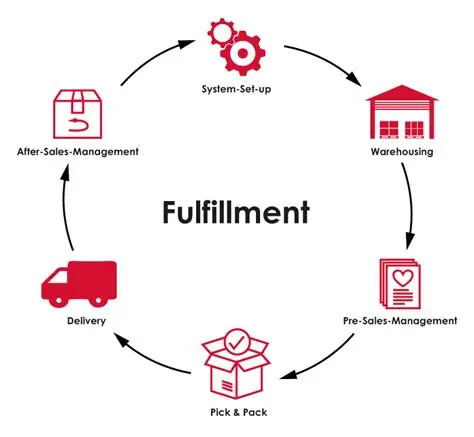
That process typically involves:
- Inventory management
- Order processing
- Picking
- Packing
- Label generation
- Shipping
- Tracking
- Delivery coordination
- Returns processing
Shipping is one component.
Fulfillment is the entire system.
The Marketplace Fulfillment Challenge
Traditional retailers typically control their own inventory.
Marketplaces frequently do not.
That difference creates complexity.
Multiple Independent Sellers
A marketplace may host thousands of sellers.
Each seller may operate differently.
Some manage inventory themselves.
Some use warehouses.
Some rely on third-party logistics providers.
The marketplace must coordinate across all of them.
Consistency Becomes Difficult
Customers generally expect uniform experiences.
Marketplace fulfillment often involves highly diverse operational models.
Balancing those realities becomes a strategic challenge.
The Three Primary Marketplace Fulfillment Models
Most marketplace fulfillment arrangements fall into three broad categories.
Seller Fulfillment
The seller manages the entire process.
The seller:
- Stores inventory
- Processes orders
- Packs products
- Coordinates shipping
The marketplace facilitates transactions.
The seller handles execution.
Marketplace Fulfillment
Some marketplaces operate fulfillment networks.
Inventory is stored within marketplace-managed facilities.
The platform handles:
- Warehousing
- Picking
- Packing
- Shipping
The seller provides products.
The marketplace manages logistics.
Third-Party Fulfillment
Many sellers outsource logistics to specialized fulfillment companies.
These organizations manage operations on behalf of sellers.
Responsibility becomes shared.
Comparing Marketplace Fulfillment Models
| Fulfillment Model | Inventory Storage | Order Processing | Shipping Responsibility | Seller Control | Delivery Consistency |
|---|---|---|---|---|---|
| Seller Fulfilled | Seller | Seller | Seller | High | Variable |
| Marketplace Fulfilled | Marketplace | Marketplace | Marketplace | Moderate | High |
| Third-Party Logistics | Logistics Provider | Logistics Provider | Logistics Provider | Moderate | Moderate to High |
| Dropshipping | Supplier | Supplier | Supplier | Low | Variable |
| Hybrid Fulfillment | Shared | Shared | Shared | Moderate to High | Moderate |
No model dominates universally.
Each involves trade-offs.
Order Processing: The Moment Fulfillment Activates
The fulfillment journey accelerates once an order is placed.
Order Transmission
Marketplace systems communicate transaction details.
Information typically includes:
- Customer details
- Product information
- Shipping preferences
- Delivery instructions
Accuracy becomes essential.
Minor data errors can create significant operational issues.
Validation Processes
Orders often undergo verification before fulfillment begins.
Systems may review:
- Inventory availability
- Payment status
- Address validity
Problems identified early are easier to resolve.
Picking: Finding the Product
Picking sounds simple.
It rarely is.
Large fulfillment environments may contain thousands or millions of items.
Finding the correct product efficiently requires sophisticated systems.
Warehouse Organization
Products are typically assigned specific locations.
Workers or automated systems retrieve inventory according to optimized workflows.
Efficiency matters enormously.
Small improvements scale dramatically.
Accuracy Is Critical
Picking errors create:
- Returns
- Refunds
- Customer dissatisfaction
Accuracy often matters more than speed.
At least in the long run.
Packing: More Important Than It Looks
Customers rarely think about packaging until something goes wrong.
A damaged item changes that quickly.
Protection Matters
Packaging must account for:
- Product fragility
- Shipping conditions
- Carrier handling
Insufficient protection increases risk.
Excessive packaging increases cost.
Balance becomes essential.
Packaging Influences Perception
Interestingly, packaging also affects customer experience.
A product may be excellent.
Poor packaging can diminish perceived quality.
Presentation shapes expectations.
Shipping Is the Most Visible Stage
Customers interact with shipping more than any other fulfillment stage.
Visibility creates scrutiny.
Carrier Coordination
Packages move through networks operated by:
- Postal services
- Regional carriers
- Global logistics companies
The fulfillment system depends heavily on external partners.
Tracking Expectations
Modern customers expect visibility.
Tracking information provides:
- Shipment status
- Estimated delivery dates
- Delivery confirmation
Information reduces uncertainty.
Uncertainty often drives support inquiries.
A Lesson I Learned About Fulfillment
Several years ago, I worked with a company that experienced a sudden surge in marketplace sales.
The marketing team celebrated.
Leadership celebrated.
Revenue increased dramatically.
The fulfillment team did not celebrate.
They looked worried.
At first, I didn't understand why.
Sales were strong.
Demand was growing.
Everything appeared positive.
Then orders began falling behind.
Inventory visibility became inconsistent.
Shipping delays increased.
Customer inquiries multiplied.
Nothing was wrong with demand.
The issue was fulfillment capacity.
That experience reinforced a lesson I have never forgotten.
Growth and fulfillment must scale together.
Sales create opportunity.
Fulfillment determines whether opportunity becomes sustainable.
A marketplace can generate demand.
Only fulfillment can satisfy it.
Why Speed Became a Competitive Weapon
Fulfillment was once viewed primarily as a cost center.
Today it often functions as a competitive advantage.
Customer Expectations Have Changed
Delivery speed influences:
- Conversion rates
- Customer loyalty
- Repeat purchases
Fast fulfillment increasingly affects buying decisions.
Marketplace Competition Accelerates Expectations
When one marketplace improves delivery performance, others respond.
Customers become accustomed to faster service.
Expectations rise.
The cycle continues.
Inventory Management: The Hidden Engine
Fulfillment succeeds or fails largely because of inventory management.
The customer rarely sees this layer.
Its importance cannot be overstated.
Overstocking Creates Costs
Excess inventory consumes:
- Storage space
- Capital
- Operational resources
Understocking Creates Lost Sales
Insufficient inventory produces:
- Stockouts
- Delayed fulfillment
- Customer disappointment
Balance becomes the objective.
Inventory management is ultimately a forecasting exercise.
Forecasting is rarely perfect.
Returns: The Other Half of Fulfillment
Many discussions stop at delivery.
They should not.
Returns are part of fulfillment.
Reverse Logistics
Returned products require:
- Transportation
- Inspection
- Restocking
- Disposition decisions
The process can become remarkably expensive.
Customer Experience Matters
Return experiences often influence loyalty more than successful deliveries.
Customers remember how problems are handled.
Sometimes more vividly than they remember smooth transactions.
Technology Is Reshaping Fulfillment
Modern fulfillment increasingly relies on sophisticated systems.
Automation continues expanding.
Warehouse Automation
Technologies now assist with:
- Product retrieval
- Inventory tracking
- Workflow optimization
Efficiency improves.
Accuracy often improves as well.
Predictive Systems
Advanced platforms increasingly anticipate demand patterns.
Inventory can be positioned closer to future customers.
The objective is reducing delivery times before orders even occur.
Marketplace Fulfillment and Trust
Fulfillment is ultimately a trust mechanism.
This idea deserves more attention.
Every Delivery Is a Promise
A marketplace listing represents a commitment.
Fulfillment determines whether that commitment becomes reality.
Consistency Builds Confidence
Reliable fulfillment encourages:
- Repeat purchases
- Positive reviews
- Marketplace growth
Trust compounds over time.
Fulfillment contributes directly to that process.
The Future of Marketplace Fulfillment
Fulfillment will continue evolving.
Automation will expand.
Artificial intelligence will improve forecasting.
Warehouses will become more sophisticated.
Delivery networks will become more efficient.
Yet despite technological advancement, the fundamental objective remains unchanged.
Deliver the right product.
To the right customer.
At the right time.
Reliably.
Technology changes.
The mission remains remarkably stable.
The Hidden Truth About Marketplace Fulfillment
People often view fulfillment as a logistics function.
That description is technically accurate.
It is strategically incomplete.
Fulfillment is really an execution function.
Marketplaces generate opportunities.
Listings generate interest.
Marketing generates traffic.
Transactions generate orders.
Fulfillment transforms all of that activity into customer outcomes.
Without fulfillment, commerce remains theoretical.
With fulfillment, promises become tangible.
That distinction matters enormously.
Conclusion: Fulfillment Is Where Marketplace Strategy Meets Reality
Marketplaces often attract attention for their technology.
Their scale.
Their customer acquisition capabilities.
Their algorithms.
Those elements matter.
But fulfillment occupies a different category.
It is where strategy encounters reality.
A marketplace can attract millions of visitors.
A seller can create compelling listings.
A customer can complete a purchase in seconds.
None of that guarantees success.
The product still needs to arrive.
Correctly.
Promptly.
Reliably.
That responsibility belongs to fulfillment.
And perhaps that is why fulfillment deserves far more attention than it usually receives.
Because marketplaces are ultimately judged not by the transactions they facilitate.
They are judged by the outcomes they deliver.
Fulfillment is what connects those two worlds.
And without it, marketplace commerce would remain little more than a promise waiting to be kept.
- Arts
- Business
- Computers
- Games
- Health
- Home
- Kids and Teens
- Money
- News
- Personal Development
- Recreation
- Regional
- Reference
- Science
- Shopping
- Society
- Sports
- Бизнес
- Деньги
- Дом
- Досуг
- Здоровье
- Игры
- Искусство
- Источники информации
- Компьютеры
- Личное развитие
- Наука
- Новости и СМИ
- Общество
- Покупки
- Спорт
- Страны и регионы
- World

 Russian
 French
 Spanish
 Portuguese
 Deutsch
 Turkish
 Dutch
Dutch
 Italiano
 Arabic
 Romaian
 Portuguese (Brazil)
 Greek
Greek