
How Do I Compete With Larger Sellers on Marketplaces?
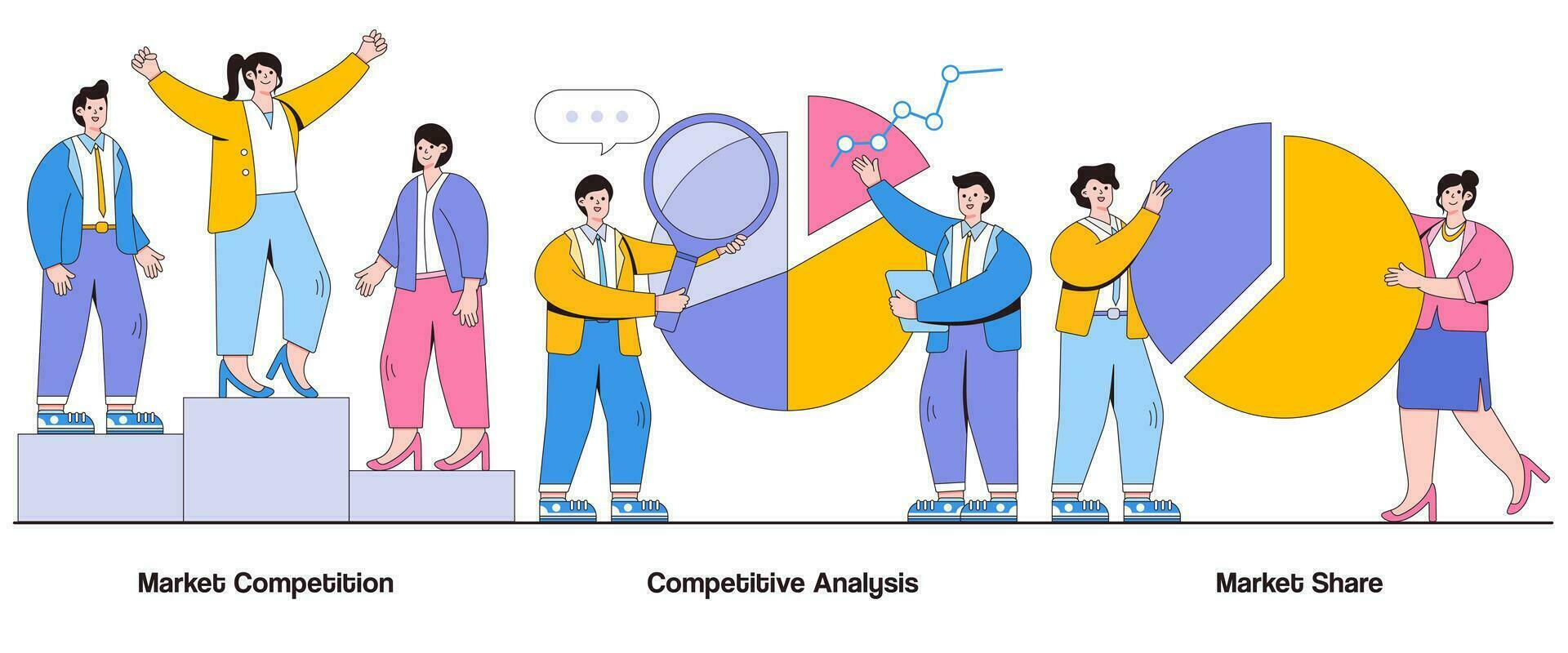
There is a particular kind of stillness that belongs to marketplace competition.
Not silence.
Not absence.
But imbalance.
A smaller seller opens a dashboard and sees it immediately: the dominance of established brands, the scale of enterprise listings, the gravitational pull of sellers who can absorb costs that others cannot even imitate.
It feels, at first glance, like a fixed hierarchy.
Large sellers at the top.
Everyone else beneath.
Yet marketplaces are not static hierarchies.
They are shifting systems—responsive, metric-driven, and, most importantly, sensitive to precision rather than size alone.
And precision is where smaller sellers often begin to outperform expectations.
Not by matching scale.
But by exploiting what scale cannot easily adjust.
The First Misunderstanding: Size Equals Advantage
Large sellers appear powerful for obvious reasons.
They hold:
- Bulk inventory
- Lower unit costs
- Established brand trust
- Algorithmic momentum
- Operational infrastructure
These advantages are real.
But they are not absolute.
They are structural, not strategic.
And structure behaves differently from adaptability.
Large sellers often operate within systems that require stability:
- Fixed supply chains
- Layered approval processes
- Broad product strategies
- Standardized pricing models
Small sellers operate differently.
They adjust faster.
Test faster.
React faster.
And in marketplaces, speed of adjustment is often more influential than size.
Marketplaces Do Not Reward Size—They Reward Signals
A marketplace algorithm does not “see” a business in the traditional sense.
It reads signals:
- Click-through rate
- Conversion rate
- Price competitiveness
- Fulfillment reliability
- Customer satisfaction
These signals accumulate into ranking decisions.
A large seller may dominate by volume.
But a smaller seller can outperform by signal efficiency.
A listing that converts more effectively can outrank a larger competitor—even temporarily.
That temporary window is where opportunity lives.
The Structural Weaknesses of Large Sellers
Scale creates advantages.
It also creates constraints.
1. Slower Decision Cycles
Large organizations rarely change pricing, imagery, or listings quickly.
Adjustments require:
- Internal approvals
- Cross-team alignment
- Brand consistency checks
By the time changes are implemented, smaller competitors may already have tested multiple variations.
2. Standardized Listings
Enterprise sellers often rely on templated content:
- Uniform descriptions
- Generic images
- Brand-safe messaging
This consistency supports scale.
But reduces differentiation.
3. Inflexible Pricing Structures
Large sellers often optimize for margin protection across channels.
Smaller sellers can adjust pricing dynamically:
- Seasonal shifts
- Competitor responses
- Inventory fluctuations
Flexibility becomes a competitive lever.
4. Lower Experimentation Rates
Smaller sellers can test:
- New images
- Alternative titles
- Bundled offers
- Niche positioning
Large sellers often avoid experimentation that risks brand inconsistency.
That caution becomes an opening.
A Comparison of Competitive Behavior
| Factor | Large Sellers | Smaller Sellers | Competitive Impact |
|---|---|---|---|
| Pricing flexibility | Low | High | Advantage small sellers |
| Listing experimentation | Low | High | Advantage small sellers |
| Brand trust | High | Moderate to low | Advantage large sellers |
| Operational speed | Slow | Fast | Advantage small sellers |
| Cost efficiency | High | Variable | Advantage large sellers |
| Niche targeting | Broad | Precise | Advantage small sellers |
| Algorithm responsiveness | Stable but rigid | Adaptive | Advantage small sellers |
The table reveals a recurring pattern:
Scale wins on efficiency.
Smaller players win on agility.
Competing Where the Algorithm Is Most Sensitive
Marketplaces amplify certain signals more than others.
Smaller sellers should focus on those.
Conversion Rate Optimization
If a listing converts better, it rises.
Even marginal improvements matter.
This includes:
- Stronger product images
- Clearer benefit statements
- Reduced friction in descriptions
The algorithm rewards clarity.
Not size.
Click-Through Rate Improvements
A listing must first attract attention.
That depends on:
- Titles
- Thumbnail images
- Pricing signals
A small improvement in CTR can significantly alter visibility.
Pricing Positioning
Not always cheaper.
But more strategically aligned.
Sometimes the advantage is:
- Bundling
- Value framing
- Psychological pricing thresholds
Large sellers often cannot adjust pricing with precision.
Smaller sellers can.
The Power of Niches
Large sellers aim for broad coverage.
Smaller sellers win through focus.
Niche positioning allows:
- Clearer messaging
- Stronger relevance signals
- Higher conversion efficiency
A product that speaks directly to a specific need often outperforms a generalized alternative.
Even if the competitor is larger.
Especially because of it.
A Lesson I Learned Watching a Small Seller Outperform a Giant
I once worked with a small seller operating in a category dominated by a global brand.
The expectation was predictable.
The large brand would dominate impressions.
The small seller would remain marginal.
But something unexpected occurred.
The smaller seller’s product began to outperform in a narrow segment of search traffic.
We investigated.
The reason was not price.
Not brand recognition.
Not advertising spend.
It was specificity.
The large brand used a broad product description designed for global consistency.
The small seller described a very precise use case:
Not just what the product was.
But exactly when and why it was used.
That specificity increased conversion rates.
Higher conversion rates improved ranking.
Improved ranking increased visibility.
Visibility reinforced sales.
The cycle compounded.
The large seller had strength.
The small seller had precision.
Precision won that round.
Competing Through Listing Architecture
Every listing is a structured argument.
Smaller sellers can improve that argument faster.
Titles That Signal Relevance
A strong title does not simply describe a product.
It aligns with search intent.
It reflects how customers actually think.
Images That Remove Uncertainty
Large sellers often rely on standardized imagery.
Smaller sellers can differentiate through:
- Contextual images
- Scale clarity
- Use-case demonstrations
Uncertainty kills conversion.
Clarity improves it.
Descriptions That Reduce Cognitive Load
Customers do not read deeply.
They scan.
Effective listings reduce thinking effort:
- Clear benefits
- Direct language
- Minimal ambiguity
Leveraging Agility as a Competitive Weapon
Speed is one of the most underestimated advantages in ecommerce.
Smaller sellers can:
- Adjust pricing within hours
- Test new keywords rapidly
- Update listings frequently
- Respond to competitor shifts immediately
Large sellers often cannot.
That lag becomes opportunity.
Not in isolation.
But in accumulation.
Competing on Trust Without a Brand
Large sellers begin with trust.
Smaller sellers must earn it.
But trust is not only brand-driven.
It is behavior-driven.
Trust signals include:
- Accurate listings
- Fast shipping
- Consistent fulfillment
- Positive reviews
Consistency builds trust faster than scale.
Strategic Pricing Against Larger Competitors
Competing on price alone is dangerous.
Competing on perceived value is more effective.
Smaller sellers can win by:
- Offering bundles large sellers do not optimize for
- Adjusting pricing in niche segments
- Highlighting features competitors under-communicate
Price is only one dimension of value perception.
Using Algorithm Loops to Your Advantage
Marketplaces reinforce performance loops:
- Better conversion → higher ranking
- Higher ranking → more visibility
- More visibility → more data
- More data → improved ranking
Smaller sellers can enter these loops faster through targeted optimization.
Large sellers often move too slowly to initiate rapid feedback cycles.
The Myth of Permanent Dominance
It is easy to assume marketplace dominance is stable.
It is not.
It is conditional.
Based on:
- Performance metrics
- Listing optimization
- Customer behavior
- Competitive response
A large seller’s advantage is real—but not immutable.
Systems shift continuously.
And within those shifts, smaller players find openings.
Practical Strategy: Where Smaller Sellers Should Focus
Competing effectively requires prioritization:
1. Optimize Listings First
Before scaling traffic, ensure conversion efficiency.
2. Focus on High-Intent Keywords
Do not chase broad visibility prematurely.
3. Refine Product Positioning
Specificity outperforms generality.
4. Improve Visual Clarity
Remove uncertainty wherever possible.
5. Monitor Competitor Weaknesses
Large sellers reveal gaps through their rigidity.
The Hidden Advantage: Attention to Detail
Large sellers optimize for systems.
Smaller sellers optimize for moments.
A moment of hesitation in a listing.
A moment of clarity in an image.
A moment of trust in a description.
Marketplaces are built from these micro-moments.
And micro-moments are rarely controlled by size.
They are controlled by precision.
Conclusion: You Are Not Competing With Size—You Are Competing With Signals
The mistake is believing competition is about matching scale.
It is not.
It is about influencing signals more effectively.
Large sellers bring structure.
Smaller sellers bring adaptability.
Large sellers bring consistency.
Smaller sellers bring experimentation.
Large sellers bring momentum.
Smaller sellers bring responsiveness.
And in marketplaces, responsiveness often determines who captures attention first.
Not permanently.
Not universally.
But enough to matter.
Because marketplace success is not a fixed position.
It is a continuous negotiation between visibility, relevance, and performance.
And in that negotiation, smaller sellers are far more powerful than they often assume.
Not because they are bigger.
But because they can change direction before the system finishes reading them.
- Arts
- Business
- Computers
- Games
- Health
- Home
- Kids and Teens
- Money
- News
- Personal Development
- Recreation
- Regional
- Reference
- Science
- Shopping
- Society
- Sports
- Бизнес
- Деньги
- Дом
- Досуг
- Здоровье
- Игры
- Искусство
- Источники информации
- Компьютеры
- Личное развитие
- Наука
- Новости и СМИ
- Общество
- Покупки
- Спорт
- Страны и регионы
- World

 Russian
 French
 Spanish
 Portuguese
 Deutsch
 Turkish
 Dutch
Dutch
 Italiano
 Arabic
 Romaian
 Portuguese (Brazil)
 Greek
Greek