
How Do Marketplaces Attract Buyers and Sellers?
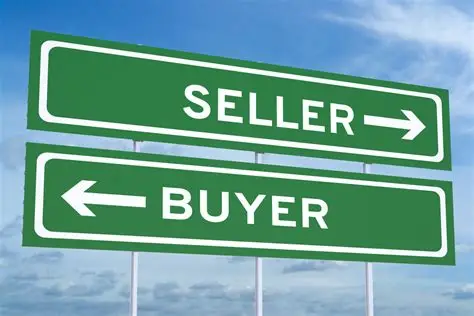
Every successful marketplace begins with a problem.
Not a technology problem.
Not a software problem.
A people problem.
Someone has something. Someone else wants it. Between those two realities sits friction—uncertainty, inconvenience, lack of trust, lack of visibility, lack of timing.
The marketplace steps into that gap.
At first glance, the model appears almost suspiciously simple. Bring buyers and sellers together. Facilitate transactions. Collect a fee.
Yet anyone who has attempted to launch a marketplace quickly discovers an uncomfortable truth.
Getting buyers is hard.
Getting sellers is hard.
Getting both at the same time borders on maddening.
This is the challenge economists call the "chicken-and-egg problem."
Buyers don't arrive without inventory.
Sellers don't arrive without buyers.
Each side waits for the other.
Meanwhile, the marketplace sits empty.
The remarkable achievement of companies like Amazon, Airbnb, Uber, Etsy, and eBay is not merely that they built websites.
It's that they solved this coordination problem at extraordinary scale.
Understanding how they did it reveals something fascinating about human behavior, incentives, and trust.
Because successful marketplaces are not built on products.
They're built on participation.
The Marketplace Balancing Act
A marketplace serves two audiences simultaneously.
That fact changes everything.
Traditional businesses focus primarily on customers.
Marketplaces must satisfy customers and suppliers.
Buyers want variety, low prices, convenience, and confidence.
Sellers want visibility, sales, profitability, and fairness.
These objectives occasionally align.
They occasionally collide.
The strongest marketplaces understand that growth on one side depends on growth on the other.
This creates a powerful feedback loop.
More sellers create more selection.
More selection attracts more buyers.
More buyers generate more sales.
More sales attract more sellers.
Eventually momentum begins feeding itself.
The process appears obvious after success arrives.
It rarely feels obvious during the early stages.
The Core Drivers That Attract Buyers and Sellers
Before examining individual tactics, it helps to understand the broader mechanics.
| Attraction Factor | Why Buyers Care | Why Sellers Care |
|---|---|---|
| Large Selection | More choices | More customer demand |
| Competitive Pricing | Better deals | Access to volume |
| Trust & Safety | Reduced risk | Reduced fraud |
| Convenience | Faster purchasing | Easier selling |
| Reviews & Ratings | Better decisions | Social proof |
| Traffic Volume | Product discovery | Revenue opportunities |
| Marketing Support | Product awareness | Customer acquisition |
| Low Fees | Lower costs | Higher profits |
| Strong Brand | Confidence | Credibility |
| Network Effects | Better experience | Greater reach |
Notice something interesting.
Many of these advantages reinforce one another.
Trust attracts buyers.
Buyers attract sellers.
Sellers increase selection.
Selection improves buyer experience.
The cycle repeats.
Marketplace growth is rarely linear.
It compounds.
Why Buyers Show Up First
Buyers are motivated by three powerful forces.
Convenience.
Confidence.
Choice.
Everything else tends to orbit these priorities.
Convenience Reduces Resistance
Human beings have a remarkable talent for avoiding effort.
Marketplaces succeed when they reduce the number of decisions customers must make.
Search tools.
Personalized recommendations.
One-click checkout.
Fast shipping.
Saved payment methods.
Each feature removes friction.
Each removed friction point increases participation.
Consumers may describe their choices differently.
Their behavior tells a clearer story.
People consistently gravitate toward the path requiring the least effort.
Confidence Eliminates Fear
Fear silently kills transactions.
Will the product arrive?
Will it match the description?
Can I get my money back?
Can I trust this seller?
Successful marketplaces answer these questions before customers ask them.
Buyer protection policies.
Verified reviews.
Secure payment systems.
Dispute resolution processes.
These mechanisms don't merely protect transactions.
They manufacture confidence.
Confidence converts browsing into buying.
Choice Creates Gravity
A single store can offer hundreds of products.
A marketplace can offer millions.
This abundance creates an important psychological advantage.
Customers begin believing they'll find what they need.
Once that belief forms, habits emerge.
Habits become traffic.
Traffic becomes dominance.
Why Sellers Join Marketplaces
The motivations are different.
Sellers care less about convenience and more about opportunity.
Specifically, access to customers.
Traffic Is the Primary Attraction
Many entrepreneurs learn a painful lesson after launching independent websites.
Building a store is relatively easy.
Building an audience is not.
Marketplaces solve the audience problem.
The traffic already exists.
Customers are already searching.
The seller enters an environment where demand is active rather than hypothetical.
That advantage explains why sellers tolerate marketplace fees.
The fee often costs less than acquiring customers independently.
Reduced Complexity
Running an ecommerce operation involves countless moving parts.
Payment processing.
Fraud prevention.
Customer support.
Infrastructure.
Search functionality.
Marketplaces absorb much of this complexity.
The seller focuses on products.
The platform handles the ecosystem.
For many businesses, that trade-off feels attractive.
Credibility by Association
Trust transfers.
A new seller operating alone must earn confidence from scratch.
A seller operating within a trusted marketplace inherits part of the platform's reputation.
Consumers may not know the merchant.
They know the marketplace.
Sometimes that distinction is enough.
The Hidden Power of Network Effects
Network effects are among the most misunderstood forces in business.
They're also among the most important.
A network effect occurs when a platform becomes more valuable as more people use it.
Telephones provide a classic example.
One telephone has little value.
Millions create immense value.
Marketplaces function similarly.
Each new buyer improves conditions for sellers.
Each new seller improves conditions for buyers.
The result is a self-reinforcing system.
Once a marketplace reaches critical mass, competitors face enormous challenges.
Not because competitors lack technology.
Because they lack participation.
Participation becomes the moat.
The Lesson I Learned Watching a Marketplace Struggle
Several years ago, I observed the launch of a niche marketplace focused on premium outdoor equipment.
The concept was intelligent.
The website looked impressive.
The technology worked flawlessly.
The founders were confident.
The marketplace failed.
Not immediately.
Slowly.
Painfully.
The problem wasn't software.
It wasn't pricing.
It wasn't branding.
The founders spent most of their resources attracting sellers.
Inventory exploded.
Listings multiplied.
Traffic remained sparse.
The marketplace became a ghost town filled with excellent products nobody was seeing.
Months later, they shifted strategy.
They invested aggressively in attracting buyers first.
Content marketing.
Partnerships.
Community engagement.
Traffic improved.
Sales appeared.
Suddenly sellers became enthusiastic.
The lesson stayed with me.
Supply alone does not create a marketplace.
Demand creates momentum.
Without demand, inventory becomes decoration.
Incentives: The Marketplace Growth Engine
Attracting participants often requires incentives.
Early marketplaces frequently subsidize one side of the equation.
Sometimes both.
Incentives for Buyers
Examples include:
- Discounts
- Free shipping
- Referral rewards
- Loyalty programs
- Cashback offers
The objective is straightforward.
Reduce hesitation.
Encourage first transactions.
Create habits.
Incentives for Sellers
Examples include:
- Reduced fees
- Advertising credits
- Premium placement
- Simplified onboarding
- Performance bonuses
The objective remains equally straightforward.
Increase participation.
More sellers improve marketplace attractiveness.
Especially during early growth phases.
Trust: The Currency Nobody Sees
Many marketplace operators focus obsessively on traffic.
The strongest marketplaces obsess over trust.
Trust scales.
Distrust spreads faster.
One fraudulent seller can damage thousands of future transactions.
One poor customer experience can influence countless purchasing decisions.
This explains the importance of:
- Verification systems
- Ratings
- Reviews
- Seller standards
- Secure payments
- Customer protection
These systems often appear secondary.
They're not.
They're foundational.
Trust isn't a feature.
It's infrastructure.
Data and Personalization
Modern marketplaces possess a remarkable advantage.
They learn continuously.
Every click.
Every search.
Every purchase.
Every abandoned cart.
Data allows marketplaces to improve relevance.
Recommendations become sharper.
Search results become smarter.
Discovery becomes easier.
Buyers encounter products they didn't know existed.
Sellers encounter customers they could never have reached independently.
The result is efficiency.
Efficiency encourages participation.
Participation strengthens the marketplace.
The cycle continues.
Marketing: Fuel for Both Sides
Marketplaces rarely rely on a single marketing channel.
Successful platforms deploy multiple approaches simultaneously.
Content Marketing
Educational content attracts buyers while building authority.
Search Engine Visibility
Organic traffic reduces dependence on advertising.
Paid Advertising
Accelerates growth and market penetration.
Influencer Partnerships
Creates credibility and awareness.
Community Building
Generates loyalty beyond transactions.
The strongest marketplaces eventually evolve into ecosystems.
People return not merely to buy.
They return because participation itself becomes valuable.
Why Some Marketplaces Fail Despite Strong Products
This puzzle confuses many entrepreneurs.
The products are excellent.
The technology is polished.
The idea seems sensible.
Yet growth stalls.
Common reasons include:
Insufficient Liquidity
Too few transactions create inactivity.
Users leave.
Momentum disappears.
Weak Trust Signals
Customers hesitate.
Sellers disengage.
Growth slows.
Poor Market Focus
Trying to serve everyone often means serving no one particularly well.
Misaligned Incentives
One side benefits disproportionately.
The other side gradually abandons the platform.
Balance matters.
More than most founders realize.
The Real Secret Behind Marketplace Success
People often assume marketplaces succeed because they offer products.
That explanation feels intuitive.
It's also incomplete.
Products matter.
Participation matters more.
The greatest marketplaces are not inventory businesses.
They are trust businesses.
Connection businesses.
Coordination businesses.
They create environments where strangers feel comfortable exchanging value.
That achievement sounds simple.
It isn't.
Because attracting buyers and sellers requires solving two separate problems simultaneously.
One group wants confidence.
The other wants opportunity.
One seeks value.
The other seeks revenue.
The marketplace stands between them, attempting to satisfy both.
And when it succeeds, something remarkable happens.
The platform becomes larger than any individual buyer.
Larger than any individual seller.
Larger, even, than the products being exchanged.
It becomes a destination.
A habit.
An ecosystem.
Which reveals the deepest truth about marketplaces.
They do not grow because they connect buyers and sellers.
They grow because they continuously give each side a reason to return.
And in business, few achievements are more powerful than becoming a place people don't want to leave.
- Arts
- Business
- Computers
- Games
- Health
- Home
- Kids and Teens
- Money
- News
- Personal Development
- Recreation
- Regional
- Reference
- Science
- Shopping
- Society
- Sports
- Бизнес
- Деньги
- Дом
- Досуг
- Здоровье
- Игры
- Искусство
- Источники информации
- Компьютеры
- Личное развитие
- Наука
- Новости и СМИ
- Общество
- Покупки
- Спорт
- Страны и регионы
- World

 Russian
 French
 Spanish
 Portuguese
 Deutsch
 Turkish
 Dutch
Dutch
 Italiano
 Arabic
 Romaian
 Portuguese (Brazil)
 Greek
Greek