
How can teachers encourage creativity?
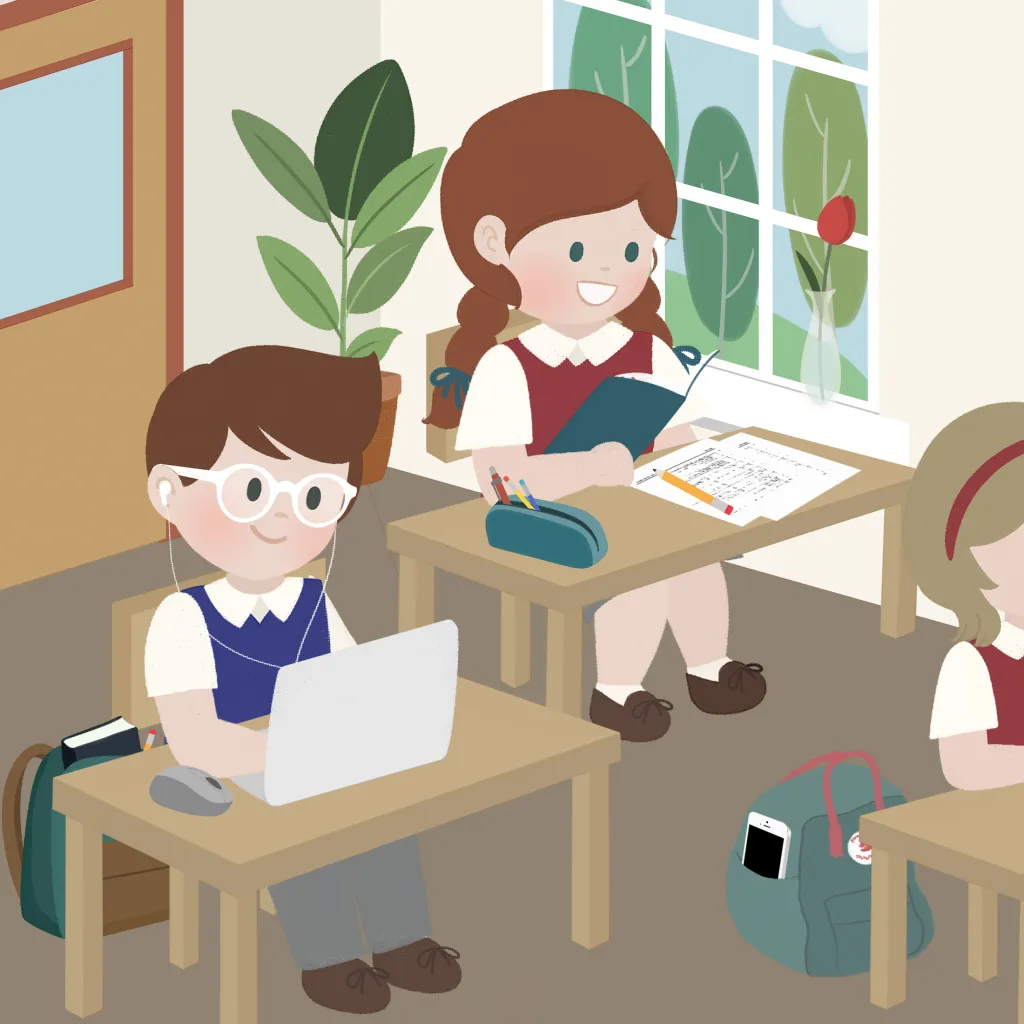
How Can Teachers Encourage Creativity?
A classroom is a strange place.
Thirty students sit in the same room.
They hear the same lesson.
Read the same material.
Receive the same instructions.
Yet something fascinating happens.
One student follows the path already created.
Another student wonders if a different path exists.
That difference is creativity.
Not intelligence.
Not effort.
Not talent alone.
Creativity is the willingness to explore beyond what is immediately visible.
A creative student does not simply ask, “What is the correct answer?”
They ask:
“Is there another answer?”
“Why does this work?”
“What happens if I change the approach?”
“How could this idea become something different?”
The most powerful classrooms are not factories producing identical outcomes.
They are environments where curiosity has room to move.
Teachers play a unique role in creating these environments.
Not because teachers manufacture creativity.
They cannot.
Creativity already exists within students.
The teacher’s role is different.
To protect it.
Encourage it.
Provide the conditions where it can grow.
Because creativity is fragile.
A single negative reaction can silence a question.
A rigid system can discourage exploration.
A supportive environment can transform a hesitant student into an active creator.
The question is not whether students are creative.
The question is whether the classroom allows that creativity to appear.
Creativity Begins With Permission
Before creativity becomes a skill, it begins as permission.
Permission to wonder.
Permission to experiment.
Permission to make mistakes.
Permission to think differently.
Children naturally possess this permission.
They ask unusual questions.
They invent explanations.
They combine unrelated ideas.
They explore without worrying whether their thoughts appear sophisticated.
As students grow older, something often changes.
They become more aware of judgment.
They become concerned about being wrong.
They begin searching for the answer they believe the teacher expects.
This is understandable.
Schools often reward accuracy.
But creativity requires something slightly different.
It requires exploration before certainty.
Teachers who encourage creativity create spaces where students understand that unusual ideas are welcome.
Not every idea will succeed.
Not every experiment will produce the desired outcome.
That is not failure.
That is the process.
The Teacher as a Creative Guide
A traditional image of teaching places the teacher at the center.
The teacher speaks.
Students listen.
The teacher explains.
Students absorb.
This model has value.
Knowledge matters.
Expertise matters.
Guidance matters.
But creativity requires another role.
The teacher becomes a guide.
A facilitator.
A person who creates conditions for discovery.
Instead of always providing answers, creative teachers encourage investigation.
Instead of immediately correcting mistakes, they ask questions.
Instead of saying:
“That is wrong.”
They might ask:
“What led you to that conclusion?”
“Why did you choose that approach?”
“What could we change?”
The conversation shifts.
The student becomes a participant.
Learning becomes active.
Curiosity Is the Foundation of Creativity
Creative classrooms are built on curiosity.
Curiosity is the beginning of exploration.
A curious student does not simply memorize information.
They investigate it.
Imagine two students learning about ecosystems.
The first memorizes definitions.
The second asks:
“What happens if one species disappears?”
“How do human choices change this system?”
“Could we design a better environment?”
Both students are learning.
But the second student is creating connections.
Those connections create deeper understanding.
Teachers encourage curiosity by treating questions as valuable.
Not interruptions.
Not distractions.
Questions are evidence of thinking.
Encourage Better Questions, Not Just Better Answers
Many classrooms focus heavily on answers.
The correct answer.
The expected answer.
The answer listed in the textbook.
Creative classrooms focus on questions.
Because questions reveal thinking.
A student asking a thoughtful question is often demonstrating deeper understanding than a student repeating a memorized response.
Teachers can encourage this by regularly asking:
“What else could explain this?”
“What assumptions are we making?”
“Could there be another solution?”
“How would someone from another perspective view this?”
These questions expand the mental landscape.
They teach students that learning is not merely collecting information.
It is exploring possibilities.
Create a Safe Space for Failure
Creativity and failure are connected.
This relationship makes many classrooms uncomfortable.
Students want to succeed.
Teachers want students to succeed.
Parents want students to succeed.
But meaningful creation requires experimentation.
Experimentation produces mistakes.
The key difference is interpretation.
A mistake can represent failure.
Or it can represent information.
Creative teachers change the meaning of mistakes.
They help students see errors as part of the learning process.
A failed experiment reveals something.
A weak draft provides direction.
A flawed idea creates opportunities for improvement.
The classroom becomes a laboratory.
Not a courtroom.
A Lesson I Learned From a Student’s Mistake
I once observed a student working on a creative writing assignment.
The instructions were simple:
Create a story using a specific theme.
Most students followed familiar structures.
Beginning.
Middle.
End.
The student I noticed took a different approach.
The story jumped between perspectives.
The timeline was unusual.
The structure was unconventional.
At first glance, it looked confusing.
The easy response would have been to tell the student to rewrite it in a more traditional way.
Instead, the teacher asked:
“What were you trying to create?”
The student explained the reasoning.
The unusual structure was intentional.
The student was experimenting with how stories could be experienced.
The writing was not perfect.
But the thinking was extraordinary.
That moment reinforced something important.
Sometimes creativity looks like confusion before it becomes clarity.
Teachers must be willing to look deeper.
Give Students Choice
Choice creates ownership.
Ownership creates engagement.
Engagement creates creativity.
When students have opportunities to make decisions, they become more invested.
Choice can appear in small ways.
Choosing a research topic.
Selecting a presentation format.
Designing a project approach.
Creating a personal interpretation.
The goal is not unlimited freedom.
Students still need structure.
The goal is meaningful autonomy.
A student who chooses part of the learning journey becomes more connected to the outcome.
Creativity grows when students feel they have a voice.
Connect Learning to Real Life
Creativity becomes stronger when students understand why knowledge matters.
Abstract information becomes more powerful when connected to experience.
A mathematics lesson can involve designing real-world solutions.
A history lesson can explore modern connections.
A science lesson can investigate local problems.
A writing lesson can address meaningful topics.
Real-world connections transform learning.
Students stop seeing knowledge as something separate from life.
They begin seeing knowledge as a tool.
Creativity thrives when students understand that ideas can influence reality.
Encourage Collaboration
Creativity is often described as individual.
In reality, many creative breakthroughs emerge through interaction.
Students develop ideas together.
One person introduces a concept.
Another improves it.
Another challenges it.
The result becomes something none of them would have created alone.
Teachers encourage collaboration by designing activities that require shared thinking.
Group projects.
Discussions.
Peer feedback.
Creative challenges.
Collaboration teaches students that ideas are not fixed objects.
They evolve.
They grow.
They transform through interaction.
Comparison Table: Traditional Classrooms vs. Creative Classrooms
| Learning Element | Traditional Classroom Approach | Creativity-Focused Classroom Approach |
|---|---|---|
| Student Role | Receives information | Creates and explores ideas |
| Teacher Role | Delivers knowledge | Guides discovery |
| Questions | Often limited to clarification | Encouraged as learning tools |
| Mistakes | Viewed as errors | Used as opportunities for growth |
| Assignments | Usually one expected outcome | Multiple possible outcomes |
| Assessment | Focuses on correctness | Includes process and reasoning |
| Participation | Students respond | Students contribute ideas |
| Learning Style | Memorization-focused | Exploration-focused |
| Problem Solving | Find the correct method | Discover possible methods |
| Classroom Culture | Compliance-oriented | Curiosity-oriented |
The difference is not about removing structure.
Creative classrooms still require discipline.
The difference is the purpose of structure.
One creates control.
The other creates possibility.
Use Projects to Develop Creative Thinking
Projects naturally encourage creativity.
They require students to combine skills.
Research.
Planning.
Problem-solving.
Communication.
Creation.
A project asks students to move beyond understanding.
They must apply.
Design.
Build.
Explain.
Projects also reveal different strengths.
One student may excel at research.
Another at visual design.
Another at presenting ideas.
Creativity appears in many forms.
Teachers who recognize this create more inclusive learning environments.
Teach Students How to Think, Not What to Think
One of the greatest gifts a teacher can provide is independent thinking.
The world changes.
Information changes.
Challenges change.
Students need adaptable minds.
Teaching students what to think provides temporary answers.
Teaching students how to think provides lifelong ability.
Creative thinking involves:
-
Questioning assumptions
-
Evaluating possibilities
-
Connecting ideas
-
Exploring alternatives
-
Reflecting on outcomes
These skills remain valuable regardless of subject.
Build a Culture of Experimentation
Creativity grows through practice.
Students become more comfortable creating when creation becomes normal.
Teachers can encourage experimentation through:
-
Brainstorming sessions
-
Open-ended assignments
-
Creative challenges
-
Prototype activities
-
Reflection exercises
The goal is repetition.
A single creative activity does not create creative confidence.
Regular opportunities do.
Creativity develops like any other ability.
Through use.
The Importance of Exposure
Students cannot create from an empty space.
Creativity depends on inputs.
Books.
Art.
Science.
Music.
Nature.
Different cultures.
Different perspectives.
Teachers expand creativity by expanding exposure.
A student who encounters diverse ideas has more material to work with.
Creative thinking often involves combining existing knowledge in new ways.
The richer the inputs, the greater the possibilities.
Technology Should Be a Creative Tool
Technology in classrooms is often discussed as a solution.
The reality is more nuanced.
Technology itself does not create creativity.
How students use it matters.
A device used only for consumption provides limited creative opportunity.
A device used for designing, building, creating, and communicating becomes a powerful tool.
Creative teachers focus less on the technology itself.
They focus on what students can create with it.
Creativity Requires Time
One of the biggest challenges in education is time.
Curriculums are full.
Schedules are crowded.
Testing creates pressure.
Creativity requires breathing room.
Students need moments to explore.
Think.
Revise.
Reflect.
The first idea is rarely the best idea.
The first attempt is rarely the final version.
Creative work requires development.
Teachers encouraging creativity protect time for this process.
Celebrate Original Thinking
Students pay attention to what teachers value.
If only correct answers receive recognition, students learn to prioritize correctness.
If thoughtful ideas receive recognition, students learn to explore.
Celebration does not mean accepting every idea without evaluation.
It means recognizing effort, curiosity, and originality.
A student who feels their thinking matters is more likely to continue thinking creatively.
Why Creativity Matters Beyond the Classroom
Education prepares students for life.
Life rarely provides perfectly structured problems.
People encounter uncertainty.
Complex decisions.
Unexpected challenges.
Creativity helps people navigate these situations.
A creative thinker can adapt.
Reimagine.
Develop solutions.
Approach challenges from different angles.
The skills developed through creative classrooms extend far beyond school walls.
The Future of Teaching Is About Creating Creators
The role of education is changing.
Students do not simply need access to information.
They need the ability to use information.
They need imagination.
Adaptability.
Curiosity.
Critical thinking.
Creative confidence.
Teachers who encourage creativity are not simply helping students produce better projects.
They are helping students become better thinkers.
The Real Secret to Encouraging Creativity
There is no single creativity technique.
No perfect classroom activity.
No universal formula.
Creativity develops through environment.
Through relationships.
Through trust.
Through opportunity.
The teacher’s greatest influence may not come from the lessons they deliver.
It may come from the possibilities they allow.
A creative classroom says:
Your questions matter.
Your ideas matter.
Your experiments matter.
Your perspective matters.
That message changes students.
Because creativity does not disappear when it is absent.
It simply becomes hidden.
The teacher’s role is to create the conditions where it can emerge.
To protect curiosity before it becomes confidence.
To encourage exploration before it becomes expertise.
To recognize imagination before the world teaches students to ignore it.
The most important thing a teacher can give a student may not be an answer.
It may be the courage to search for a better question.
- Arts
- Business
- Computers
- Games
- Health
- Home
- Kids and Teens
- Money
- News
- Personal Development
- Recreation
- Regional
- Reference
- Science
- Shopping
- Society
- Sports
- Бизнес
- Деньги
- Дом
- Досуг
- Здоровье
- Игры
- Искусство
- Источники информации
- Компьютеры
- Личное развитие
- Наука
- Новости и СМИ
- Общество
- Покупки
- Спорт
- Страны и регионы
- World

 Russian
 French
 Spanish
 Portuguese
 Deutsch
 Turkish
 Dutch
Dutch
 Italiano
 Arabic
 Romaian
 Portuguese (Brazil)
 Greek
Greek