
What Are Membership Terms and Conditions?
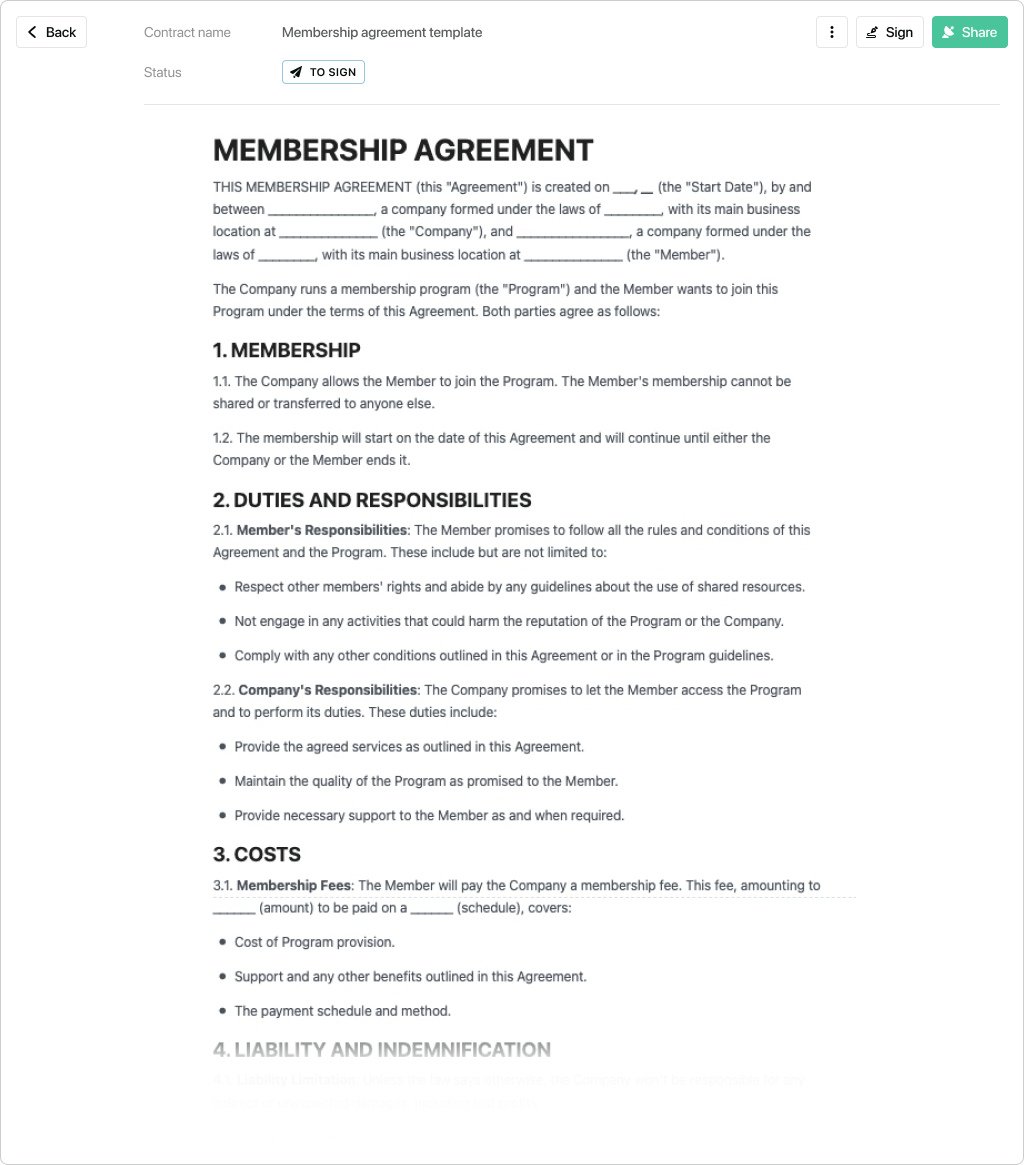
Most people don't join a membership because they are excited to read the terms and conditions.
They join because they want access.
Access to knowledge.
To a professional network.
To exclusive benefits.
To a community that helps them grow.
Then, almost as an afterthought, they click a small checkbox labeled, "I agree."
That single click represents more than a legal formality.
It establishes the rules of a relationship.
Membership terms and conditions are often viewed as legal necessities written to protect organizations from liability.
Certainly, they serve that purpose.
But reducing them to legal documents misses their broader role.
Well-crafted membership terms and conditions create clarity.
They establish expectations.
They define responsibilities.
Most importantly, they build trust before questions ever arise.
The strongest membership organizations understand something subtle but powerful:
Members rarely remember every clause in the agreement.
They remember whether the organization behaved consistently with the promises it made.
That consistency begins with clear terms and conditions.
What Are Membership Terms and Conditions?
Membership terms and conditions are the written rules governing the relationship between an organization and its members.
They explain what members receive, what the organization expects, and how both parties will handle common situations throughout the membership lifecycle.
Typically, terms and conditions cover:
- Membership eligibility
- Payment obligations
- Renewal policies
- Cancellation procedures
- Refund policies
- Member responsibilities
- Code of conduct
- Privacy practices
- Intellectual property
- Liability limitations
Think of them as the operating manual for the membership relationship.
Rather than waiting for misunderstandings to occur, they answer important questions in advance.
Why Membership Terms Matter
Organizations sometimes treat terms and conditions as documents written solely for attorneys.
Members see them differently.
Clear terms create confidence.
Ambiguous language creates uncertainty.
That distinction influences trust.
Imagine joining a professional association without knowing:
- How renewals work
- Whether dues are refundable
- What happens after cancellation
- How personal information will be used
Uncertainty discourages commitment.
Clarity encourages participation.
The best terms and conditions remove unnecessary ambiguity before it affects the member experience.
What Should Membership Terms and Conditions Include?
Every organization has unique requirements.
Still, several sections appear consistently across effective membership agreements.
Membership Eligibility
Organizations should define who qualifies for membership.
Requirements may include:
- Professional credentials
- Geographic location
- Age restrictions
- Educational qualifications
- Organizational affiliation
Eligibility standards maintain fairness while protecting membership integrity.
Membership Benefits
Members deserve a clear understanding of what their dues provide.
Benefits might include:
- Educational resources
- Networking opportunities
- Event access
- Certifications
- Publications
- Online communities
- Member discounts
Clearly describing benefits reduces future misunderstandings.
Payment Terms
Payment policies should explain:
- Membership pricing
- Billing frequency
- Accepted payment methods
- Automatic renewals
- Late payment procedures
- Taxes or additional fees
Financial transparency strengthens member confidence.
Renewal Policies
Organizations should clearly answer:
- Does membership renew automatically?
- Will reminders be sent?
- Can members opt out?
- When are payments processed?
Renewals should never surprise members.
Cancellation Policy
Members need straightforward guidance explaining:
- How to cancel
- When cancellation becomes effective
- Whether benefits continue through the paid period
- How recurring billing ends
Simple policies reduce frustration.
Refund Policy
Terms should specify whether memberships are:
- Fully refundable
- Partially refundable
- Nonrefundable
- Reviewed individually
Clear expectations prevent unnecessary disputes.
Member Code of Conduct
Communities function best when expectations remain explicit.
Codes of conduct often address:
- Respectful communication
- Harassment
- Discrimination
- Professional behavior
- Appropriate use of member resources
Healthy communities depend upon shared standards.
Privacy and Data Use
Members increasingly care about how organizations handle personal information.
Terms should explain:
- Information collected
- Data storage
- Communication preferences
- Third-party sharing
- Member rights
Transparency supports long-term trust.
Terms and Conditions vs. Membership Policies
These concepts often overlap but serve different purposes.
| Membership Terms and Conditions | Membership Policies |
|---|---|
| Define the legal relationship between the organization and members | Explain operational procedures and day-to-day rules |
| Usually accepted during enrollment | May evolve over time without requiring a new agreement |
| Focus on rights and responsibilities | Focus on implementation and administration |
| Cover payment, liability, privacy, and membership obligations | Cover event attendance, volunteer procedures, committee guidelines, and operational details |
Together, they create a complete framework for managing the membership experience.
A Lesson I Learned About Clear Expectations
Several years ago, I worked with an association receiving frequent complaints about annual renewals.
Leadership initially believed the problem involved pricing.
Yet member interviews revealed something else.
Very few people objected to the dues themselves.
They objected to uncertainty.
Some members misunderstood automatic renewals.
Others assumed memberships could be paused indefinitely.
Several expected refunds after attending multiple events.
The organization's policies existed.
Technically.
They were buried inside lengthy legal language that almost nobody read.
The organization rewrote its membership terms using straightforward language.
Headings became clearer.
Billing schedules became easier to understand.
Cancellation and refund policies appeared prominently during checkout.
Support requests declined noticeably.
Member satisfaction improved.
Nothing about the policy itself had changed.
Only its clarity.
That experience reinforced an important lesson.
Confusion is often mistaken for disagreement.
Sometimes people simply need understandable expectations.
Common Mistakes Organizations Make
Even well-intentioned organizations sometimes undermine trust through avoidable mistakes.
Writing Exclusively for Lawyers
Legal accuracy matters.
Readability matters just as much.
Members should understand what they are agreeing to without requiring legal interpretation.
Hiding Important Information
Automatic renewals.
Cancellation procedures.
Refund limitations.
These topics deserve visibility.
Transparency prevents future frustration.
Using Vague Language
Statements such as "subject to change" without explanation create uncertainty.
Specific language builds confidence.
Forgetting Regular Updates
Membership programs evolve.
Terms should evolve accordingly.
Periodic review ensures policies remain accurate and relevant.
Best Practices for Membership Terms and Conditions
Organizations that create strong member relationships often share similar practices.
Use Plain Language
Short sentences.
Clear headings.
Direct explanations.
Complexity rarely improves understanding.
Organize Information Logically
Members should easily locate:
- Payment details
- Renewals
- Refunds
- Privacy
- Cancellation
Thoughtful organization reduces confusion.
Require Active Agreement
Rather than assuming acceptance, organizations should ask members to acknowledge the terms during enrollment.
This protects both parties.
Make Terms Accessible
Terms should remain available after enrollment.
Members appreciate being able to review them whenever questions arise.
Why Transparency Improves Retention
Some organizations hesitate to present detailed membership terms prominently.
They worry transparency may discourage prospective members.
Experience often suggests the opposite.
Clear expectations reduce uncertainty.
Reduced uncertainty encourages commitment.
Members rarely object to fair policies explained honestly.
They object to surprises.
Trust grows when organizations consistently communicate expectations before payments occur.
The Future of Membership Agreements
Membership terms continue evolving.
Organizations increasingly address:
- Digital communities
- Virtual events
- Artificial intelligence
- Data portability
- Online learning
- Global memberships
Despite these technological developments, one principle remains remarkably stable.
Members want fairness.
Organizations want clarity.
Good terms provide both.
More Than Legal Protection
Perhaps the greatest misconception surrounding membership terms and conditions is that they exist primarily to protect organizations.
Certainly, they help manage legal risk.
But they also protect members.
They answer questions before disagreements emerge.
They establish fairness before exceptions become necessary.
They create confidence before uncertainty develops.
That contribution extends far beyond compliance.
It strengthens relationships.
The Question Every Organization Should Ask
When leaders review membership terms, they often ask:
"Will this protect us legally?"
An important consideration.
But another question deserves equal attention.
Will our members clearly understand what kind of relationship we are inviting them into?
That question changes the conversation.
Membership terms and conditions become more than legal documents.
They become expressions of organizational values.
Clear expectations.
Transparent communication.
Consistent policies.
Respect for members' time, trust, and investment.
Because membership is ultimately built on shared understanding.
The written agreement simply gives that understanding a durable foundation.
When organizations communicate their terms with honesty and clarity, members gain something more valuable than legal certainty.
They gain confidence that the relationship they are entering is one built on openness, consistency, and mutual respect.
And that confidence often becomes one of the strongest reasons they choose to stay.
- Arts
- Business
- Computers
- Jogos
- Health
- Início
- Kids and Teens
- Money
- News
- Personal Development
- Recreation
- Regional
- Reference
- Science
- Shopping
- Society
- Sports
- Бизнес
- Деньги
- Дом
- Досуг
- Здоровье
- Игры
- Искусство
- Источники информации
- Компьютеры
- Личное развитие
- Наука
- Новости и СМИ
- Общество
- Покупки
- Спорт
- Страны и регионы
- World

 English
 Russian
 French
 Spanish
 Portuguese
 Deutsch
 Turkish
 Dutch
Dutch
 Italiano
 Arabic
 Romaian
 Greek
Greek