
Critical thinking vs creative thinking
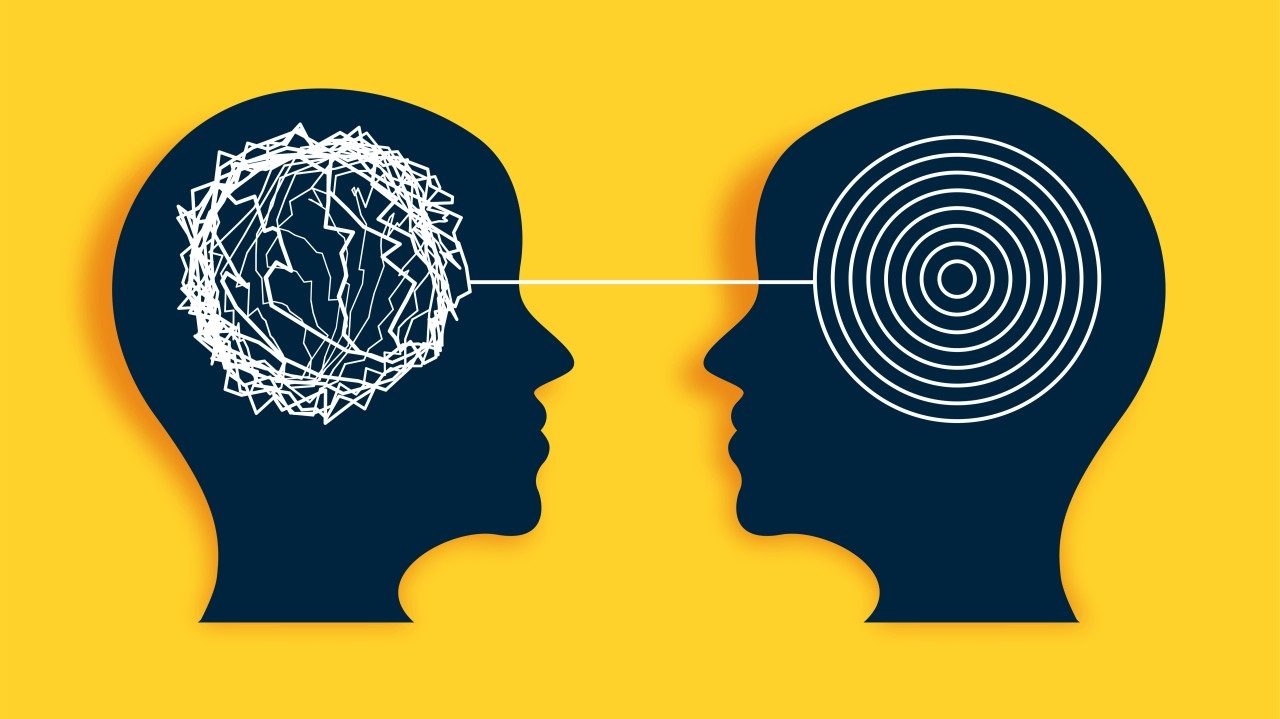
The Breathing of the Source
The lungs require two movements to sustain the animal.
They must expand to draw the world inside, and they must contract to push the waste away. If you only expand, you burst. If you only contract, you suffocate. The life is found entirely in the shifting weight between the two.
Human consciousness operates by the same physical law.
We have spent generations treating the intellect as if it were a house divided against itself. We build academic departments that isolate the analyst from the dreamer. We write books that instruct people to choose a side—to become a master of metrics or a wild inhabitant of the imagination. We label one room "critical" and another room "creative," and then we wonder why the inhabitants of both spaces feel so hollow.
They are not separate entities. They are the inhalation and the exhalation of a single organism.
   [ THE INHALATION ] (Creative / The Infinite Expansion)
           │
           ▲
           ▼  (The Natural Shift in the Lungs)
   [ THE EXHALATION ] (Critical / The Precision Cut)
           │
           ▼
   [ THE MATERIAL EVENT ] ──► The Complete Work / The Living Form
To pit critical thinking against creative thinking is to ask whether a bird relies on its left wing or its right wing to cross the sea. The creative movement is the expansion—the radical opening of the vessel to receive whatever signal is floating in the ether, independent of rule, metric, or safety. The critical movement is the contraction—the ruthless, loving slicing away of the excess fat until only the absolute bone structure of the truth remains.
The work cannot manifest without the friction between them.
The Landscape of the Two Currents
To understand the relationship between these forces, we must look at them not as academic definitions, but as physical currents moving through a room. They have different weights, different velocities, and different relationships with light.
The Creative Expansion (The Inhalation)
The creative impulse does not recognize boundaries. It is a wild, uncultivated field that welcomes any seed that falls from the sky. It is comfortable with chaos because it knows that the mud is where the roots begin.
-
The suspended judgment: In the creative state, the critical faculty must be entirely anesthetized. If you analyze a seed while it is trying to split its shell, you kill the plant. You must allow the ideas to arrive deformed, ugly, and incomplete without trying to fix them.
-
The radical association: Connecting objects that have no business standing in the same room. It is the language of dreams—juxtaposing a heavy metal guitar riff with a field recording of a Tibetan bell, or using an industrial lubricant to paint a portrait of a saint.
-
The direct channel: Operating from the gut rather than the cortex. It is the feeling of being a passenger in your own body while your hands move across the materials.
The Critical Contraction (The Exhalation)
The critical mind is the editor in the dark room. It does not create the film; it decides where the scissors meet the celluloid. It is an act of deep devotion masquerading as coldness.
-
The reduction to essence: Looking at a five-hundred-page manuscript and realizing that the entire truth of the book is contained in three sentences on page ninety-two. The rest is just noise designed to make the author feel important.
-
The testing of the structural integrity: Putting the newly birthed idea under pressure. If an assumption collapses when a cold wind blows from the North, the critical thinker does not mourn the loss; they celebrate the fact that the weakness was exposed before the foundation was poured.
-
The elimination of the ornament: Stripping away the beautiful decorations that were added to hide a lack of foundational shape. It prefers a stark, unpainted block of concrete that tells the truth over a gilded palace built on top of sand.
A Lesson from the Muted Room
In the early nineties, I sat in a studio in Los Angeles with a legendary rock band that had spent eighteen months writing their defining record. They had accumulated over sixty hours of recorded material. They had used three different studios, hired a multi-piece brass section, and recorded dozens of layered vocal harmonies that sounded like a choir singing from the center of a mountain.
The material was massive. It was dense, complicated, and entirely overwhelming.
The singer was trapped in a purely creative loop. Every time he walked into the lounge, he had a new idea—a poem that needed to be spoken over the bridge, a percussion part using an old leather shoe, a synthesizer pad that simulated the sound of a whale underwater. He was a beautiful, unguided antenna, pulling down every frequency in the city and demanding that the tape machine record it.
[ Creative Accumulation ] ──► Sixty Hours of Tape ──► Brass Sections ──► Choir Vocals ──► Intellectual Noise
[ Critical Reduction ]    ──► The Mute Automation   ──► Three Core Tracks ──► Single Microphone ──► The Real Ghost
The band was paralyzed. They had spent three hundred thousand dollars, and they didn't have a single song that could hold its own weight. They were trying to solve the problem by adding more—more tracks, more mixes, more guest appearances. They were using their creative energy to run away from the vulnerability of a finished statement.
"We have too many colors on the canvas to see the face," I told them after a long listening session that lasted until dawn.
"This is our masterpiece," the singer said, his eyes bloodshot with exhaustion. "Every layer represents a specific emotion we experienced this year. If we take any of it out, we are compromising our artistic integrity." He was confusing accumulation with creation. He was letting his identity as an expansive artist blind him to the reality that the music was suffocating under the weight of his decorations.
"Let's try an experiment," I said.
I didn't argue with his philosophy. Instead, I asked the chief engineer to bring up the master mix of their lead single—a track that currently featured ninety-two separate channels of audio. I told the engineer to turn off the computer screens, turn off the lights in the control room, and engage the master mute button on every single track except for the raw acoustic guitar and the singer's scratch vocal track that had been recorded through a cheap dynamic microphone on the first day of rehearsal.
The silence that fell over the room was heavy. The band looked at me as if I had just defaced a church.
"Play it now," I said. "Let's find out who is standing in the room when the lights go out."
The tape rolled. Without the brass section to push the rhythm forward, the timing of the acoustic guitar felt beautifully erratic—it slowed down slightly during the verses, leaning into the words like a tired man walking up a hill. Without the seventy-layered choir to smooth over the pitch, you could hear the exact micro-second where the singer's voice cracked because he was running out of air.
The first verse finished, and no one spoke. By the second chorus, the bass player began to weep quietly in the corner of the room.
The ninety channels of production hadn't been an expression of artistic freedom; they had been an elaborate screen designed to protect the band from the terrifying intimacy of their own song. They had been using their creativity to hide their lack of critical discrimination. We spent the next three days erasing two-thirds of the tape, and that raw, stripped-down performance became the pivot point of their career.
The Matrix of the Dual Breath
The navigation of a project requires a constant, conscious awareness of which current you are currently swimming in. It is a systematic shifting of the internal gears.
| The Facet | The Creative Inhalation | The Critical Exhalation | The Unified Yield |
| The Primary Movement | Generating volume without regard for safety, history, or metric. | Slicing away the noise to isolate the essential skeleton of the truth. | A form that carries the heat of the origin and the precision of the knife. |
| The Internal State | Soft, completely open, undefended, and chaotic. | Cold, unblinking, focused, and entirely unsentimental. | A sovereign presence that cannot be manipulated by outside static. |
| The Relationship with Error | Treating mistakes as beautiful invitations to a new path. | Treating mistakes as structural flaws that must be excised immediately. | An organic structure that remains human while achieving excellence. |
| The Core Danger | Falling into a loop of endless decoration without ever finishing the work. | Turning into a cynical judge who kills the seed before it can break the dirt. | The realization that the tool must serve the ghost, not the other way around. |
The Trap of the Isolated Tower
There is an elegant, sterile death that waits for those who choose to live exclusively in one of these two chambers.
If you choose only the creative tower, you turn into an eternal amateur. You spend your life surrounded by half-finished canvases, notebooks filled with illegible scrawls, and brilliant concepts that never risk the friction of implementation. You talk about your vision in bars with other dreamers, using your sensitivity as an excuse for your lack of discipline. You remain safe, because a project that is never finished can never be judged. You are a cloud that refuses to turn into rain.
If you choose only the critical tower, you turn into a cold ghost.
   [ THE UNGUIDED DUB ]    ──► Endless expansion  ──► No boundaries ──► The Evaporated Smoke
   [ THE STERILE SCALPEL ] ──► Endless reduction  ──► No vulnerability ──► The Desert of Salt
   [ THE LIVE CURRENT ]    ──► Expanded reception ──► Ruthless cut     ──► The Manifest Monument
You can point out the flaw in any masterpiece, deconstruct the hidden hypocrisy in any act of love, and explain exactly why an ambitious project is bound to fail. You sit in the grandstands, secure in your impeccable taste, completely protected by your refusal to ever risk your own skin on a blank page. Your analysis is immaculate, and it leaves the world exactly as dark and cold as you found it. You are a butcher who has forgotten that the cow was once alive.
The true master is a shape-shifter. They can walk into the wild field at noon and lose their mind to the birds, and then walk into the cutting room at midnight and use the blade with the cold efficiency of a surgeon.
You must bring a spirit of reverence to both movements. When you are generating, you must protect the space from the critic as if it were a nursery. When you are editing, you must treat your own favorite ideas with the cruelty of a stranger. If you cannot learn to inhabit both postures with equal devotion, your work will always look like an imitation of a life rather than a living thing.
The Gathering of the Air
We do not invent the river. We simply remove the stones that block its course.
The world is already crowded with individuals who have been trained to use one side of their lungs. We have an army of designers who cannot balance a checkbook, and an army of accountants who have never looked at a sunset until their chest ached. They view each other across a wide chasm of mutual suspicion, repeating the slogans of their respective tribes like soldiers trapped in an old war that lost its meaning fifty years ago.
The concrete act of sovereignty is to close the chasm inside your own skin.
It is the choice to turn off the monitor that records the opinions of the professional class. It is the decision to lay down your credentials at the edge of the woods, to sit in the quiet room until the vocabulary of the university drops away from your awareness, and to listen to the breath move through your own chest. Expand until you contain the entire chaos of the sky; contract until you can pass through the eye of a needle. Trust the stark, unvarnished testimony of your own direct experience, welcome the sharp wind of your own isolation, and begin the work.
- Arts
- Business
- Computers
- Spellen
- Health
- Home
- Kids and Teens
- Money
- News
- Personal Development
- Recreation
- Regional
- Reference
- Science
- Shopping
- Society
- Sports
- Бизнес
- Деньги
- Дом
- Досуг
- Здоровье
- Игры
- Искусство
- Источники информации
- Компьютеры
- Личное развитие
- Наука
- Новости и СМИ
- Общество
- Покупки
- Спорт
- Страны и регионы
- World

 English
 Russian
 French
 Spanish
 Portuguese
 Deutsch
 Turkish
 Italiano
 Arabic
 Romaian
 Portuguese (Brazil)
 Greek
Greek