
Why is decision making important?
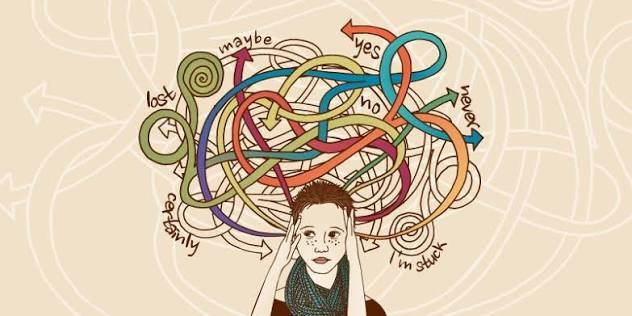
The Architecture of the Defining Stroke
We move through the world, and we believe we are simply traveling. We think we are moving from one point to another, collecting experiences, and observing the landscape as it unfolds. We view our lives as a series of events happening to us, like weather patterns or passing trains.
But this is a misunderstanding. You are not the passenger in your own life. You are the architect of the environment. And every single thing you do—every choice you commit to, every path you decline—is a stroke of the chisel, defining the shape of the room you inhabit.
Decision-making is not a administrative task. It is the fundamental practice of existence. It is the mechanism by which you transform the raw, chaotic energy of the universe into the specific, localized reality of your own experience. When you decide, you are not merely picking an option from a menu. You are casting a vote for the version of reality you wish to inhabit.
   [ THE INFINITE POTENTIAL ] (The Chaotic Field)
                │
                ▼
   [ THE ACT OF DECISION ] <─── Driven by: Alignment / The Refusal to be Indifferent
                │
                ▼  (The Sacred Suspension)
   [ THE LOCALIZED REALITY ]
                │
                ▼
   [ THE TRUTH ] ──► The world has taken a specific, unchangeable shape.
To understand the importance of decision-making is to understand that the "results" in your life are not external things. They are the cumulative echoes of your own commitments. You are not waiting for your life to start. You are actively building it, in every moment of discernment, whether you are conscious of it or not.
The Geography of the Mental Audit
We live in a culture that encourages us to keep our options open. We are told that keeping the door ajar, staying flexible, and avoiding the "final" commitment is a sign of wisdom. We fear that to decide is to lose something.
But to keep your options open is to keep your life in a state of suspended animation. It is to remain a spectator in your own house.
The Horizontal Tension (The Search for the Anchor)
Indecision is a masquerade. We pretend it is carefulness, or nuance, or patience. In reality, it is a form of paralysis born from the fear that our own direction might be wrong.
-
The audit of the drift: If you aren't actively deciding, the environment is deciding for you. You are being shaped by the momentum of your past habits, the expectations of your peers, and the convenience of the path of least resistance.
-
The architecture of the commitment: A decision is a commitment to a specific frequency. Once you choose, you aren't just getting an outcome; you are entering a new state of being. The value of the decision lies in the focus it provides. When you stop trying to be everything, you finally have the room to be something.
The Vertical Extraction (The Deep Descent)
True discernment is the practice of removing the secondary considerations until you are left with the core of the intent.
-
The silent audit: Take the noise of the "pros and cons" away. Ask yourself: If no one were watching, if there were no social consequences, what would I choose? The answer to that question is your truth. Everything else is just performance.
-
The subtraction of the secondary metric: We are taught to measure the importance of a decision by its impact on our status, our income, or our perceived safety. This is backwards. The importance of the decision is measured by how much it clarifies your own internal state.
A Lesson from the Stalled Session
In the winter of two thousand and ten, I was working with a producer who was incapable of finishing a project. He had dozens of versions of the same track. He had hundreds of hours of raw audio. He was caught in the trap of "infinite potential." He kept trying to make the track everything, because he couldn't decide what it was supposed to be.
He was terrified that if he committed to one arrangement, he would be closing the door on a better one. He was living in the space of "maybe."
I told him: "The track is already finished. You’re just refusing to let it exist."
I made him walk away from the studio for forty-eight hours. No music. No instruments. No thinking about the track. When he came back, I told him he had to make one final decision. He had to choose one version, and he had to export it, right there, without making another adjustment.
He hesitated. He looked for a reason to keep working. He looked for a reason to stay in the space of "maybe." But he knew that to finish the work, he had to make the decision. He hit the button.
[ The Space of "Maybe" ] ──► Keep Adjusting / Avoid the Finality / The Stagnant Energy
[ The Act of Decision ]  ──► Make the Choice / Trust the Result / The Living Energy
That track became the centerpiece of his career. It wasn't the "best" version in a technical sense; it was the version that existed. He learned that the decision is the only thing that gives the work its life. The value isn't in the perfection of the choice; it’s in the act of bringing it into the world.
The Landscape of the Sovereign Discernor
Decision-making is the act of claiming your own sovereignty. It is the practice of taking ownership of the shape of your life.
| The Arena | The Standardized Technician | The Vertical Auditor | The Sovereign Discernor |
| The Primary Metric | Validation; will this be approved by the existing system? | Alignment; does this move support the integrity of the vision? | Resonance; is this move a reflection of my core reality? |
| The Internal Speed | High-velocity; the race to avoid the discomfort of the unknown. | Interrupted; the creation of a deliberate vacuum between the stimulus and the choice. | A metronomic stillness that waits for the light to show the path. |
| The Operational Tool | Addition. Bringing more opinions, more "best practices," and more pressure to the table. | Subtraction. Clearing the table until only the irreducible bone of the intent remains. | An effortless presence that sees the move because it has stopped fighting the terrain. |
| The Human Hazard | Becoming a high-fidelity echo of a narrative that is functionally empty. | Turning into a skeptic who disassembles the process but loses the spirit. | The realization that the decision must serve the spirit, not the ego of the decision-maker. |
The Fortress of the Certified Illusion
There is a clean, sophisticated failure that waits for the person who treats life as a series of tests they are trying to pass. They believe that if they make the "right" decisions, they will be rewarded by the world. They treat decision-making as a form of compliance.
They are the favorites of the boardroom. They can justify every choice with a mountain of data, they can minimize the risk with a wall of insurance, and they can ensure that they never, ever ruffle a feather. They treat their decisions as a way to maintain the status quo.
But if you are not prepared to make a decision that deviates from the expected, you aren't deciding. You are just submitting.
   [ THE METRIC CLERK ]      ──► Catalogs the risks ──► Asks "Is it safe?"   ──► The Grid of Iron
   [ THE ISOLATED THEORY ]   ──► Debates the method ──► Asks "Who agrees?"  ──► The Stagnant Water
   [ THE SOVEREIGN WITNESS ] ──► Touches the material ──► Asks "What is true?" ──► The Clear Ground
If you only use your decision-making to optimize the safety of your current position, you are not living. You are simply becoming a more efficient operator of someone else’s narrow, frightened vision. You are using your intellect to build a more comfortable prison cell for the truth.
The Cleansing of the Room
We do not manufacture the truth. We merely wash the soot off the window so the light can show us where the floorboards are honest.
The institutions will continue to offer you an endless menu of convenient fictions, tailored specifically to match the requirements of the marketplace. They will tell you that the polish of the data is the measure of the intelligence. They will tell you that the avoidance of the mistake is the measure of the character.
The decision to practice true, sovereign discernment is a radical act of spiritual hygiene.
It is the choice to step into the room and exist without the armor of the explanation. It is the decision to lay down your need to be "correct" at the threshold, to look at the fork in the road until the noise of your own expectations runs out of fuel, and to wait for the movement that arrives from the marrow of your own bones rather than the ledger of your own history. Trust the silent weight of your own direct presence, drop the obligation to defend your choice, and let the false structures of the reasoning dissolve in the sun.
- Arts
- Business
- Computers
- Jogos
- Health
- Início
- Kids and Teens
- Money
- News
- Personal Development
- Recreation
- Regional
- Reference
- Science
- Shopping
- Society
- Sports
- Бизнес
- Деньги
- Дом
- Досуг
- Здоровье
- Игры
- Искусство
- Источники информации
- Компьютеры
- Личное развитие
- Наука
- Новости и СМИ
- Общество
- Покупки
- Спорт
- Страны и регионы
- World

 English
 Russian
 French
 Spanish
 Portuguese
 Deutsch
 Turkish
 Dutch
Dutch
 Italiano
 Arabic
 Romaian
 Greek
Greek