
Why do smart people make mistakes?
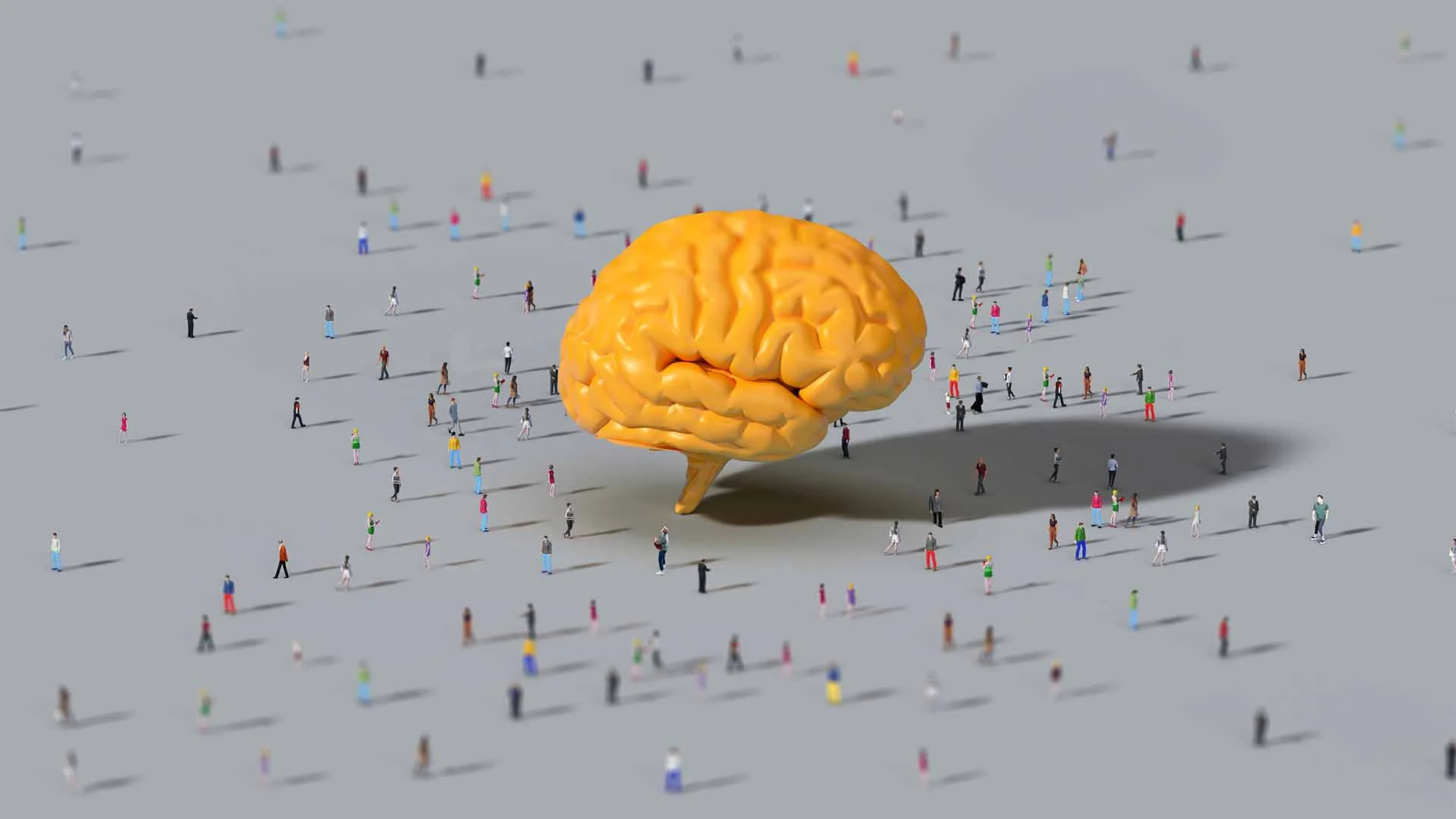
Why Do Smart People Make Mistakes? The Hidden Limits of Intelligence in Decision-Making
Intelligence enjoys an almost mythical reputation.
We often assume that exceptionally intelligent people make better decisions, avoid obvious errors, and recognize flawed reasoning before anyone else does. It is a comforting belief because it suggests that enough knowledge, education, or experience can protect us from costly mistakes.
Reality is considerably less reassuring.
History offers countless examples of brilliant scientists defending incorrect theories, accomplished executives pursuing disastrous acquisitions, celebrated investors making catastrophic financial decisions, and highly trained physicians overlooking straightforward diagnoses. Their intelligence was genuine. Their mistakes were equally real.
This raises an uncomfortable question.
If intelligence is not enough, what actually separates consistently good decisions from consistently poor ones?
The answer lies in understanding how the human mind works under uncertainty. Intelligence expands our capacity to analyze information. It does not eliminate the cognitive shortcuts, emotional influences, and social pressures that shape judgment. In some situations, intelligence even strengthens these forces by making us better at defending conclusions we have already reached.
I learned this lesson during a strategy workshop early in my career. The participants were among the most capable professionals I had worked with. Their credentials were impressive, their analyses detailed, and their arguments persuasive. Yet after several hours of discussion, it became clear that everyone was interpreting the same evidence differently. The disagreement did not stem from missing information. It stemmed from different assumptions that had gone unexamined.
The meeting ended with a realization that has stayed with me ever since: smart people rarely fail because they cannot think. They fail because they sometimes stop questioning how they are thinking.
Intelligence Solves Problems—Judgment Chooses Which Problems Matter
There is an important distinction between intelligence and judgment.
Intelligence helps solve equations, identify patterns, process information, and understand complex systems.
Judgment determines which assumptions deserve scrutiny, which risks deserve attention, and which conclusions require skepticism.
A person can possess extraordinary analytical ability while consistently applying it to flawed premises.
The quality of reasoning depends not only on logic but also on the starting assumptions.
If those assumptions remain unchallenged, intelligence accelerates movement in the wrong direction.
Why the Brain Prefers Efficiency Over Accuracy
The human brain evolved to make rapid decisions in environments where hesitation carried significant costs.
Mental shortcuts allowed quick action.
Those shortcuts remain with us today.
Instead of analyzing every decision from first principles, the brain simplifies complexity by recognizing familiar patterns, recalling previous experiences, and generating intuitive impressions.
Most of the time, this works remarkably well.
Occasionally, it creates predictable errors.
The important observation is that intelligence does not replace these shortcuts.
It simply operates alongside them.
Knowledge Can Create Overconfidence
Expertise offers tremendous advantages.
It also introduces hidden risks.
As individuals become more knowledgeable, they often develop increasing confidence in their own judgment.
Confidence itself is not problematic.
The danger appears when confidence discourages curiosity.
Experts sometimes stop asking questions that beginners naturally ask.
Alternative explanations receive less attention.
Contradictory evidence appears less convincing.
The result is subtle.
Knowledge grows.
Intellectual flexibility shrinks.
Cognitive Biases Affect Everyone
One common misconception deserves immediate correction.
Cognitive biases do not disappear as intelligence increases.
They often become more sophisticated.
Confirmation bias encourages people to seek evidence supporting existing beliefs.
Anchoring influences estimates through initial information.
Availability bias exaggerates memorable events.
Loss aversion encourages preserving familiar situations despite stronger alternatives.
Highly intelligent individuals frequently recognize these concepts academically.
Recognizing a bias does not guarantee immunity from it.
Intelligence Improves Rationalization
Perhaps the most surprising relationship involves reasoning itself.
People often imagine intelligence as protection against irrational thinking.
Research suggests something more complicated.
Intelligent individuals frequently become exceptionally skilled at constructing logical explanations supporting emotionally preferred conclusions.
The reasoning appears rigorous.
Its purpose quietly shifts.
Instead of discovering truth, it defends existing beliefs.
The distinction matters enormously.
Comparing Common Reasons Smart People Make Mistakes
Different psychological tendencies influence decision-making in different ways.
| Factor | How It Influences Judgment | Typical Outcome | Practical Countermeasure |
|---|---|---|---|
| Overconfidence | Excessive trust in personal judgment | Poor forecasting | Estimate probability ranges |
| Confirmation Bias | Selective attention to supporting evidence | Reinforced misconceptions | Seek disconfirming evidence |
| Anchoring | Heavy reliance on first information | Distorted evaluations | Generate independent estimates |
| Sunk Cost Fallacy | Commitment to previous investments | Escalating losses | Focus on future value only |
| Groupthink | Preference for agreement over accuracy | Weak strategic decisions | Encourage structured disagreement |
| Emotional Reasoning | Feelings interpreted as evidence | Impulsive choices | Separate emotions from facts |
The pattern is revealing.
None of these problems originates from insufficient intelligence.
They originate from predictable characteristics of human cognition.
Success Can Become a Liability
Repeated success creates valuable experience.
It also reinforces confidence.
Strategies that worked repeatedly begin to resemble universal principles.
Changing conditions receive less attention because familiar approaches have succeeded before.
Many organizational failures begin this way.
Past victories encourage future complacency.
Markets evolve.
Technology changes.
Customer expectations shift.
Successful methods gradually lose effectiveness.
The greatest obstacle becomes not ignorance but attachment to previous success.
Complexity Encourages Simplification
Complex problems rarely provide clear answers.
The human mind naturally responds by simplifying them.
One explanation becomes dominant.
One cause appears responsible.
One solution receives attention.
Reality often involves interacting variables rather than isolated causes.
The desire for simplicity creates confidence.
Complexity deserves curiosity instead.
My Most Valuable Lesson About Intelligence
Several years ago, I participated in a strategic review where every recommendation appeared thoroughly supported by data.
The discussion felt unusually convincing.
Then someone asked a question that changed the direction of the meeting.
"What assumptions would have to be false for this recommendation to fail?"
The room became noticeably quieter.
Within minutes, several assumptions emerged that nobody had examined because they seemed obvious.
Some proved uncertain.
Others proved incorrect.
The recommendation ultimately changed—not because new information arrived, but because hidden assumptions became visible.
That experience permanently altered how I evaluate confidence.
Whenever an argument feels especially persuasive, I now look first for the assumptions supporting it.
Social Dynamics Influence Smart People Too
Decision-making rarely occurs in isolation.
Status influences discussion.
Authority shapes attention.
Consensus encourages conformity.
Highly intelligent individuals remain vulnerable to these influences because social pressures operate independently of analytical ability.
Organizations frequently mistake rapid agreement for effective thinking.
Constructive disagreement often produces better outcomes than effortless consensus.
Emotion Quietly Shapes Reasoning
Intelligence does not eliminate emotional influence.
Fear magnifies perceived risks.
Anger increases certainty.
Pride discourages reconsideration.
Regret alters future choices.
The emotional response frequently appears first.
Reasoning often follows.
The resulting explanations feel objective because they genuinely make sense.
Their origin may nevertheless be emotional.
Recognizing this possibility improves self-awareness.
Better Questions Produce Better Decisions
Improving judgment often requires changing the questions rather than searching harder for answers.
Instead of asking:
"Why is my conclusion correct?"
Ask:
-
What assumptions support this conclusion?
-
Which evidence contradicts my interpretation?
-
What alternative explanations deserve attention?
-
What information am I overlooking?
-
Would I reach the same conclusion if the evidence appeared in a different order?
These questions slow thinking slightly.
They frequently improve it substantially.
Design Better Decision Processes
Organizations frequently reward outcomes.
Better organizations reward processes.
Excellent decisions occasionally produce disappointing results because uncertainty remains unavoidable.
Poor decisions occasionally produce favorable outcomes through luck.
Evaluating the quality of reasoning matters more than judging isolated outcomes.
Strong decision processes typically include:
-
Independent analysis before discussion.
-
Explicit documentation of assumptions.
-
Structured evaluation of alternatives.
-
Deliberate search for contradictory evidence.
-
Review after implementation.
These practices reduce reliance on intuition without eliminating human judgment.
Intellectual Humility Is a Competitive Advantage
Humility is often misunderstood as uncertainty.
The opposite is closer to the truth.
Intellectual humility reflects confidence that remains willing to change.
It accepts that evidence may contradict expectations.
It welcomes disagreement when disagreement improves understanding.
Perhaps the strongest decision-makers share one characteristic above all others.
They remain curious after becoming successful.
Curiosity prevents certainty from becoming complacency.
Conclusion: Intelligence Is a Beginning, Not a Guarantee
Smart people make mistakes for a surprisingly ordinary reason. Intelligence enhances our ability to process information, recognize patterns, and solve problems, but it does not exempt us from the mental shortcuts, emotional influences, and social pressures that shape every human judgment.
Indeed, exceptional intelligence sometimes creates new vulnerabilities. It can increase confidence, strengthen rationalization, and encourage attachment to familiar explanations. Expertise becomes most dangerous when it convinces us that further questioning is unnecessary.
The strongest decision-makers therefore rely on more than intellectual ability. They cultivate disciplined habits. They challenge assumptions before defending conclusions. They separate evidence from interpretation. They invite disagreement rather than avoiding it. Most importantly, they recognize that good judgment depends less on always being correct than on remaining willing to discover when they are not.
Perhaps that is the greatest paradox of intelligent thinking.
The people who consistently make the best decisions are rarely those most certain of their conclusions.
They are the ones most committed to improving them.
- Arts
- Business
- Computers
- Juegos
- Health
- Home
- Kids and Teens
- Money
- News
- Personal Development
- Recreation
- Regional
- Reference
- Science
- Shopping
- Society
- Sports
- Бизнес
- Деньги
- Дом
- Досуг
- Здоровье
- Игры
- Искусство
- Источники информации
- Компьютеры
- Личное развитие
- Наука
- Новости и СМИ
- Общество
- Покупки
- Спорт
- Страны и регионы
- World

 English
 Russian
 French
 Portuguese
 Deutsch
 Turkish
 Dutch
Dutch
 Italiano
 Arabic
 Romaian
 Portuguese (Brazil)
 Greek
Greek