
Are Gig Workers Employees or Independent Contractors?
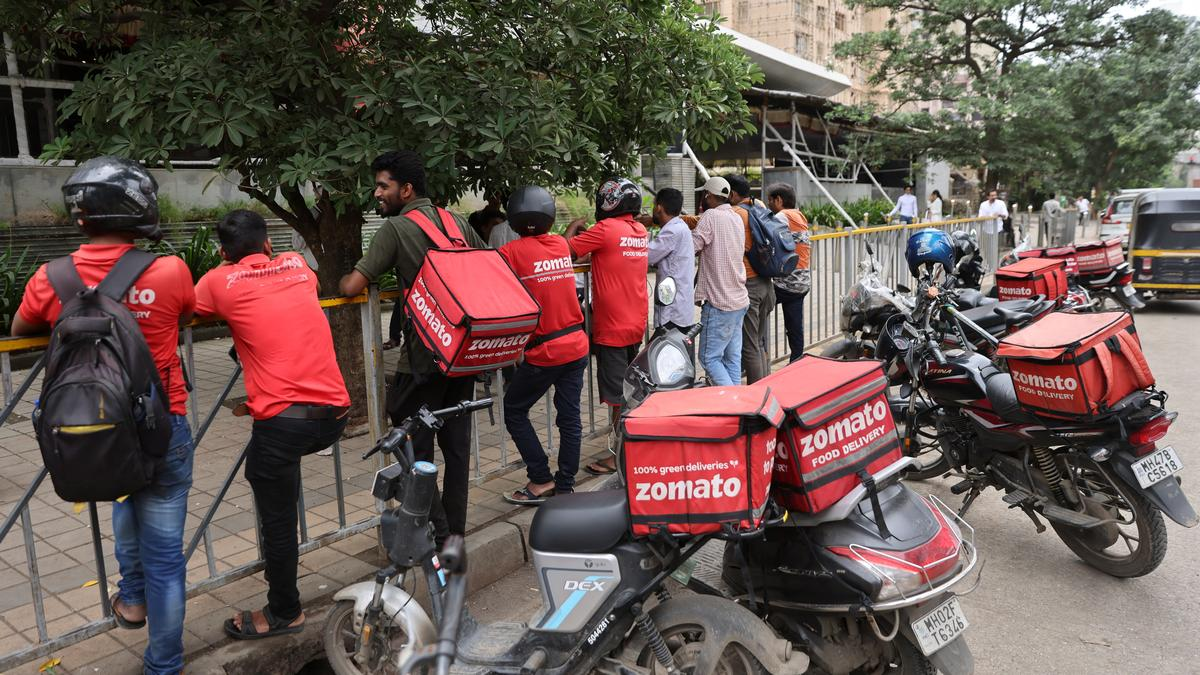
A founder once asked me a question that sounded deceptively simple.
"We're building a marketplace. Are our workers employees or independent contractors?"
The room immediately became quieter.
Not because no one had an opinion, but because everyone understood the answer wasn't universal.
It depended on where the business operated, how the platform functioned, the degree of control it exercised, and the legal framework governing employment in that jurisdiction.
What struck me most wasn't the legal complexity. It was how often business leaders approached the issue as a technical compliance exercise rather than a strategic decision about the kind of organization they wanted to build.
The classification of gig workers affects far more than payroll. It influences flexibility, operating costs, customer experience, worker satisfaction, regulatory obligations, and ultimately, trust.
That's why the conversation continues to evolve around the world.
The question isn't simply whether gig workers are employees or independent contractors.
The more meaningful question is why that distinction matters—and how businesses can create sustainable relationships regardless of the legal model they adopt.
Understanding the Gig Economy
The gig economy includes businesses that connect customers with individuals providing services on a flexible basis.
Common examples include:
- Ride-hailing
- Food delivery
- Grocery delivery
- Home services
- Freelance consulting
- Creative services
- Professional marketplaces
Many workers choose gig platforms because they offer greater flexibility than traditional employment.
Businesses often value the ability to scale their workforce in response to fluctuating demand.
The relationship, however, exists within legal frameworks that vary significantly across countries and industries.
The Two Primary Classifications
Broadly speaking, workers are typically classified as either employees or independent contractors.
While terminology and legal tests differ by jurisdiction, these categories generally carry distinct characteristics.
Employees
Employees usually work within a structured employment relationship.
Employers often provide:
- Regular wages
- Benefits
- Tax withholding
- Training
- Equipment
- Workplace protections
Organizations generally exercise greater control over how work is performed.
Independent Contractors
Independent contractors generally operate as self-employed individuals.
They often:
- Set their own schedules
- Choose which assignments to accept
- Supply their own equipment
- Manage their own taxes
- Work with multiple clients
The degree of independence often becomes an important factor in legal analysis.
Why Classification Matters
Worker classification influences nearly every aspect of a marketplace business.
For workers, it may affect:
- Income stability
- Benefits eligibility
- Tax responsibilities
- Schedule flexibility
- Legal protections
For businesses, it influences:
- Labor costs
- Compliance obligations
- Operational flexibility
- Workforce management
- Long-term scalability
Because the stakes are significant, governments continue refining employment regulations to reflect changing business models.
Legal Standards Differ Around the World
One lesson I've learned while studying digital marketplaces is that there is rarely a universal answer to legal questions involving employment.
Different jurisdictions apply different legal tests.
Some focus primarily on:
- Employer control
- Economic dependence
- Integration into the business
- Independence in performing work
Others consider multiple factors simultaneously.
A worker classified one way in one country could be treated differently elsewhere.
Businesses expanding internationally often need localized legal guidance rather than assuming regulations transfer across borders.
Comparing Employees and Independent Contractors
| Factor | Employee | Independent Contractor |
|---|---|---|
| Work schedule | Often directed by employer | Usually self-directed |
| Tax responsibilities | Employer withholds taxes | Worker generally manages taxes |
| Benefits | Often provided | Typically self-managed |
| Equipment | Frequently employer-provided | Usually worker-provided |
| Work flexibility | More structured | Greater flexibility |
| Multiple clients | Sometimes restricted | Generally permitted |
| Business control | Higher employer oversight | Greater operational independence |
These distinctions are general principles rather than universal legal rules.
Specific requirements vary by jurisdiction.
Why Many Workers Choose Gig Platforms
Public discussions often focus on legal classification.
Workers frequently focus on something different.
Choice.
Many people value gig work because it offers flexibility that traditional employment cannot always provide.
Examples include:
- Choosing working hours
- Supplementing existing income
- Balancing caregiving responsibilities
- Pursuing education
- Building independent businesses
For some, flexibility outweighs predictability.
For others, traditional employment remains the preferred option.
Individual priorities differ.
Why Businesses Use Independent Contractor Models
Marketplace businesses often rely on contractor relationships because they support dynamic supply management.
Benefits may include:
- Flexible staffing
- Faster geographic expansion
- Lower fixed labor costs
- Greater provider autonomy
- Increased marketplace participation
However, these advantages must be balanced with evolving legal requirements and thoughtful workforce policies.
Operational efficiency alone cannot determine workforce strategy.
Customer Expectations Influence the Debate
Interestingly, customers rarely think explicitly about employment classification.
They care about outcomes.
Reliable service.
Professional behavior.
Transparent pricing.
Consistent quality.
Yet those outcomes often depend on workforce engagement.
Satisfied workers frequently create stronger customer experiences.
That connection encourages many businesses to invest more heavily in provider support regardless of legal classification.
Building Strong Relationships Beyond Classification
One observation continues to stand out.
Businesses that treat providers solely as operational resources often struggle with retention.
Organizations that invest in provider success often experience stronger marketplace performance.
Support may include:
- Transparent earnings information
- Educational resources
- Fair dispute resolution
- Clear communication
- Technology that simplifies work
- Responsive support teams
Trust grows through consistent treatment rather than legal terminology alone.
Common Challenges
Marketplace businesses frequently encounter several ongoing challenges.
Regulatory Changes
Employment laws continue evolving in many jurisdictions.
Businesses must remain informed while adapting policies as regulations change.
Operational Consistency
Providing reliable customer experiences while supporting workforce flexibility requires careful operational design.
Worker Retention
Retaining experienced providers often becomes increasingly valuable as marketplaces mature.
Public Expectations
Customers, policymakers, workers, and investors may evaluate workforce practices differently.
Organizations benefit from communicating their approach transparently.
Lessons I've Learned About Workforce Strategy
Early in my career, I assumed workforce classification was primarily a legal issue.
Experience broadened that perspective.
The strongest businesses I've observed think beyond compliance.
They ask:
How do we create opportunities people genuinely value?
How do we support providers effectively?
How do we build customer trust?
How do we create sustainable relationships for everyone participating in the marketplace?
Legal frameworks establish important boundaries.
Business culture determines much of what happens within them.
Organizations that prioritize respect, transparency, and fairness often build stronger ecosystems regardless of the classification model they use.
Looking Ahead
The conversation surrounding gig work continues evolving.
Several long-term trends are shaping the future:
- Continued regulatory refinement
- Greater workforce flexibility
- Expanded platform-based employment
- Increased provider support programs
- Growing use of technology to improve operations
- Ongoing public discussion about worker protections
Rather than converging toward one universal model, different industries and countries may continue adopting different approaches based on local priorities.
Adaptability will remain important.
Conclusion
Whether gig workers are employees or independent contractors depends on the legal standards of the jurisdiction, the nature of the working relationship, and the degree of independence exercised within that relationship. There is no single answer that applies universally across industries or countries.
For businesses, this means workforce strategy should extend beyond legal compliance. Sustainable marketplace growth depends on building systems that support workers, deliver reliable customer experiences, and adapt thoughtfully to changing regulatory environments.
For workers, the decision often involves balancing flexibility, income opportunities, independence, and workplace protections according to individual circumstances and career goals.
Ultimately, the future of the gig economy is unlikely to be defined solely by legal classifications. It will be shaped by organizations that recognize a simple but powerful principle: marketplaces become stronger when the people creating value—customers, providers, and businesses alike—can all participate with confidence, transparency, and trust.
- Arts
- Business
- Computers
- Παιχνίδια
- Health
- Κεντρική Σελίδα
- Kids and Teens
- Money
- News
- Personal Development
- Recreation
- Regional
- Reference
- Science
- Shopping
- Society
- Sports
- Бизнес
- Деньги
- Дом
- Досуг
- Здоровье
- Игры
- Искусство
- Источники информации
- Компьютеры
- Личное развитие
- Наука
- Новости и СМИ
- Общество
- Покупки
- Спорт
- Страны и регионы
- World

 English
 Russian
 French
 Spanish
 Portuguese
 Deutsch
 Turkish
 Dutch
Dutch
 Italiano
 Arabic
 Romaian
 Portuguese (Brazil)