
Why Are Subscription and On-Demand Services So Popular?
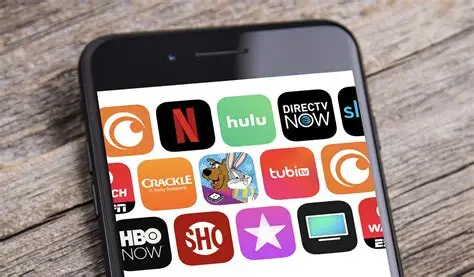
I still remember the first time I noticed the shift.
It wasn’t in a boardroom or a strategy deck. It was in a small, ordinary moment: a friend casually canceled a cable subscription while sitting in a café, then immediately signed up for three streaming services on her phone.
No hesitation. No sense of loss. Just substitution.
When I asked her about it, she shrugged.
“I just want what I want, when I want it.”
That sentence, delivered so casually, captures a deeper structural change in consumer behavior. Subscription and on-demand services didn’t become popular because companies pushed them. They became popular because they aligned with how people increasingly want to experience the world: continuously, flexibly, and without friction.
This isn’t just about convenience. It’s about control.
And control, once experienced, is difficult to give up.
The Shift from Ownership to Access
For most of the 20th century, consumption was built around ownership.
- Buy the DVD
- Own the car
- Purchase the software license
- Subscribe to cable bundles
Ownership meant permanence. It also meant commitment—whether or not the product continued to serve you well.
That model is steadily giving way to something more fluid:
- Streaming instead of purchasing
- Ride access instead of car ownership (for many users)
- Software subscriptions instead of boxed products
- On-demand services instead of scheduled providers
Consumers are not rejecting ownership entirely. They are redefining when ownership matters.
Everything else becomes access.
Why Subscription Models Feel Comfortable
Subscription services reduce decision-making friction.
Instead of repeatedly asking:
- Should I buy this again?
- What’s the best option now?
- Do I need this?
Consumers shift into a different mindset:
- It’s already available
- It’s already paid for
- It’s already part of my system
This psychological shift reduces cognitive load.
One less decision.
One less transaction.
One less moment of uncertainty.
Over time, that reduction compounds into habit.
On-Demand Services Solve a Different Problem: Timing
If subscriptions solve repetition, on-demand services solve timing.
They answer a different question entirely:
“Can I get this exactly when I need it?”
That simple promise reshapes expectations across industries:
- Food arrives when hunger hits
- Transportation arrives when you’re ready
- Services arrive when problems arise
- Content arrives when curiosity strikes
On-demand is not about abundance.
It is about immediacy.
Comparing Subscription and On-Demand Models
| Dimension | Subscription Services | On-Demand Services | Customer Benefit |
|---|---|---|---|
| Payment structure | Recurring fee | Per-use pricing | Predictability vs flexibility |
| Customer intent | Ongoing access | Immediate need | Habit vs urgency |
| Decision frequency | Low | High or variable | Reduced effort vs control |
| Perceived value | Long-term utility | Instant resolution | Continuity vs responsiveness |
| Example industries | Streaming, SaaS, memberships | Delivery, ride-hailing, home services | Access vs execution |
Although they differ structurally, both models reduce friction in different ways.
Subscriptions reduce thinking.
On-demand reduces waiting.
The Psychology Behind Both Models
At the core of both subscription and on-demand models is a simple insight:
People want less friction in daily life.
But friction shows up in different forms:
- Effort
- Time
- Uncertainty
- Decision fatigue
- Inconvenience
Subscription models eliminate repeated effort.
On-demand models eliminate delay.
Together, they cover a large portion of modern consumer needs.
Lessons I’ve Learned About Consumer Behavior
Early in my work studying digital marketplaces, I assumed adoption was driven primarily by price.
Lower cost equals higher adoption.
That assumption quickly broke down.
In interviews and behavioral data, a different pattern emerged.
Consumers consistently prioritized:
- Predictability
- Ease of access
- Reliability
- Control over timing
- Reduction of friction
Price mattered.
But it was rarely the deciding factor alone.
One customer explained it simply:
“I don’t want to plan around services anymore. I want services to plan around me.”
That shift is subtle but powerful.
Why Subscription Fatigue Is Real—but Limited
Critics often point to “subscription fatigue.”
Too many recurring charges.
Too many overlapping services.
Too many monthly commitments.
This is real.
But it doesn’t signal decline. It signals filtering.
Consumers increasingly:
- Keep high-value subscriptions
- Cancel low-value ones
- Rotate services based on need
- Consolidate where possible
Subscriptions that remain tend to deliver continuous perceived value.
The rest get cut quickly.
That discipline actually strengthens the model over time.
Why On-Demand Feels Like Freedom
On-demand services succeed because they remove commitment.
Consumers do not need to:
- Plan ahead
- Schedule repeatedly
- Maintain ongoing relationships
- Commit financially in advance
Instead, they engage only when needed.
That creates a sense of autonomy.
But there is a tradeoff.
Freedom can become dependency.
Once convenience is experienced repeatedly, alternatives begin to feel cumbersome.
The Infrastructure Behind the Experience
Neither model works without significant infrastructure.
Subscription systems require:
- Billing automation
- Retention systems
- Customer lifecycle management
- Content or service continuity
On-demand systems require:
- Real-time logistics
- Matching algorithms
- Dynamic pricing systems
- Supply coordination
- Rapid communication layers
Customers rarely see this infrastructure.
They only see the outcome:
- A show plays instantly
- A car arrives quickly
- A service is completed efficiently
But the complexity behind that simplicity is substantial.
The Hidden Tradeoff: Control vs Simplicity
Both models optimize for something specific:
- Subscription: simplicity over control
- On-demand: control over commitment
But neither gives everything.
Subscription services may reduce choice.
On-demand services may introduce variability in cost or availability.
Consumers constantly navigate this tradeoff without explicitly naming it.
They just decide what feels easier in the moment.
When Subscription and On-Demand Overlap
Interestingly, many modern businesses blend both models.
Examples include:
- Subscription + add-on delivery services
- SaaS platforms with usage-based pricing
- Memberships with on-demand perks
- Hybrid media platforms (subscription + pay-per-view content)
This hybridization reflects a deeper truth:
Consumers want both stability and flexibility.
Not one or the other.
The most successful platforms often learn how to provide both simultaneously.
A Lesson From a Product Team
I once worked with a team trying to decide whether to launch a service as subscription or on-demand.
The debate was intense.
Subscription would stabilize revenue.
On-demand would expand reach.
Eventually, they tested both.
The surprising result wasn’t which model performed better.
It was how customers used them.
Subscription users valued consistency.
On-demand users valued experimentation.
The company didn’t choose a model.
It redesigned the product to support both behaviors.
That shift unlocked growth.
Not because the model changed.
But because the assumptions did.
Why These Models Keep Expanding
Subscription and on-demand services continue growing because they align with three structural shifts:
1. Time Scarcity
People feel increasingly time-constrained.
Services that save time or optimize timing gain value.
2. Digital Friction Reduction
Payment, access, and fulfillment have become easier than ever.
That lowers switching costs.
3. Behavioral Expectation Shifts
Once people experience low-friction systems, they expect them elsewhere.
Standards rise quickly.
Rarely do they fall back.
The Emotional Layer: Reducing Anxiety
Beyond efficiency, both models reduce anxiety.
- Subscriptions reduce “Do I need to remember this?”
- On-demand reduces “How long will this take?”
Modern consumers are not only optimizing for cost or speed.
They are optimizing for mental ease.
That emotional layer is often underestimated in strategy discussions.
The Future: Blurring Boundaries
The line between subscription and on-demand will likely continue to blur.
We already see early signals:
- Subscription services with instant fulfillment options
- On-demand platforms offering membership tiers
- Dynamic pricing layered into subscription models
- Personalized hybrid bundles
The future is not either/or.
It is adaptive systems that respond to context.
Conclusion: Why These Models Win
Subscription and on-demand services are popular for the same underlying reason: they reduce friction in different parts of the consumer experience.
Subscriptions remove repeated decision-making.
On-demand services remove waiting and uncertainty.
Together, they reshape how people interact with products, services, and time itself.
But the deeper reason they endure is not structural.
It is behavioral.
Consumers are not just buying services.
They are buying predictability, control, and simplicity in an increasingly complex world.
And once those expectations are set, they rarely go backward.
The real competition is no longer between companies offering similar services.
It is between experiences that feel effortless—and everything else.
- Arts
- Business
- Computers
- Oyunlar
- Health
- Home
- Kids and Teens
- Money
- News
- Personal Development
- Recreation
- Regional
- Reference
- Science
- Shopping
- Society
- Sports
- Бизнес
- Деньги
- Дом
- Досуг
- Здоровье
- Игры
- Искусство
- Источники информации
- Компьютеры
- Личное развитие
- Наука
- Новости и СМИ
- Общество
- Покупки
- Спорт
- Страны и регионы
- World

 English
 Russian
 French
 Spanish
 Portuguese
 Deutsch
 Dutch
Dutch
 Italiano
 Arabic
 Romaian
 Portuguese (Brazil)
 Greek
Greek