
How Does GPS Technology Support On-Demand Platforms?
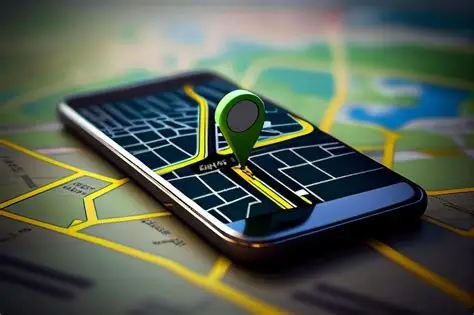
The first time I watched an on-demand service unfold from behind the scenes, I expected to be impressed by sophisticated algorithms. Instead, I found myself fascinated by a blinking blue dot moving across a map.
It represented a delivery driver navigating city streets.
Around that single location signal revolved an astonishing number of decisions. Customers tracked estimated arrival times. Dispatch systems recalculated routes as traffic shifted. Businesses adjusted staffing based on incoming demand. Drivers received updated directions within seconds.
The blue dot seemed almost ordinary.
It wasn't.
It was the foundation of an entire marketplace.
That experience changed the way I think about GPS technology. Most people associate it with navigation, but navigation is only one piece of a much larger story. For on-demand platforms, location is more than a convenience. It is the common language connecting customers, workers, businesses, and software into a coordinated system capable of responding almost instantly to changing conditions.
Without reliable location data, the on-demand economy would still exist—but it would look remarkably different. Requests would take longer to fulfill. Matching would become less accurate. Customers would experience greater uncertainty. Workers would spend more time waiting and less time serving.
GPS technology doesn't simply tell people where they are.
It helps entire marketplaces decide what should happen next.
The On-Demand Economy Depends on Knowing "Where"
Every on-demand transaction begins with a location.
A passenger requests a ride.
A customer orders dinner.
A homeowner schedules an electrician.
A pharmacy dispatches a prescription.
Each request includes an essential question.
Where?
Location determines almost every operational decision that follows. It influences who receives the assignment, how long fulfillment will take, which route should be used, and whether customer expectations can realistically be met.
Without accurate location information, platforms lose much of their ability to coordinate supply and demand efficiently.
GPS transforms geography into actionable data.
GPS Does More Than Provide Directions
Many people think of GPS primarily as a navigation tool.
For on-demand platforms, its role is considerably broader.
Location data continuously feeds multiple systems operating simultaneously.
Matching engines identify nearby workers.
Routing software calculates efficient travel paths.
Customers receive live arrival estimates.
Businesses forecast demand by neighborhood.
Fraud detection systems verify legitimate activity.
Performance analytics evaluate service efficiency.
Navigation is simply the visible outcome.
The larger value lies in coordination.
Real-Time Visibility Changes Customer Expectations
One of the most significant contributions of GPS technology is transparency.
Not long ago, customers often waited with limited information.
A package would arrive "sometime today."
A technician would appear within a four-hour window.
That uncertainty carried hidden costs.
People delayed meetings.
Stayed home unnecessarily.
Repeatedly called customer support for updates.
Today, many on-demand platforms provide continuous visibility into service progress.
Customers can see where their driver is, monitor estimated arrival times, and receive automatic updates when circumstances change.
Visibility creates confidence.
Even short delays become more manageable when customers understand what is happening.
The experience feels more reliable because uncertainty has been reduced.
GPS Makes Smarter Matching Possible
Assigning work involves far more than finding the closest available worker.
Modern platforms evaluate location alongside numerous operational factors.
Distance.
Traffic conditions.
Road closures.
Estimated travel time.
Current workload.
Vehicle type.
Specialized qualifications.
The objective is not simply minimizing distance.
It is maximizing the probability of a successful outcome.
Sometimes the closest worker is not the best choice.
GPS provides the geographic context needed to make those distinctions intelligently.
How GPS Supports Different Functions Across On-Demand Platforms
| Platform Function | GPS Contribution | Customer Benefit | Business Benefit |
|---|---|---|---|
| Driver matching | Identifies nearby workers | Faster service | Higher marketplace efficiency |
| Route optimization | Calculates optimal travel paths | More accurate arrival times | Lower operating costs |
| Live tracking | Displays real-time location | Greater transparency | Fewer support inquiries |
| Demand forecasting | Maps geographic demand trends | Better availability | Smarter resource planning |
| Dynamic pricing | Detects local supply and demand | Faster fulfillment during peak periods | Marketplace balance |
| Fraud prevention | Confirms service locations | Increased trust | Reduced fraudulent activity |
| Performance analytics | Measures travel efficiency | More reliable service | Continuous operational improvement |
| Safety monitoring | Shares live trip locations | Greater customer confidence | Enhanced risk management |
Each function reinforces the others.
Together, they create experiences that feel remarkably coordinated despite involving thousands—or even millions—of simultaneous interactions.
Efficiency Improves for Workers Too
Customers often notice GPS through tracking features.
Workers experience different advantages.
Better navigation reduces unnecessary travel.
Optimized routing minimizes idle time.
Accurate location sharing decreases confusion during pickups.
Fewer wrong turns translate into higher productivity.
Perhaps more importantly, reliable location data allows workers to complete more assignments without increasing working hours.
Efficiency benefits both income potential and customer satisfaction.
That alignment is particularly valuable because successful marketplaces depend on healthy experiences for both sides.
Small Improvements Compound Quickly
One lesson became especially clear while observing operational teams analyze marketplace performance.
Tiny improvements matter.
Reducing average travel time by two minutes may appear insignificant on a single delivery.
Across hundreds of thousands of daily transactions, however, those minutes accumulate into substantial operational gains.
More completed orders.
Lower fuel consumption.
Shorter customer wait times.
Higher worker utilization.
GPS technology enables those incremental improvements because it provides continuous operational feedback rather than occasional snapshots.
The marketplace learns constantly.
GPS Helps Platforms Predict, Not Just Respond
Location data becomes even more valuable when combined with predictive analytics.
Historical movement patterns reveal where future demand is likely to emerge.
Sporting events increase transportation requests.
Office districts experience lunchtime delivery surges.
Residential neighborhoods become busier during evenings.
Weather conditions influence travel behavior.
By recognizing recurring geographic patterns, platforms position workers before requests even arrive.
This changes operations fundamentally.
Instead of reacting to customer demand, businesses begin anticipating it.
Prediction becomes a competitive advantage.
Privacy Matters as Much as Precision
The increasing use of location technology also raises important questions.
Customers appreciate convenience.
They also expect responsible data stewardship.
Workers value operational efficiency.
They likewise care about how location information is collected, stored, and used.
Trust therefore becomes an essential component of GPS-enabled services.
Organizations that communicate clearly about data practices strengthen confidence.
Transparency regarding privacy policies, permission settings, and security protections is no longer optional.
It is part of the customer experience.
Responsible location intelligence creates stronger long-term relationships than unrestricted data collection ever could.
Human Judgment Complements Location Intelligence
GPS can identify the fastest route.
It cannot fully understand every circumstance.
Construction projects appear unexpectedly.
Apartment entrances prove difficult to locate.
Customers modify delivery instructions.
Emergencies alter traffic conditions.
Workers routinely adapt to these realities.
Technology provides recommendations.
People interpret context.
The strongest on-demand platforms recognize that effective operations depend on both computational precision and human judgment.
Neither performs optimally in isolation.
GPS Is Quietly Reshaping Business Strategy
Many organizations initially adopt GPS technology to improve logistics.
Over time, they discover broader strategic value.
Location insights influence expansion decisions.
Service territories evolve.
Pricing models improve.
Operational bottlenecks become visible.
Marketing campaigns become geographically targeted.
What begins as navigation gradually becomes business intelligence.
Location transforms into one of the organization's most valuable operational assets.
The Blue Dot Represents More Than a Location
Returning to that blinking blue dot on the operations dashboard, I now appreciate what it truly represented.
Not merely a driver's position.
A customer's expectation.
A worker's opportunity.
A business promise.
A continuously updating network of decisions connecting people who would otherwise remain strangers.
That realization changed my perspective.
GPS technology is not simply helping people move through cities more efficiently.
It is helping organizations coordinate relationships at remarkable scale.
Location Is Becoming the Foundation of Trust
The future of on-demand platforms will undoubtedly include increasingly sophisticated artificial intelligence, predictive analytics, and automation. Yet many of those innovations depend on one foundational capability: understanding where people and services intersect in real time.
Customers judge platforms by reliability. Workers judge them by fairness and efficiency. Businesses judge them by operational performance. GPS technology quietly supports all three perspectives by reducing uncertainty, improving coordination, and enabling decisions based on current rather than outdated information.
Perhaps its greatest contribution is not speed.
It is confidence.
Confidence that help is nearby.
Confidence that arrival estimates are realistic.
Confidence that businesses can keep the promises they make.
Ultimately, GPS does far more than pinpoint locations on a map. It creates the shared awareness that allows modern marketplaces to function as connected ecosystems rather than isolated transactions. Every accurate location update strengthens coordination. Every optimized route improves efficiency. Every transparent arrival estimate reinforces trust.
The blue dot may seem small.
The relationships it supports are anything but.
- Arts
- Business
- Computers
- Παιχνίδια
- Health
- Κεντρική Σελίδα
- Kids and Teens
- Money
- News
- Personal Development
- Recreation
- Regional
- Reference
- Science
- Shopping
- Society
- Sports
- Бизнес
- Деньги
- Дом
- Досуг
- Здоровье
- Игры
- Искусство
- Источники информации
- Компьютеры
- Личное развитие
- Наука
- Новости и СМИ
- Общество
- Покупки
- Спорт
- Страны и регионы
- World

 English
 Russian
 French
 Spanish
 Portuguese
 Deutsch
 Turkish
 Dutch
Dutch
 Italiano
 Arabic
 Romaian
 Portuguese (Brazil)