
What Is the Pricing Model for PaaS?
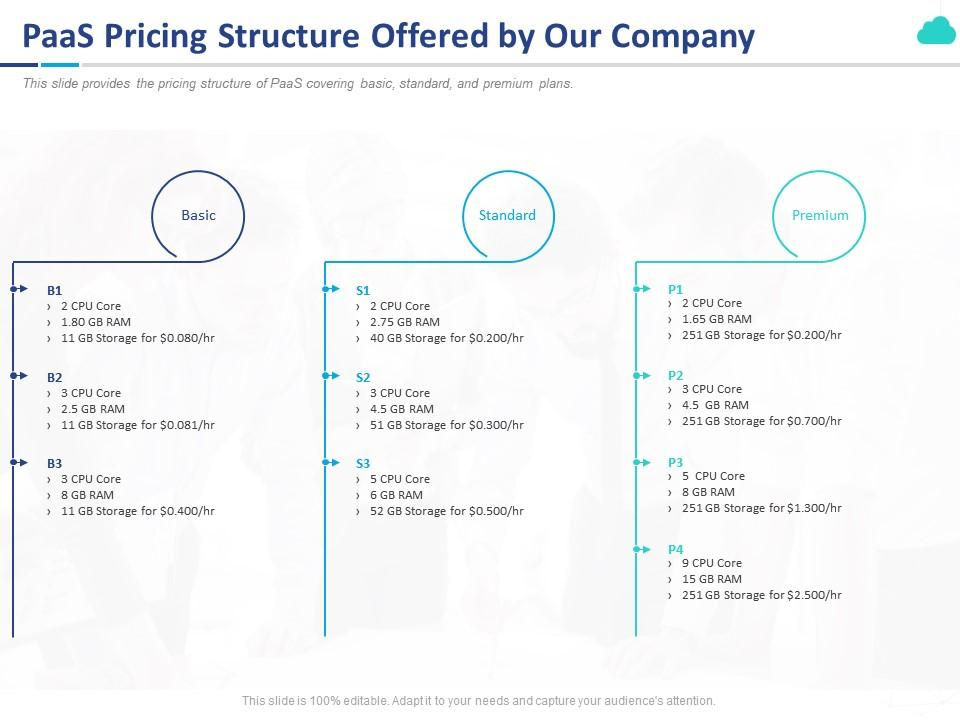
A CFO once joined a product strategy meeting with what seemed like a reasonable request.
He wanted a forecast.
Not revenue.
Not customer growth.
He wanted to know what the company's Platform as a Service costs would look like one year later.
The engineering team exchanged glances.
Someone estimated a few hundred dollars per month.
Another guessed several thousand.
A third argued that it depended entirely on traffic.
All three were partially correct.
And that uncertainty reveals something important about Platform as a Service pricing.
Unlike traditional software licensing, PaaS pricing isn't built around a single metric. It is a living model. One that expands and contracts with application usage, customer adoption, infrastructure requirements, and operational complexity.
This creates both opportunity and confusion.
Organizations gain flexibility because they can pay for what they consume. Yet they also inherit a new challenge: understanding how dozens of pricing variables interact.
So when someone asks, "What is the pricing model for PaaS?", the answer is not a number.
It's a framework.
And understanding that framework can mean the difference between predictable growth and unexpected cloud invoices.
The Core Idea Behind PaaS Pricing
At its foundation, Platform as a Service pricing follows a simple principle:
You pay for access to a managed application environment rather than raw infrastructure alone.
That distinction matters.
Infrastructure as a Service typically charges organizations for virtual machines, storage, and networking resources.
PaaS goes further.
The platform manages operating systems, deployment pipelines, scaling mechanisms, runtime environments, security updates, and often significant portions of operational maintenance.
The result is a different value proposition.
You're not just purchasing computing power.
You're purchasing reduced operational complexity.
And that shift influences how providers structure pricing.
Why PaaS Pricing Feels Different from Traditional Software
Traditional software often follows familiar patterns.
A license fee.
A monthly subscription.
A per-user charge.
PaaS operates differently because applications consume resources dynamically.
One application may receive ten visitors per day.
Another may process millions of API requests per hour.
Charging both customers the same amount would create obvious imbalances.
Instead, most providers blend multiple pricing dimensions together.
Think of PaaS pricing less like a magazine subscription and more like a utility service.
Consumption matters.
Growth matters.
Behavior matters.
The bill evolves alongside usage.
The Four Primary PaaS Pricing Models
Although every provider structures pricing differently, most platforms rely on four foundational approaches.
1. Resource-Based Pricing
This is the most common model.
Customers pay according to infrastructure resources consumed.
Typical metrics include:
- CPU allocation
- Memory usage
- Storage capacity
- Runtime hours
For example, an application requiring 512 MB of RAM costs less than one requiring 8 GB.
The logic is straightforward.
More resources create higher operating costs for the provider.
Resource-based pricing aligns expenses with consumption.
It also creates predictability.
Organizations can estimate costs based on deployment architecture rather than user behavior alone.
2. Usage-Based Pricing
Some platforms focus heavily on actual application activity.
Charges may depend on:
- Requests processed
- Container execution time
- Database transactions
- API calls
- Network traffic
Google Cloud Run provides a useful example of this approach.
Applications incur costs based on actual execution and resource utilization rather than merely existing.
This model appeals to organizations with fluctuating workloads.
Low usage generates low costs.
High usage generates higher costs.
The relationship feels intuitive.
3. Tier-Based Pricing
Many PaaS vendors package capabilities into predefined plans.
Examples include:
- Starter
- Professional
- Business
- Enterprise
Each tier includes specific resource limits, features, and support levels.
This model simplifies purchasing decisions.
Customers select a package that aligns with their needs.
The tradeoff is reduced granularity.
Organizations may occasionally pay for capacity they have not yet fully utilized.
4. Hybrid Pricing
Increasingly, providers combine multiple approaches.
A platform may charge:
- A base monthly subscription
- Additional usage fees
- Premium support costs
- Add-on service expenses
This hybrid model reflects the reality of modern cloud applications.
Applications consume different resources in different ways.
A blended pricing structure captures those variations more effectively.
How Major PaaS Providers Structure Pricing
While exact rates change frequently, the underlying pricing philosophies remain relatively consistent.
Comparative Pricing Model Overview
| Provider | Primary Pricing Method | Billing Style | Best Fit |
|---|---|---|---|
| Heroku | Resource-based tiers | Fixed monthly plans | Simplicity-focused teams |
| Render | Resource-based | Predictable monthly pricing | Startups and SaaS companies |
| Railway | Usage-based + credits | Consumption-driven | Development and experimentation |
| Google Cloud Run | Usage-based | Pay-per-use | Variable workloads |
| AWS Elastic Beanstalk | Infrastructure consumption | Resource billing | AWS-centric organizations |
| Azure App Service | Tier-based + resources | Fixed plans | Enterprise environments |
| Platform.sh | Environment-based | Subscription tiers | Multi-environment workflows |
| OpenShift | Enterprise subscriptions | Contract pricing | Large organizations |
The differences are revealing.
Some platforms optimize for predictability.
Others optimize for efficiency.
Neither approach is inherently superior.
The right choice depends on organizational priorities.
The Invisible Layer: What You're Really Paying For
Many discussions about PaaS pricing focus narrowly on compute resources.
That misses a significant portion of the value equation.
When organizations purchase PaaS, they are also purchasing:
- Deployment automation
- Environment management
- Security patching
- Scaling infrastructure
- Monitoring capabilities
- Operational simplification
These services rarely appear as separate line items.
Yet they represent substantial value.
This distinction explains why PaaS sometimes appears more expensive than self-managed infrastructure.
The comparison often overlooks the operational labor absorbed by the platform.
A Lesson Learned from a Pricing Review
Several years ago, I worked with a software company that became concerned about increasing cloud costs.
The leadership team initiated a review.
Their PaaS spending had grown significantly over twelve months.
At first glance, the trend looked alarming.
The finance team focused on invoices.
The engineering team focused on outcomes.
As we examined the data, an interesting pattern emerged.
Customer usage had tripled.
Deployment frequency had doubled.
Infrastructure incidents had decreased dramatically.
Developer onboarding time had shortened.
The platform was costing more because the business was creating more value.
The invoice had increased.
The efficiency gains had increased even faster.
That experience reinforced an important lesson.
PaaS pricing should rarely be evaluated in isolation.
The cost side of the equation matters.
The productivity side matters equally.
The Hidden Variables That Influence Pricing
Two organizations running seemingly similar applications can receive very different invoices.
Why?
Because PaaS pricing responds to multiple variables simultaneously.
Application Architecture
Monolithic applications often consume resources differently than microservices.
Containerized architectures introduce additional considerations.
The technical design influences consumption patterns.
Traffic Volume
User growth affects:
- Compute consumption
- Database activity
- Bandwidth usage
- Caching requirements
Growth creates value.
It also creates costs.
Geographic Distribution
Applications operating across multiple regions typically require additional infrastructure resources.
Global availability rarely comes without expense.
Compliance Requirements
Security, governance, auditing, and regulatory controls often influence platform selection and pricing.
Enterprise-grade requirements frequently carry premium costs.
Predictable Pricing vs. Elastic Pricing
One of the most important distinctions in PaaS economics involves predictability.
Some organizations value stable invoices.
Others prioritize maximum efficiency.
These preferences often lead to different platform choices.
Predictable Pricing
Fixed plans create budgeting confidence.
Finance teams appreciate consistency.
Unexpected traffic spikes do not necessarily trigger immediate invoice increases.
However, organizations may pay for unused capacity.
Elastic Pricing
Usage-based platforms maximize efficiency.
Customers pay closer to actual consumption.
The tradeoff is variability.
Monthly expenses fluctuate.
Forecasting becomes more challenging.
Neither model is universally superior.
The choice depends on organizational priorities and risk tolerance.
Why Pricing Complexity Increases with Growth
Early-stage applications often enjoy remarkably simple economics.
One application.
One environment.
Minimal traffic.
Minimal complexity.
Growth changes everything.
Soon organizations add:
- Development environments
- Staging environments
- Production redundancy
- Monitoring systems
- Managed databases
- Message queues
- Security services
Each addition introduces new pricing layers.
The platform itself may remain straightforward.
The ecosystem surrounding the platform becomes increasingly sophisticated.
This is why mature cloud spending discussions focus on total platform costs rather than application hosting alone.
The Strategic Purpose Behind PaaS Pricing
Viewed narrowly, pricing determines revenue for providers.
Viewed strategically, pricing shapes customer behavior.
Free tiers encourage experimentation.
Usage-based models encourage adoption.
Enterprise contracts encourage long-term commitments.
Pricing is not merely an accounting mechanism.
It is a design decision.
It influences how customers engage with the platform.
The most successful providers understand this deeply.
They structure pricing not only to capture value but also to create it.
How Organizations Should Evaluate PaaS Pricing
The mistake many teams make is focusing exclusively on monthly platform charges.
A more comprehensive evaluation framework includes four categories:
Direct Costs
The actual invoice.
Subscriptions.
Resources.
Storage.
Bandwidth.
Operational Costs
Infrastructure management.
Deployment complexity.
Maintenance activities.
Productivity Impact
Developer efficiency.
Onboarding speed.
Release frequency.
Risk Reduction
Reliability improvements.
Security enhancements.
Compliance support.
Organizations that evaluate all four dimensions often reach different conclusions than those focused solely on infrastructure expenses.
Conclusion: The Most Important Metric Isn't the Monthly Bill
When people ask, "What is the pricing model for PaaS?" they often expect a technical answer.
Resource pricing.
Usage billing.
Subscription tiers.
Consumption metrics.
Those elements matter.
But they tell only part of the story.
The deeper reality is that PaaS pricing reflects a broader exchange.
Organizations pay providers to absorb complexity.
To automate operations.
To reduce friction.
To help developers spend less time managing infrastructure and more time creating value.
That is why two companies can pay identical platform fees and experience entirely different returns on investment.
One sees expense.
The other sees leverage.
And that may be the most useful way to think about PaaS pricing.
Not as a cloud bill.
Not as a subscription.
Not as a collection of resource metrics.
But as an investment in organizational focus.
Because in modern software organizations, infrastructure is abundant.
Focused attention is not.
And the pricing model that matters most is the one that helps your team direct that attention where it creates the greatest impact.
- Arts
- Business
- Computers
- Игры
- Health
- Главная
- Kids and Teens
- Деньги
- News
- Personal Development
- Recreation
- Regional
- Reference
- Science
- Shopping
- Society
- Sports
- Бизнес
- Деньги
- Дом
- Досуг
- Здоровье
- Игры
- Искусство
- Источники информации
- Компьютеры
- Личное развитие
- Наука
- Новости и СМИ
- Общество
- Покупки
- Спорт
- Страны и регионы
- World

 English
 French
 Spanish
 Portuguese
 Deutsch
 Turkish
 Dutch
Dutch
 Italiano
 Arabic
 Romaian
 Portuguese (Brazil)
 Greek
Greek