
How Do I Improve Store Efficiency? The Retail Question That Isn’t Really About Efficiency
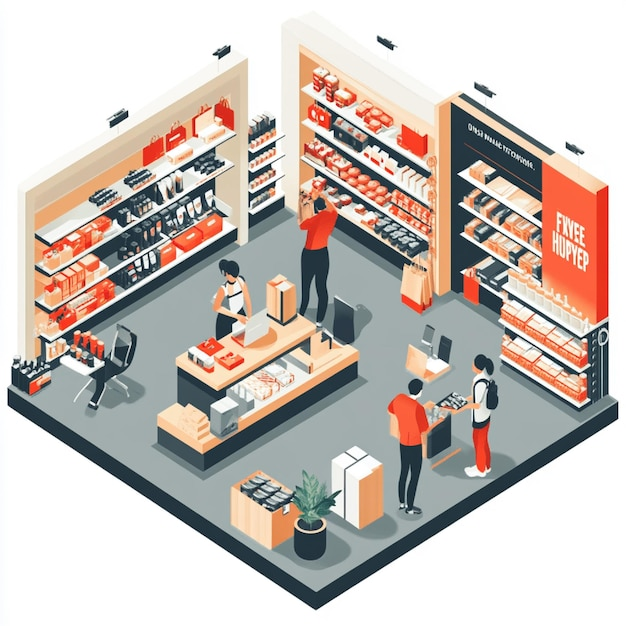
Walk into two stores selling nearly identical products.
The first feels effortless.
Employees seem available without hovering. Shelves are stocked. Checkout lines move quickly. Merchandise is easy to find. Questions receive immediate answers. Customers flow naturally through the space.
The second store feels strangely exhausting.
Customers wander in search of products. Associates appear busy but unhelpful. Inventory sits in carts waiting to be shelved. Checkout lines grow. Small frustrations accumulate.
Both stores may occupy similar square footage.
Both may carry comparable merchandise.
Both may employ roughly the same number of people.
Yet one consistently outperforms the other.
Why?
Many executives would answer with a familiar phrase: operational efficiency.
The answer is correct—but incomplete.
Because store efficiency is not simply about doing things faster. It is about doing the right things in ways that create value for customers while minimizing wasted effort. Speed matters. Productivity matters. Cost control matters. Yet none of these objectives exist independently.
Retail efficiency, at its core, is the art of reducing friction.
Friction for customers.
Friction for employees.
Friction for inventory.
Friction for information.
The stores that excel are not necessarily the busiest or the most technologically advanced. They are often the ones that have systematically removed obstacles from the shopping experience.
And that distinction changes everything.
Store Efficiency Is a Customer Experience Issue
When people discuss store efficiency, the conversation often begins with labor costs.
That is understandable.
Labor represents one of retail’s largest operating expenses.
Yet focusing exclusively on labor can be misleading.
Customers do not experience labor costs.
They experience outcomes.
A customer notices whether shelves are stocked.
A customer notices whether checkout takes two minutes or twelve.
A customer notices whether finding assistance feels easy or impossible.
Efficiency therefore becomes visible through customer experience.
The most efficient stores often feel less efficient from the outside because employees are spending time helping shoppers rather than constantly reacting to operational breakdowns.
The goal is not maximum activity.
The goal is maximum effectiveness.
Those are very different concepts.
Understanding Where Inefficiency Actually Lives
Many retailers attempt to improve efficiency by addressing symptoms.
The root causes frequently remain untouched.
Store inefficiency typically emerges from several recurring areas:
- Poor inventory visibility
- Ineffective labor allocation
- Inefficient store layouts
- Weak communication systems
- Inconsistent operational processes
- Technology fragmentation
Notice what is absent from that list.
Employees.
Retail organizations sometimes blame associates for poor execution when the underlying problem is process design.
If systems create unnecessary complexity, even highly capable teams struggle.
Efficiency improves when retailers remove obstacles rather than simply demand greater effort.
The Hidden Cost of Operational Friction
Retail inefficiencies often appear minor when viewed individually.
A delayed inventory update.
A missing price tag.
An understaffed checkout lane.
An associate searching for product information.
Each incident seems insignificant.
Collectively, they become expensive.
Small inefficiencies compound throughout the day.
Customers wait longer.
Employees become frustrated.
Sales opportunities disappear.
Labor productivity declines.
The challenge is that friction rarely appears on financial statements as a single line item.
Its effects are dispersed across multiple metrics.
That makes it easy to overlook.
The strongest operators actively search for friction because they understand its cumulative impact.
Inventory Accuracy Is an Efficiency Multiplier
Few factors influence store efficiency more than inventory accuracy.
When inventory records are unreliable, operational consequences emerge quickly.
Employees spend time searching for products.
Customers receive conflicting availability information.
Replenishment becomes inconsistent.
Stockouts increase.
Productivity declines.
Accurate inventory creates a foundation for operational excellence.
Without it, efficiency initiatives often produce disappointing results.
Operational Impact of Inventory Accuracy
| Inventory Condition | Employee Productivity | Customer Experience | Operational Cost |
|---|---|---|---|
| High Accuracy | Faster task completion | Reliable availability | Lower |
| Moderate Accuracy | Occasional disruptions | Some frustration | Moderate |
| Low Accuracy | Frequent searching and corrections | Stockouts and confusion | High |
| Highly Inaccurate | Constant operational interruptions | Poor trust and satisfaction | Very High |
The table illustrates an important reality.
Inventory accuracy influences far more than inventory management.
It affects nearly every store function.
Labor Efficiency Is About Allocation, Not Reduction
Retail leaders often ask how to reduce labor costs.
A more productive question is how to deploy labor effectively.
These are not necessarily the same objective.
Cutting labor may improve short-term expenses.
It can also damage customer experience.
The strongest retailers focus on labor alignment.
They ensure employees are present when customer demand peaks and avoid excessive staffing when traffic slows.
Questions Efficient Retailers Ask
- When do customers actually need assistance?
- Which tasks consume excessive associate time?
- Are employees spending time on customer-facing activities?
- What recurring tasks could be simplified?
- Where do operational bottlenecks emerge?
Efficiency emerges from alignment.
Not austerity.
This distinction is frequently overlooked.
Why Store Layout Matters More Than Most Retailers Realize
Store layout is often discussed as a merchandising issue.
It is equally an efficiency issue.
Poor layouts create unnecessary movement.
Employees travel farther to complete tasks.
Customers struggle to locate products.
Congestion develops in high-traffic areas.
Checkout queues interfere with shopping flow.
Efficient layouts reduce these challenges.
The objective is not simply maximizing product exposure.
It is minimizing unnecessary effort.
Both customers and employees benefit.
Characteristics of Efficient Store Layouts
- Logical category organization
- Clear sightlines
- Balanced traffic flow
- Accessible service points
- Strategic checkout placement
The best layouts feel intuitive.
Customers rarely notice them.
That is precisely the point.
My Lesson Learned About Store Efficiency
Several years ago, I worked with a retailer determined to improve store productivity.
Leadership focused heavily on labor metrics.
They measured tasks completed per hour, staffing levels, and labor utilization rates.
The numbers improved.
Customer satisfaction did not.
In fact, it declined.
After spending time observing store operations, the explanation became obvious.
Employees were optimizing for task completion rather than customer engagement.
Associates rushed to finish assignments while customers struggled to find assistance.
The organization had become more efficient operationally while becoming less effective commercially.
That experience reinforced an important lesson.
Efficiency should support customer value.
When efficiency becomes disconnected from customer outcomes, the metric loses meaning.
Retail exists to serve customers, not spreadsheets.
Standardization Creates Predictability
One hallmark of highly efficient stores is consistency.
Tasks are performed similarly across locations.
Processes are documented.
Expectations are clear.
This consistency reduces variation.
Variation often creates inefficiency.
Consider inventory receiving procedures.
If every store handles deliveries differently, execution quality fluctuates.
Training becomes more difficult.
Errors become more common.
Standardized processes reduce these risks.
Areas That Benefit from Standardization
- Receiving inventory
- Shelf replenishment
- Store opening procedures
- Store closing procedures
- Customer service protocols
- Checkout processes
Standardization creates predictability.
Predictability supports efficiency.
Technology Improves Efficiency When It Eliminates Work
Retail technology investments continue to expand.
Yet technology alone does not guarantee efficiency.
Many retailers introduce systems that create additional complexity rather than reducing it.
The most effective technologies remove work.
Examples include:
- Mobile inventory lookup tools
- Automated replenishment systems
- Self-checkout solutions
- Workforce scheduling platforms
- Real-time reporting dashboards
The key question is simple:
Does the technology reduce effort or merely relocate it?
If employees must spend additional time managing technology, efficiency gains may prove elusive.
Technology should simplify operations.
Not complicate them.
The Checkout Experience Remains Critical
Retailers sometimes underestimate the importance of checkout efficiency.
Customers certainly do not.
A smooth shopping journey can be undermined by a frustrating payment experience.
Long checkout lines generate disproportionate dissatisfaction because they occur at the conclusion of the shopping trip.
Customers have already made purchasing decisions.
Waiting feels unnecessary.
Efficient checkout operations typically emphasize:
- Queue management
- Staffing flexibility
- Mobile checkout options
- Self-service capabilities
- Payment simplicity
Reducing checkout friction often delivers immediate customer satisfaction benefits.
Communication Is an Operational Asset
Store efficiency depends heavily on information flow.
Employees need accurate information.
Managers need visibility.
Customers need clarity.
Breakdowns in communication create inefficiencies that ripple throughout the organization.
Examples include:
- Pricing discrepancies
- Promotion misunderstandings
- Inventory confusion
- Scheduling conflicts
- Task duplication
Strong communication systems reduce uncertainty.
Reduced uncertainty improves execution.
The relationship is straightforward but frequently underestimated.
Measuring Store Efficiency Properly
Retailers often rely on a limited set of operational metrics.
That approach can create blind spots.
Store efficiency should be evaluated across multiple dimensions.
Essential Efficiency Metrics
Sales Per Labor Hour
Measures workforce productivity relative to revenue generation.
Inventory Turnover
Evaluates inventory utilization efficiency.
Stockout Rate
Reflects inventory availability performance.
Average Checkout Time
Measures transaction efficiency.
Customer Satisfaction Scores
Captures customer perception.
Conversion Rate
Measures how effectively traffic converts into purchases.
Together, these metrics provide a more balanced view than any single measure alone.
Efficiency is multidimensional.
Measurement should reflect that reality.
Employee Engagement and Efficiency Are Connected
Retail efficiency discussions often emphasize systems and processes.
People matter just as much.
Engaged employees generally:
- Solve problems faster
- Deliver stronger customer service
- Adapt more effectively
- Contribute operational insights
- Make fewer errors
Disengaged employees frequently create hidden costs.
Turnover increases.
Training expenses rise.
Execution quality declines.
The most efficient stores are rarely staffed by exhausted employees operating under constant pressure.
They are often staffed by teams who understand expectations and possess the tools needed to succeed.
Efficiency and engagement are not competing objectives.
They reinforce one another.
The Future of Store Efficiency Is Adaptive
Historically, efficiency focused on standardization.
That remains important.
Yet modern retail environments require adaptability as well.
Customer expectations evolve rapidly.
Traffic patterns shift.
Demand fluctuates.
Operational models must respond.
The most successful retailers combine consistency with flexibility.
Processes remain stable.
Execution remains responsive.
This balance allows organizations to maintain efficiency while adapting to changing conditions.
Rigid systems struggle.
Adaptive systems endure.
Conclusion: Efficiency Is the Elimination of Friction
When retailers ask, “How do I improve store efficiency?” they often expect discussions about labor productivity, automation, or cost reduction.
Those elements matter.
But they represent only part of the story.
The deeper challenge involves identifying and removing friction wherever it exists.
Friction in inventory systems.
Friction in store layouts.
Friction in communication.
Friction in checkout processes.
Friction in customer journeys.
The most efficient stores are not necessarily the fastest. They are the stores where customers accomplish their goals effortlessly and employees perform their responsibilities without unnecessary obstacles.
That distinction is crucial.
Because efficiency is not ultimately measured by how hard people work.
It is measured by how little unnecessary work remains.
And perhaps that is the most revealing truth in retail operations.
Store efficiency is not about squeezing more activity into the day.
It is about creating an environment where every action contributes meaningfully to customer value.
When that happens, efficiency ceases to feel like an operational objective.
It becomes a competitive advantage.
- Arts
- Business
- Computers
- Juegos
- Health
- Home
- Kids and Teens
- Money
- News
- Personal Development
- Recreation
- Regional
- Reference
- Science
- Shopping
- Society
- Sports
- Бизнес
- Деньги
- Дом
- Досуг
- Здоровье
- Игры
- Искусство
- Источники информации
- Компьютеры
- Личное развитие
- Наука
- Новости и СМИ
- Общество
- Покупки
- Спорт
- Страны и регионы
- World

 English
 Russian
 French
 Portuguese
 Deutsch
 Turkish
 Dutch
Dutch
 Italiano
 Arabic
 Romaian
 Portuguese (Brazil)
 Greek
Greek
