
What Is Retail Profit Margin?
Retail has a habit of fooling the eye.
Walk into a luxury boutique and see a handbag priced at $2,000. The assumption arrives almost instantly: the retailer must be making a fortune. Then walk into a warehouse club selling pallets of paper towels on razor-thin pricing and assume the opposite. Yet retail economics rarely rewards assumptions. Some retailers thrive while operating on margins that would make other industries nervous. Others charge premium prices and still struggle to generate meaningful profits.
That paradox sits at the heart of retail profit margin.
When I first began studying retail strategy, I made the same mistake many consumers make. I focused on prices. High prices suggested high profits. Low prices suggested low profits. The more I analyzed retail businesses, however, the more I realized that price is only one piece of a much larger puzzle. Profitability depends on inventory turnover, customer acquisition costs, operating expenses, merchandising decisions, and a retailer’s ability to create value that customers are willing to pay for.
Profit margin is not simply an accounting metric. It is a window into how effectively a retailer turns customer demand into financial performance.
Understanding Retail Profit Margin
Retail profit margin measures how much profit a retailer keeps from its sales revenue after accounting for various costs.
At its most basic level, profit margin answers a simple question:
For every dollar of sales, how many cents remain as profit?
The calculation is straightforward:
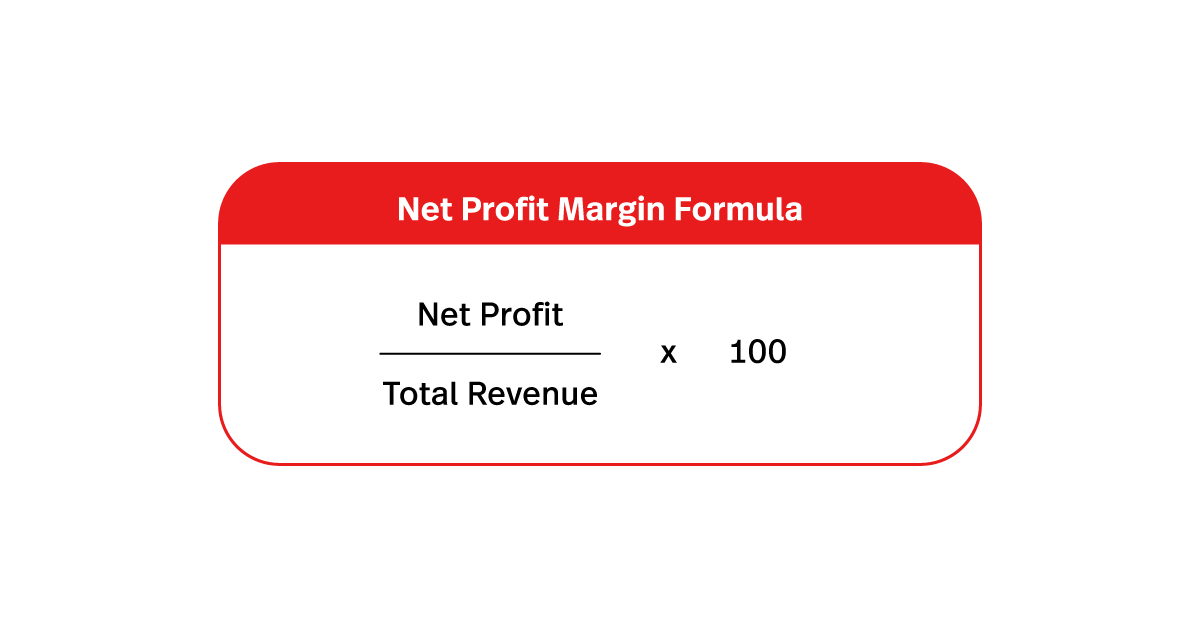
Profit Margin (%) = (Profit ÷ Revenue) × 100
If a retailer generates $1 million in revenue and earns $100,000 in profit, its profit margin is 10%.
What makes retail fascinating is that two retailers can generate identical revenue and arrive at dramatically different profit margins.
One retailer may have superior inventory management. Another may negotiate better supplier contracts. A third may enjoy stronger brand equity, allowing it to command higher prices without reducing demand.
The number itself matters. The story behind the number matters even more.
Gross Profit Margin vs. Net Profit Margin
One of the most common sources of confusion in retail is the distinction between gross profit margin and net profit margin.
They are related, but they tell very different stories.
Gross Profit Margin
Gross profit margin focuses on the relationship between sales and the direct cost of goods sold (COGS).
Gross Margin = ((Revenue – Cost of Goods Sold) ÷ Revenue) × 100
Imagine a retailer sells a jacket for $100.
- Cost to acquire the jacket: $60
- Selling price: $100
- Gross profit: $40
The gross margin equals 40%.
This metric reveals how effectively a retailer prices merchandise relative to product costs.
Net Profit Margin
Net profit margin goes much further.
It accounts for:
- Rent
- Payroll
- Marketing
- Technology investments
- Utilities
- Distribution expenses
- Administrative costs
- Taxes
A retailer may enjoy a healthy gross margin but still produce a weak net margin if operating expenses become excessive.
That distinction explains why retailers often obsess over operational efficiency. Selling products profitably is important. Running the business efficiently is equally important.
Why Retail Profit Margin Matters
Profit margin serves as one of retail’s most important performance indicators because it reflects strategic choices.
Consider three fundamental questions:
- Can the retailer charge premium prices?
- Can the retailer control costs?
- Can the retailer scale efficiently?
The answers reveal whether a business model is sustainable.
A retailer with consistently shrinking margins may be facing competitive pressure, rising costs, or weakening customer loyalty.
Conversely, expanding margins often indicate stronger brand positioning, improved operational execution, or both.
This is where retail becomes particularly interesting. Customers rarely think about margins. Retail executives think about little else.
Typical Retail Profit Margins Across Categories
Profit margins vary dramatically by retail sector.
A luxury fashion brand operates under very different economic realities than a grocery chain.
The comparison below illustrates the variation.
| Retail Category | Typical Gross Margin | Typical Net Margin |
|---|---|---|
| Grocery Stores | 20%–35% | 1%–3% |
| Discount Retailers | 20%–30% | 2%–5% |
| Department Stores | 30%–45% | 3%–8% |
| Consumer Electronics | 15%–30% | 1%–5% |
| Specialty Apparel | 40%–60% | 5%–12% |
| Beauty Retail | 35%–65% | 6%–15% |
| Luxury Goods | 50%–80% | 10%–25% |
| Home Furnishings | 35%–55% | 4%–10% |
The table reveals a critical retail truth:
High sales volume and high profit margins rarely occur together.
Grocery retailers sell enormous quantities but retain very little profit per transaction. Luxury retailers sell fewer units but often capture significantly larger margins.
Neither model is inherently superior. Success depends on execution.
The Margin-Volume Tradeoff
One of the most enduring tensions in retail strategy is the tradeoff between margin and volume.
Retailers generally pursue one of two paths.
Higher Margin Strategy
Retailers pursuing higher margins emphasize:
- Brand differentiation
- Exclusive products
- Premium experiences
- Strong emotional connections
Customers pay more because they perceive greater value.
Think about prestige beauty brands or luxury fashion houses. Their goal is not necessarily maximizing transaction volume. Their goal is maximizing perceived value.
Higher Volume Strategy
Volume-oriented retailers focus on:
- Competitive pricing
- Efficient operations
- Rapid inventory turnover
- Broad customer reach
Warehouse clubs and discount chains exemplify this approach.
The margin on each sale may be modest, but the cumulative effect of millions of transactions creates substantial profitability.
The most successful retailers understand precisely where they sit on this spectrum and align every decision accordingly.
How Retailers Improve Profit Margins
Improving profit margin sounds simple. In practice, it requires balancing competing priorities.
Raise prices too aggressively, and demand may fall.
Cut costs too deeply, and the customer experience may suffer.
Successful retailers usually improve margins through a combination of initiatives.
Better Inventory Management
Inventory represents one of retail’s largest investments.
Excess inventory creates markdowns.
Insufficient inventory creates missed sales.
Strong retailers continuously refine forecasting models to maintain optimal inventory levels.
The goal is remarkably elegant: have the right product in the right place at the right time.
Strategic Pricing
Pricing remains one of the most powerful levers available to retailers.
Yet pricing is often misunderstood.
Customers do not evaluate prices in isolation. They evaluate them relative to perceived value.
A retailer that strengthens brand equity can frequently increase margins without triggering significant customer resistance.
Supplier Negotiations
Retailers with scale often gain leverage with suppliers.
Improved purchasing terms can reduce product costs, expanding gross margins even when selling prices remain unchanged.
This advantage helps explain why large retailers often enjoy economic benefits unavailable to smaller competitors.
Private Label Expansion
Private-label products frequently generate higher margins than national brands.
Because retailers control sourcing, packaging, and positioning, they capture a larger share of the value chain.
Many leading retailers increasingly view private-label development as both a margin opportunity and a differentiation strategy.
A Lesson I Learned About Margins
Years ago, while analyzing a specialty retail concept, I became captivated by its impressive gross margins.
The numbers looked extraordinary.
Customers loved the merchandise. Prices were strong. Product margins exceeded many competitors.
Then I looked deeper.
Store labor costs were climbing. Marketing expenditures had ballooned. Inventory turnover had slowed considerably.
The result was sobering. Despite enviable gross margins, net profitability lagged behind several less glamorous competitors.
That experience reinforced a lesson I have carried ever since: metrics rarely speak alone.
Retail leaders who focus exclusively on one number often miss the broader economic story.
Profit margin gains meaning only when viewed within the context of customer demand, operational efficiency, and long-term strategy.
The Relationship Between Customer Experience and Profit Margin
At first glance, customer experience and profit margin may seem unrelated.
One concerns shoppers.
The other concerns financial statements.
In reality, they are deeply connected.
Exceptional customer experiences often create:
- Higher purchase frequency
- Greater loyalty
- Increased basket size
- Reduced price sensitivity
Each outcome contributes positively to profitability.
This relationship explains why leading retailers invest heavily in store design, digital capabilities, employee training, and loyalty programs.
The objective is not simply delight.
The objective is profitable delight.
That distinction matters.
Retailers must generate experiences customers value while maintaining economic discipline.
When those forces align, margins improve naturally.
Common Mistakes When Evaluating Retail Profit Margins
Several misconceptions repeatedly emerge in discussions about retail profitability.
Assuming Higher Margins Always Mean Better Performance
A retailer with a 20% margin is not automatically healthier than one with a 5% margin.
Context matters.
A high-margin retailer with stagnant sales may face challenges that a lower-margin, rapidly growing retailer does not.
Ignoring Inventory Turnover
Profit margin alone provides an incomplete picture.
A retailer generating modest margins but selling inventory quickly can outperform a retailer with stronger margins and slower turnover.
Retail success often depends on the interaction between margin and velocity.
Overlooking Industry Differences
Comparing grocery margins to luxury margins creates misleading conclusions.
Every category operates under different customer expectations, competitive pressures, and cost structures.
Meaningful analysis requires category-specific benchmarks.
Retail Profit Margin in an Omnichannel World
Modern retail has become increasingly complex.
Stores, websites, mobile apps, social commerce platforms, fulfillment centers, and last-mile delivery networks all influence profitability.
A sale that appears profitable at first glance may become less attractive once shipping, returns, and fulfillment costs enter the equation.
This complexity has pushed retailers toward more sophisticated margin analysis.
Instead of evaluating profitability at the company level alone, many retailers now examine margins by:
- Product category
- Customer segment
- Channel
- Geographic market
- Individual transaction
The result is a more nuanced understanding of where value is truly created.
Retail profitability today is less about maximizing sales and more about optimizing profitable sales.
Conclusion: The Most Important Number Is Never Just a Number
Retail profit margin appears deceptively simple. A percentage. A formula. A line on a financial statement.
Yet beneath that figure lies an intricate web of strategic decisions.
Profit margin reflects pricing power. It reflects operational discipline. It reflects inventory management, supplier relationships, customer loyalty, and brand strength. It captures the consequences of thousands of choices made throughout the organization.
What makes retail endlessly fascinating is that there is no universal margin formula for success. A luxury retailer and a discount chain can both thrive while operating under completely different economics. The winners are not necessarily those with the highest margins. They are the retailers that understand the relationship between value creation and value capture.
That is the provocative reality at the center of modern retail: customers never buy margins. They buy products, experiences, convenience, status, solutions, and trust. Profit margins emerge as the financial residue of delivering those things better than competitors.
And that is why retail profit margin is far more than an accounting measure. It is a report card on strategy itself.
- Arts
- Business
- Computers
- Spiele
- Health
- Startseite
- Kids and Teens
- Geld
- News
- Personal Development
- Recreation
- Regional
- Reference
- Science
- Shopping
- Society
- Sports
- Бизнес
- Деньги
- Дом
- Досуг
- Здоровье
- Игры
- Искусство
- Источники информации
- Компьютеры
- Личное развитие
- Наука
- Новости и СМИ
- Общество
- Покупки
- Спорт
- Страны и регионы
- World

 English
 Russian
 French
 Spanish
 Portuguese
 Turkish
 Dutch
Dutch
 Italiano
 Arabic
 Romaian
 Portuguese (Brazil)
 Greek
Greek
