
What Is Experiential Retail? When Stores Become Stages, Classrooms, and Communities
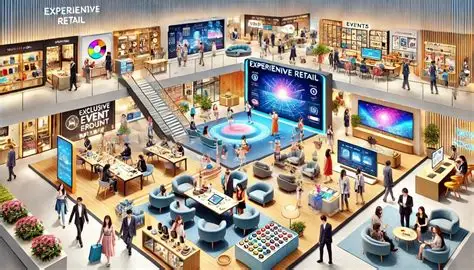
Retail has a problem.
Or perhaps more accurately, retail has a question.
Why should consumers visit a store when they can purchase almost anything without leaving their couch?
That question hangs over modern commerce like a persistent challenge. Faster delivery, endless assortment, and frictionless checkout have fundamentally altered consumer expectations. If acquiring products were the sole purpose of retail, many physical stores would have far less reason to exist.
Yet something interesting happened on the way to a purely transactional future.
Consumers kept showing up.
Not everywhere. Not for every retailer. But in surprising numbers for brands that offered something beyond merchandise.
People attended product launches. They participated in workshops. They explored immersive brand environments. They visited flagship stores they had no immediate intention of buying from. They stood in line for experiences that could not be downloaded, shipped, or delivered.
The lesson is revealing.
Consumers do not merely shop.
They explore. They learn. They socialize. They seek inspiration. They pursue identity. They collect stories.
Experiential retail emerges from this reality.
At its core, experiential retail transforms stores from places of transaction into places of engagement. The objective is no longer simply to sell products. The objective is to create memorable interactions that deepen customer relationships and strengthen brand meaning.
The store becomes something larger than a store.
And that shift is reshaping the future of retail.
Defining Experiential Retail
Experiential retail refers to retail environments designed to immerse customers in engaging, interactive, and memorable experiences that extend beyond traditional shopping activities.
The focus moves from products alone to the broader customer experience.
Examples include:
- Interactive product demonstrations
- Workshops and educational events
- Brand exhibitions
- Immersive installations
- Personalized consultations
- Community gatherings
- Livestream and hybrid experiences
- Interactive technology displays
Importantly, experiential retail is not about entertainment for its own sake.
The strongest experiences reinforce the brand's value proposition while helping customers connect more deeply with products, services, and communities.
That distinction matters.
A memorable experience without strategic relevance creates temporary excitement.
A memorable experience tied to brand purpose creates lasting value.
Why Experiential Retail Matters
Retailers have always competed for consumer attention.
What has changed is the intensity of that competition.
Today's consumer faces an extraordinary abundance of options.
Products can be ordered instantly.
Prices can be compared effortlessly.
Alternatives are perpetually available.
In such an environment, product availability alone provides limited differentiation.
Experience becomes increasingly important.
This is particularly true because consumers frequently evaluate purchases through emotional as well as functional criteria.
People buy running shoes.
But they also buy motivation.
People buy cosmetics.
But they also buy confidence.
People buy home furnishings.
But they also buy self-expression.
Experiential retail recognizes these emotional dimensions and builds environments designed to support them.
The Shift From Transaction to Relationship
Historically, many retailers measured success primarily through sales volume.
Experiential retailers adopt a broader perspective.
They focus on:
- Engagement
- Community participation
- Brand affinity
- Customer loyalty
- Lifetime value
Sales remain important.
But they become part of a larger relationship-building strategy.
This shift reflects an important reality.
A transaction can occur in seconds.
A relationship requires time.
Experiential retail invests in that time.
The Psychology Behind Experiential Retail
The appeal of experiential retail is rooted in human behavior.
Consumers remember experiences differently than they remember transactions.
A receipt rarely becomes a story.
An experience often does.
Psychological research consistently demonstrates that experiences generate stronger emotional responses, richer memories, and greater opportunities for social sharing.
Experiential retail leverages these dynamics.
Rather than simply presenting products, retailers create contexts in which products become part of broader narratives.
Customers do not merely observe.
They participate.
And participation strengthens engagement.
This explains why consumers frequently share experiential retail moments through social platforms.
The experience becomes both personal and social simultaneously.
Why Physical Stores Are Evolving Rather Than Disappearing
For years, commentators predicted that e-commerce would eliminate large portions of physical retail.
Reality proved more nuanced.
Stores remain valuable because they provide benefits digital channels struggle to replicate.
They offer:
- Sensory interaction
- Human connection
- Immediate product access
- Social engagement
- Immersive brand experiences
Experiential retail builds upon these strengths.
Rather than competing directly with e-commerce on convenience, stores increasingly compete on engagement.
The question changes.
Not "How can stores replicate online experiences?"
But "How can stores provide experiences unavailable online?"
That subtle shift has significant strategic implications.
Experiential Retail Versus Traditional Retail
The differences become clearer when examined across several dimensions.
| Retail Dimension | Traditional Retail | Experiential Retail |
|---|---|---|
| Primary Objective | Product sales | Customer engagement and sales |
| Store Function | Transaction center | Experience destination |
| Customer Interaction | Product-focused | Experience-focused |
| Success Metrics | Revenue per visit | Revenue, engagement, and loyalty |
| Brand Communication | Visual merchandising | Immersive storytelling |
| Customer Role | Shopper | Participant |
| Visit Motivation | Purchase need | Exploration, learning, and connection |
| Staff Function | Sales assistance | Guidance and relationship-building |
| Time Spent in Store | Limited | Extended |
| Social Sharing Potential | Low | High |
The pattern is unmistakable.
Experiential retail expands the purpose of the store.
Products remain essential.
But they become part of a broader ecosystem of engagement.
Technology Is Enhancing the Experience
Technology often plays a visible role in experiential retail environments.
Retailers increasingly use:
- Augmented reality
- Virtual try-on tools
- Interactive displays
- Smart mirrors
- Mobile integration
- Personalized recommendations
Yet the most successful experiential retailers understand an important principle.
Technology is a means.
Not an end.
Consumers rarely visit stores because they want to interact with technology.
They visit because they want better experiences.
When technology enhances convenience, personalization, or engagement, it creates value.
When it exists primarily to attract attention, its impact tends to be short-lived.
The distinction is critical.
Retail history is filled with impressive technologies that generated excitement but failed to improve customer outcomes.
The Rise of Community-Centered Retail
One of the most significant developments in experiential retail involves the growing emphasis on community.
Retailers increasingly host:
- Educational workshops
- Fitness classes
- Networking events
- Product training sessions
- Local gatherings
These activities transform stores into social environments.
The objective is not merely to attract traffic.
It is to foster belonging.
Community creates advantages that are difficult for competitors to replicate.
Products can be copied.
Prices can be matched.
Communities are considerably harder to duplicate.
This explains why many successful experiential retailers prioritize participation alongside commerce.
A Lesson I Learned Watching Consumers Behave in Stores
Several years ago, I visited a flagship retail location renowned for its immersive design.
The store contained beautiful displays, innovative technology, and an impressive assortment of merchandise.
Yet what captured my attention was not the products.
It was the people.
Customers lingered.
They talked.
They experimented.
They asked questions.
Many were not actively purchasing anything.
At first glance, that seemed counterintuitive.
Then the insight became obvious.
The retailer had created a destination rather than a transaction point.
People wanted to spend time there.
That observation reinforced a lesson I have encountered repeatedly throughout retail research: engagement often precedes purchasing.
Consumers who feel connected to a brand frequently become customers.
The reverse is not always true.
A sale may generate revenue.
An experience can generate loyalty.
The distinction is profound.
Experiential Retail Creates Emotional Differentiation
Many retail categories suffer from product parity.
Competitors offer similar merchandise at comparable prices.
Differentiation becomes increasingly difficult.
Experiential retail addresses this challenge by creating emotional differentiation.
Customers may forget a promotion.
They may forget a product specification.
They are less likely to forget how a brand made them feel.
Emotional connections influence:
- Brand preference
- Customer retention
- Word-of-mouth recommendations
- Purchase frequency
This explains why experiential strategies continue expanding across industries ranging from fashion and beauty to home furnishings and consumer electronics.
Retailers are not simply selling products.
They are shaping perceptions.
The Economic Value of Experience
Skeptics occasionally question whether experiences justify their costs.
The answer depends on execution.
Poorly designed experiences create little value.
Well-designed experiences can generate substantial returns.
Benefits often include:
- Increased store traffic
- Longer visit durations
- Higher customer loyalty
- Greater social visibility
- Stronger brand advocacy
- Improved customer lifetime value
Importantly, experiential retail often influences purchasing behavior beyond the store itself.
Customers may interact with a brand in person and complete purchases later through digital channels.
The value extends across the entire customer relationship.
This reality challenges traditional methods of measuring retail performance.
Not every meaningful interaction produces an immediate transaction.
Some create future opportunities.
The Risks of Getting Experiential Retail Wrong
Despite its potential, experiential retail is not universally successful.
Many retailers misunderstand the concept.
They assume experience means spectacle.
As a result, they invest heavily in attention-grabbing features disconnected from customer needs.
The experience becomes memorable.
But irrelevant.
Consumers quickly recognize this disconnect.
The most effective experiential retailers begin with customer insights rather than entertainment ambitions.
They ask:
What problem are we solving?
What value are we creating?
How does this experience strengthen our relationship with customers?
Without clear answers, experiential initiatives often struggle.
Relevance remains essential.
The Future of Experiential Retail
Experiential retail continues evolving as consumer expectations change.
Future developments will likely emphasize:
- Greater personalization
- Stronger community engagement
- Hybrid physical-digital experiences
- Interactive learning opportunities
- Enhanced loyalty ecosystems
Yet the underlying objective will remain remarkably consistent.
Retailers will seek to create meaningful interactions that deepen customer relationships.
Technology may evolve.
Consumer expectations may shift.
The desire for connection remains surprisingly stable.
That stability provides an important foundation for experiential strategies.
Conclusion: Experiential Retail Is Really About Human Connection
The phrase "experiential retail" sometimes creates the impression that retail has become a form of entertainment.
That interpretation captures only part of the story.
The deeper reality is more interesting.
Experiential retail reflects a recognition that consumers are not merely economic actors optimizing purchases. They are social beings seeking meaning, identity, connection, and engagement.
Products matter.
But context matters too.
A store can sell merchandise.
Or it can create memories.
Increasingly, the retailers generating the strongest customer loyalty understand that the most valuable outcome is not a transaction. It is a relationship.
That insight helps explain why experiential retail continues gaining momentum despite the growth of e-commerce.
Convenience is powerful.
Connection is powerful too.
And while many products can be purchased with a few taps on a screen, meaningful experiences remain far more difficult to replicate.
The future of retail may not belong to the retailers with the largest footprints or the broadest assortments.
It may belong to those that understand a simple but increasingly important truth.
People remember experiences long after they forget transactions.
The retailers that create those experiences are not merely selling products.
They are creating reasons to return.
- Arts
- Business
- Computers
- Games
- Health
- Home
- Kids and Teens
- Money
- News
- Personal Development
- Recreation
- Regional
- Reference
- Science
- Shopping
- Society
- Sports
- Бизнес
- Деньги
- Дом
- Досуг
- Здоровье
- Игры
- Искусство
- Источники информации
- Компьютеры
- Личное развитие
- Наука
- Новости и СМИ
- Общество
- Покупки
- Спорт
- Страны и регионы
- World

 Russian
 French
 Spanish
 Portuguese
 Deutsch
 Turkish
 Dutch
Dutch
 Italiano
 Arabic
 Romaian
 Portuguese (Brazil)
 Greek
Greek
