
How do I build better habits?
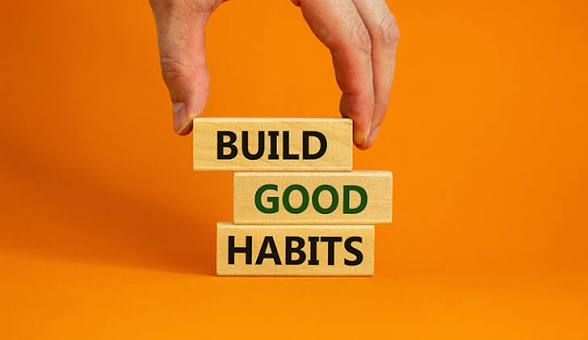
You sit staring at a broken streak tracker on your phone screen, watching a long line of consecutive check-ins shatter into dust while a familiar wave of cynicism tightens your chest.
You grip the edge of your desk, cursing your sudden failure to maintain a routine that felt so effortless just three weeks ago.
Why do my habits always collapse the moment life gets complicated? Why can't I just make them stick permanently?
Let’s cut through the noise right out of the gate: your chronic failure to build lasting habits is not a sign that your neurological hardware is permanently defective, and your inability to stick to a morning routine is not proof that you were born without the capacity for discipline. For decades, culture has treated habit formation like a mystical lifestyle aesthetic—you are either told to download a prettier app, stack your mornings with twenty unrelated micro-behaviors, or rely on twenty-one-day myths until your brain magically rewires itself.
That view is dangerously backward.
Habit building is not an unexplainable psychological art form or a superficial matter of tracking checkmarks on a calendar. It is a mechanical, highly measurable internal feedback loop that can be mapped, diagnosed, analyzed, and systematically engineered just like any high-performance technical system. If you want to stop watching your best intentions get slowly torched by friction and burnout, you have to stop treating your mind like a mysterious black box and start treating it like a system that requires strict diagnostic calibration. How do you build better habits? Let's break down the foundational architecture required to stop reacting to erratic motivation spikes and start executing with mechanical precision.
The Anatomy of a Faulty Automation Loop
Think about how you evaluate a complex industrial automation system when a automated conveyor line starts jamming, dropping products, and misaligning parts halfway through a shift. If the mechanical sensors are poorly calibrated, the guide rails are misaligned, and the error-handling loops are missing, you don't stare at the control room monitor and yell at the machinery to try harder. You open the logic controller, inspect the trigger sequences, clear the physical obstructions, and rewrite the operational protocol. You treat the jam as a mechanical breakdown that requires systematic debugging.
Yet, when it comes to human habit formation, we completely abandon all logic.
We expect ourselves to build complex, demanding daily routines while our brains run unmanaged background friction, vague triggers, and exhausted reserves of willpower. And when our nervous systems inevitably rebel against the unengineered workload and abandon the routine, we beat ourselves up for lacking willpower, completely ignoring the reality that we never engineered a structural framework to automate the behavior.
Habits operate on exact neurobiological feedback loops. When you lack structural self-assessment tools, your emotional brain interprets the friction of a new routine as a threat to your comfort, triggering an avoidance cascade designed to preserve energy. You aren't lazy; you are simply ignoring the mechanical breakdowns causing your faulty automation loops.
The Lesson of the Over-Engineered Routine
I learned this reality years ago while working with a senior software architect who was utterly convinced that his inability to maintain a consistent fitness and reading habit was proof of a terminal lack of personal discipline. On paper, he was an elite problem solver. He could design complex distributed software systems with ease. Yet, his habit-building strategy consisted entirely of over-engineering a massive, rigid morning routine: waking up at five o'clock, meditating for thirty minutes, writing journaling entries, working out for an hour, and reading dense technical literature—all before eating breakfast.
His routine was a brittle glass sculpture waiting for the slightest breeze to shatter it.
When we finally sat down and mapped his execution after a brutal month where he abandoned the entire routine within four days of starting, we discovered something entirely different. He wasn't failing because he lacked drive. He was failing because his habit architecture violated every basic law of behavioral mechanics. He had zero progressive escalation, massive environmental friction, and zero error-handling protocols for days when he slept poorly. The moment work stress spiked, his fragile morning house of cards collapsed entirely.
Once we built a structured protocol to strip his habits down to their absolute minimal viable increment, anchor them to existing daily anchors, and eliminate environmental friction, his entire profile changed. The work didn't get any less demanding, but his ability to execute foundational habits without relying on heroic willpower became completely mechanical. That is what true habit engineering looks like in action.
The Taxonomy of Habit Mechanics
To understand how to build better habits, you have to look past vague wellness advice to "just stay consistent" and examine concrete behavioral mechanics. Here is how unskilled and skilled approaches compare across different operational frameworks.
| Habit Dimension | The Unskilled Approach (Brute Force & Over-Engineering) | The Skilled Approach (Mechanically Engineered Automation) | Corrective Technical Protocol |
| Trigger Design | Relying on vague intentions ("I will read more / eat better this week"). | Anchoring the new behavior to an immutable, pre-existing physical trigger in your daily workflow. | Habit stacking, environmental cue mapping, context pairing. |
| Initial Scope | Starting with massive, intimidating goals that require maximum daily willpower. | Scaling the initial behavior down to an absurdly small micro-increment that takes under two minutes. | Minimum viable action, friction reduction, scoping limits. |
| Friction Management | Ignoring environmental obstacles and leaving distractions within arms reach. | Systematically engineering the environment to make good habits effortless and bad habits impossible. | Environmental design, barrier placement, digital lockdowns. |
| Setback Recovery | Treating a broken streak as total failure, leading to complete abandonment of the routine. | Treating a missed day as high-value diagnostic data to debug the environmental failure. | Root-cause analysis, system resetting, zero-guilt iteration. |
Notice the structural divide? The unskilled approach relies entirely on hope, emotional intensity, and rigid perfectionism. The skilled approach relies on mechanics. When stress or life disruption scales upward, the naive method collapses into complete functional failure.
Step-by-Step Protocol: Engineering Your Behavioral Automation
You cannot read your way into permanent habit formation. You have to build it through deliberate, systematic behavioral changes. Here is how you engineer automatic consistency out of your daily workflow.
1. Conduct a Behavioral Friction Audit
The single greatest cause of habit failure is environmental drag. If you have to climb over three obstacles to perform a positive behavior—or if a negative habit is instantly accessible—your brain will default to the path of least resistance every single time.
-
The Practice: Map your physical and digital workspaces for friction vectors. If you want to build a writing habit, leave your laptop open on your desk with the document ready the night before. If you want to stop snacking, remove junk food from your kitchen entirely. Maximize the friction for bad loops while zeroing out the friction for good loops.
-
The Goal: Eliminate the need for conscious decision-making. When your environment is mechanically optimized to pull you toward the desired behavior, you no longer need heroic willpower to execute.
2. Isolate the Micro-Habit Threshold
Most people try to build habits by targeting the final destination rather than the entry point. They try to run five miles on day one or write five thousand words immediately, triggering an instant defensive reaction from their nervous systems.
-
The Practice: Reduce your new habit down to its smallest viable increment—an action so ridiculously small that it feels laughable to skip. If you want to build a fitness habit, commit to doing a single push-up or putting on your running shoes. If you want to read, commit to reading one single page.
-
The Goal: Bypass the brain's threat-detection system. Once the initial barrier to entry is eliminated, momentum takes over, and expanding the output becomes natural.
3. Implement the Habit Stacking Protocol
Creating a brand-new habit from thin air is notoriously difficult because your brain lacks an established neural runway for it. The most efficient way to build a new loop is to piggyback it onto an existing behavior that you already perform automatically every single day.
-
The Practice: Use the formula: After [Current Habit], I will [New Micro-Habit]. For example: "After I pour my morning coffee, I will immediately open my journal and write one line of focus." Tie the new behavior to a concrete, sensory anchor in your daily routine.
-
The Goal: Leverage existing neural pathways. By linking the new action to an established anchor, you eliminate the cognitive burden of remembering when or how to start.
4. Construct a Diagnostic Recovery Protocol
A major engine of long-term habit failure is the psychological spiral triggered by missing a single day. People view a broken streak as evidence that they lack discipline, leading them to quit altogether.
-
The Practice: Build a strict "Never Miss Twice" rule into your architecture. Missing one day is an anomaly, a piece of diagnostic data to review; missing two days in a row is the start of a new, unwanted habit loop. If you miss a day, analyze why mechanically without emotional guilt, and execute the micro-habit immediately the next morning.
-
The Goal: Protect your behavioral momentum from perfectionist traps. Treating lapses as engineering data rather than moral failures ensures long-term system resilience.
The Provocative Reality of Habit Mastery
Let’s dismantle the ultimate comforting illusion: the belief that building better habits means reaching a magical state of effortless automation where routines run forever without maintenance or attention.
When people struggle with consistency, they love to wait until they "feel disciplined" or until their schedule becomes predictable so they can finally lock in their routines. They cast themselves as victims of a chaotic lifestyle. That is a cop-out. It is a psychological defense mechanism designed to protect you from the uncomfortable labor of imposing structural boundaries on your own environment.
Mastering habit formation requires maintenance. It requires sweat, structural discipline, and the brutal honesty of looking at your own sloppy routines without making excuses. If your car engine starts sputtering because you are ignoring basic mechanical maintenance and driving on unmaintained roads, you don't curse the vehicle or wait for the highway to flatten itself. You tune the engine, adjust your route, and drive with intention.
It is time to tune the engine of your own daily execution. Stop waiting for motivation to magically sustain your routines, stop hoping that rigid streaks will substitute for environmental design, and stop treating inconsistency as an unalterable personal destiny. Build the systems, master the automation mechanics, and take absolute ownership of your behavioral output. Watch how quickly your professional and personal trajectory transforms when you stop reacting to daily friction and start engineering your habits.
- Arts
- Business
- Computers
- Παιχνίδια
- Health
- Κεντρική Σελίδα
- Kids and Teens
- Money
- News
- Personal Development
- Recreation
- Regional
- Reference
- Science
- Shopping
- Society
- Sports
- Бизнес
- Деньги
- Дом
- Досуг
- Здоровье
- Игры
- Искусство
- Источники информации
- Компьютеры
- Личное развитие
- Наука
- Новости и СМИ
- Общество
- Покупки
- Спорт
- Страны и регионы
- World

 English
 Russian
 French
 Spanish
 Portuguese
 Deutsch
 Turkish
 Dutch
Dutch
 Italiano
 Arabic
 Romaian
 Portuguese (Brazil)
