
How do I reduce exam anxiety?
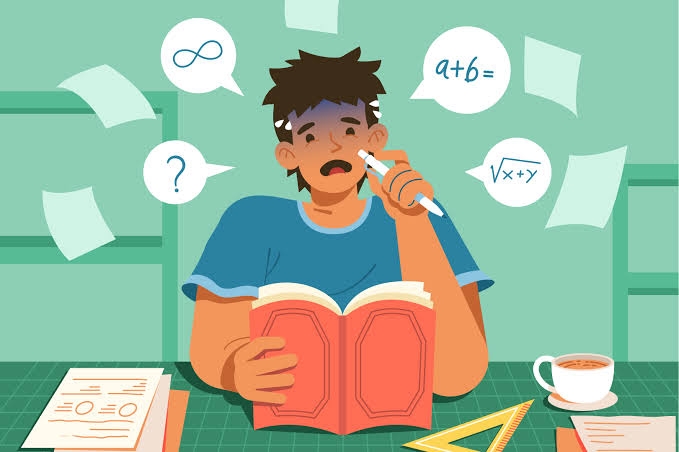
You sit frozen at your desk while the printed examination packet rests face down in front of you, and an aggressive spike of internal panic threatens to short-circuit your entire cognitive architecture before you even write your name.
You grip your pen, cursing your shaking fingers and the cold, hollow dread pooling in your stomach.
Why does my body betray me the second an exam starts? Why can't I access the knowledge I spent weeks mastering?
Let’s cut through the noise right out of the gate: your chronic, crippling exam anxiety is not a sign that your moral character is collapsing, and your tendency to freeze under high-stakes testing conditions is not proof that you were born with a defective neurological battery. For decades, traditional academic culture has treated test anxiety like an abstract emotional weakness or a mysterious spiritual defect—you are either told to "calm down," think positive thoughts, or breathe deeply until your stress magically evaporates.
That view is dangerously backward.
Exam anxiety is not an unexplainable emotional curse or an unpredictable mood swing. It is a mechanical, highly measurable internal stress response that can be mapped, diagnosed, analyzed, and systematically regulated just like a precision engine overheating under load. If you want to stop watching your academic potential get slowly torched by panic, adrenaline rushes, and mental blocks, you have to stop treating your nervous system like a mysterious black box and start treating it like a system that requires strict diagnostic calibration. How do I reduce exam anxiety? Let's break down the foundational architecture required to stop reacting to testing pressure and start executing with precision.
The Anatomy of an Overheated Autonomic Nervous System
Think about how you evaluate a high-performance turbine generator when its core temperature spikes past safe operational limits, triggering emergency shutdown protocols and power grid failure. If the turbine is overheating because coolant flow is restricted and friction is multiplying under maximum load, you don't stare at the control panel and yell at the machinery to feel more confident about spinning. You inspect the valves, flush the lines, rebalance the thermal load, and restore structural stability to the system. You treat the shutdown as a direct mechanical symptom of an unmanaged threshold override.
Yet, when it comes to student examination panic, we completely abandon all logic.
We expect learners to run complex analytical retrieval tasks while their sympathetic nervous systems are flooding their bloodstreams with cortisol and adrenaline, shutting down the prefrontal cortex and prioritizing primal survival over working memory. And when our brains inevitably go blank, our hearts pound uncontrollably, and we make catastrophic careless errors, we beat ourselves up for lacking courage, completely ignoring the reality that we never engineered a structural mechanism to manage our autonomic arousal states.
Anxiety operates on exact neurobiological feedback loops. When you lack structural self-assessment tools, your brain misinterprets the natural physiological arousal of high-stakes testing as an existential threat, locking you into a fight-or-flight loop. You aren't weak; you are simply ignoring the mechanical breakdowns causing your overheated nervous systems.
The Lesson of the Over-Anxious Pre-Med
I learned this reality years ago while working with a brilliant pre-medical student who was utterly convinced that her chronic testing panic was a terminal flaw in her intellectual capability. On paper, she was an absolute titan of preparation. She knew every biological pathway, every pharmacological classification, and every anatomical structure inside and out during low-stakes practice quizzes. Yet, the moment she walked into a standardized certification exam, her pulse would spike, her vision would tunnel, and she would completely forget fundamental concepts she had reviewed forty times.
Her testing routine was a high-revving engine running with zero coolant and a welded thermostat.
When we finally sat down and mapped her cognitive responses after a devastating exam failure that delayed her medical school application by a full year, we discovered something entirely different. She wasn't failing because her memory storage was weak. She was failing because her emotional telemetry was unmanaged. The moment she saw a difficult question on the test paper, her working memory flooded with catastrophic predictions: "If I miss this, my career is over." That thought triggered a massive physiological panic response that starved her prefrontal cortex of executive function. She tried to study harder to fix an anxiety problem that required mechanical nervous system regulation.
Once we built a structured protocol to map her somatic triggers, enforce a strict physiological reset breath the moment heart rate elevated, and treat her exam day panic as raw diagnostic data rather than proof of incompetence, her entire profile changed. The test difficulty didn't get any lighter, but her ability to process high-pressure questions without letting adrenaline hijack her motor skills became completely mechanical. That is what true exam anxiety reduction looks like in action.
The Taxonomy of Test Anxiety Mechanics
To understand how to reduce exam anxiety, you have to look past vague wellness advice to "just relax" and examine concrete behavioral mechanics. Here is how unskilled and skilled approaches compare across different testing frameworks.
| Exam Anxiety Dimension | The Unskilled Approach (Suppression & Wishful Thinking) | The Skilled Approach (Mechanically Engineered Regulation) | Corrective Technical Protocol |
| Somatic Arousal Control | Fighting physical panic with desperate positive self-talk while heart rate climbs. | Utilizing hard physiological reset breathing to down-regulate the sympathetic nervous system instantly. | Physiological sighs, tactical breathing, somatic baseline resets. |
| Cognitive Processing | Ruminating on failure consequences and comparing speed with surrounding students. | Locking attention strictly onto the immediate question mechanics and stripping away outcome focus. | Focus gating, process anchoring, execution framing. |
| Error Management | Panicking when hitting a hard question, triggering a downward spiral across the entire exam. | Executing a hard stop routine, skipping the roadblock instantly, and returning with cleared working memory. | Skip-and-return protocol, flush routines, tactical triage. |
| Preparation Auditing | Relying on emotional feelings of readiness or unmeasured rereading hours. | Building unshakeable confidence through verifiable logs of active recall and simulated test conditions. | Evidence cataloging, mock test calibration, performance ledgers. |
Notice the structural divide? The unskilled approach relies entirely on hope, emotional resistance, and brute-force optimism. The skilled approach relies on mechanics. When exam friction or time pressure scales upward, the naive method collapses into complete functional panic.
Step-by-Step Protocol: Engineering Your Exam Anxiety Arsenal
You cannot read your way into elite anxiety management mastery. You have to build your stress regulation through deliberate, systematic behavioral drills just like you train your academic recall or physical fitness. Here is how you engineer cognitive precision into your testing workflow.
1. Conduct a Somatic Trigger Audit
The single greatest cause of exam panic is not the difficulty of the test questions; it is the invisible somatic buildup happening in the background—shallow breathing, clenched jaws, and rising heart rates that signal to your brain that you are under mortal threat before you even process page two.
-
The Practice: Map your physical reactions during mock practice exams. Count how many times your body tightens up or your breathing accelerates when you hit a challenging problem. The moment you feel that physiological shift, interrupt it immediately by executing a controlled physiological reset: inhale deeply through your nose, take a secondary sharp top-off breath, and exhale slowly through your mouth for six seconds.
-
The Goal: Stop the thermal leaks in your nervous system. Forcing your autonomic system out of sympathetic overdrive keeps your prefrontal cortex fully online for complex problem-solving.
2. Implement the Diagnostic Triage Protocol for Exams
Most students fail under test pressure because they treat every difficult question as a personal emergency, staying stuck on a single roadblock until time runs out and panic takes over.
-
The Practice: Build a strict operational triage rule for exam day. If you read a question and your working memory does not immediately access a clear pathway to the solution within thirty seconds, circle the question number, write a tentative guess, execute a hard nasal exhale, and move immediately to the next item. Never let a single roadblock compromise your pacing.
-
The Goal: Protect your cognitive bandwidth. Treating difficult test items as routine mechanical triage stops the accumulation of toxic frustration and keeps your momentum intact.
3. Construct a Structured Pre-Exam Calibration Routine
Walking into an examination room cold, with your mind racing and your adrenaline spiking, guarantees an unstable performance. You need a reliable, repeatable ignition sequence to transition your brain into operational mode.
-
The Practice: Design a ten-minute pre-exam ritual. Arrive early, sit with your feet flat on the floor, close your eyes, and run through three controlled breathing cycles while silently reciting your primary instructional cue words ("Read carefully, execute step-by-step"). Do not review notes in the final five minutes; your memory is already set. Focus entirely on physiological stabilization.
-
The Goal: Automate your entry into execution focus. Creating a mechanical pre-exam ritual bypasses the need for raw willpower and establishes a calm baseline before the test packet opens.
4. Build a Performance Evidence Ledger for Test Confidence
True exam confidence is not an emotional mood state that you can simply summon through positive self-talk or looking in a mirror. It is a logical conclusion derived from verifiable evidence of your preparation under rigorous conditions.
-
The Practice: Maintain a testing ledger where you record concrete evidence of your execution—scores on timed practice exams, completed active recall modules, and mastered diagnostic sets. When pre-exam anxiety whispers that you are unprepared, open your ledger and review the undeniable physical evidence of your rigorous work.
-
The Goal: Starve exam anxiety of its fuel. When your brain is confronted with documentary proof of your systematic preparation, panic loses its foundation and self-doubt dissolves.
The Provocative Reality of Anxiety Management
Let’s dismantle the ultimate comforting illusion in education: the belief that mastering exam anxiety means reaching a magical state of zen where stress never occurs and nervousness is completely eradicated.
When individuals struggle with testing pressure, they love to wait until they "feel totally calm" or until their anxiety disappears so they can finally perform at their best. They cast themselves as victims of high-stakes testing. That is a cop-out. It is a psychological defense mechanism designed to protect you from the uncomfortable labor of training your nervous system with the same brutal discipline you apply to mastering course content.
Mastering exam anxiety requires maintenance. It requires sweat, structural discipline, and the brutal honesty of looking at your own sloppy emotional habits without making excuses. If your car engine starts sputtering because you are ignoring basic mechanical maintenance and driving on unmaintained roads under a heavy load, you don't curse the vehicle or wait for the road to flatten itself. You tune the engine, adjust your telemetry, and drive with intention.
It is time to tune the telemetry of your own nervous system. Stop waiting for motivation to magically cure your testing panic, stop hoping that hollow pep talks will substitute for structured stress mechanics, and stop treating exam anxiety as an unalterable personal destiny. Build the systems, master the cognitive mechanics, and take absolute ownership of your academic output. Watch how quickly your performance trajectory transforms when you stop reacting to physiological panic and start engineering your anxiety reduction.
- Arts
- Business
- Computers
- Giochi
- Health
- Home
- Kids and Teens
- Money
- News
- Personal Development
- Recreation
- Regional
- Reference
- Science
- Shopping
- Society
- Sports
- Бизнес
- Деньги
- Дом
- Досуг
- Здоровье
- Игры
- Искусство
- Источники информации
- Компьютеры
- Личное развитие
- Наука
- Новости и СМИ
- Общество
- Покупки
- Спорт
- Страны и регионы
- World

 English
 Russian
 French
 Spanish
 Portuguese
 Deutsch
 Turkish
 Dutch
Dutch
 Arabic
 Romaian
 Portuguese (Brazil)
 Greek
Greek
