
Just-in-Time Inventory: The Retail Strategy Built Around Timing, Trust, and Risk
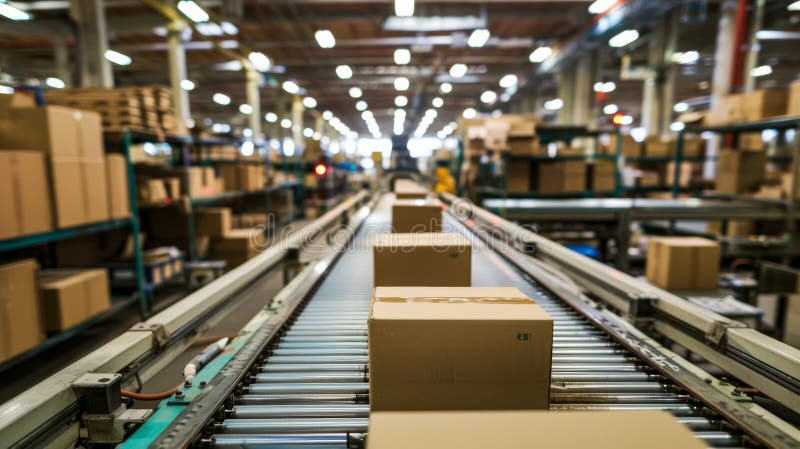
A warehouse filled with unsold products looks like a problem.
A warehouse with almost nothing inside looks like a risk.
For decades, businesses have wrestled with this uncomfortable question: How much inventory is enough?
Too much inventory ties up capital, occupies storage space, and creates the possibility that products will lose value before customers buy them.
Too little inventory creates empty shelves, delayed orders, and disappointed customers.
Just-in-time inventory was created around a simple but powerful idea: what if companies could receive products precisely when they were needed rather than storing large quantities in advance?
The concept sounds almost obvious.
The execution is anything but.
Just-in-time inventory is a management philosophy built on timing, coordination, and efficiency. It requires suppliers, manufacturers, warehouses, and retailers to operate with remarkable accuracy. When it works, companies reduce waste and improve efficiency. When it fails, the consequences can appear immediately: shortages, production delays, and frustrated customers.
I learned this lesson while observing a retailer adjust its inventory approach for a high-demand product category. The company had previously maintained large safety stocks because managers feared running out. The result was expensive storage and frequent markdowns. After implementing a more responsive replenishment system, inventory costs declined. But the process required something equally important: stronger supplier communication. The lesson was clear. Just-in-time inventory is not simply about keeping less stock. It is about building a system where every participant can respond quickly.
The real question is not whether a company has inventory.
The question is whether that inventory arrives at the moment it creates the most value.
What Is Just-in-Time Inventory?
Just-in-time inventory, often called JIT inventory, is a supply chain strategy where businesses receive goods or materials close to the moment they are needed rather than storing large quantities ahead of time.
Traditional inventory systems often follow this pattern:
Produce large quantities.
Store products.
Sell from available inventory.
JIT reverses the logic:
Forecast demand.
Coordinate supply.
Receive inventory when needed.
Move products quickly into production, distribution, or customer channels.
The objective is efficiency.
By reducing excess inventory, companies can lower storage expenses, minimize waste, and improve cash flow.
However, JIT depends on precision.
A traditional inventory system can absorb mistakes because extra stock acts as a cushion.
A JIT system has less room for error.
The Origins of Just-in-Time Inventory
The modern JIT approach became widely associated with Japanese manufacturing, particularly the production methods developed by Toyota Motor Corporation during the 20th century.
Manufacturers faced limited resources and needed to create systems that reduced waste while maintaining quality.
The approach emphasized several principles:
- Producing only what was needed
- Reducing unnecessary inventory
- Improving production flow
- Identifying inefficiencies
- Continuously improving processes
Over time, companies across industries adopted variations of JIT.
Retailers applied similar thinking to merchandise planning, distribution, and replenishment.
The underlying philosophy remained consistent:
Inventory should exist because it serves a purpose, not because a company failed to predict demand accurately.
Why Companies Use Just-in-Time Inventory
Businesses adopt JIT inventory for several strategic reasons.
Lower Storage Costs
Inventory requires physical space.
Warehouses, refrigeration facilities, security systems, and employees all create expenses.
Reducing unnecessary inventory can significantly lower operating costs.
Improved Cash Flow
Every unsold product represents money that has already been spent but has not yet generated revenue.
JIT allows companies to keep more capital available for other investments.
Reduced Waste
Products become outdated.
Consumer preferences change.
Technology evolves.
Fashion trends disappear.
Holding less inventory reduces the risk of products becoming difficult to sell.
Faster Response to Demand Changes
A flexible inventory system can adjust more quickly when customers change their behavior.
Instead of committing months in advance to large quantities, businesses can respond closer to actual demand.
How Just-in-Time Inventory Works
A successful JIT system depends on several connected processes.
Accurate Demand Forecasting
JIT begins with understanding demand.
Companies analyze:
- Historical sales
- Customer trends
- Seasonal patterns
- Market conditions
- Regional differences
Forecasting does not need to be perfect.
But it needs to be reliable enough to guide decisions.
Strong Supplier Relationships
JIT creates greater dependence on suppliers.
A company cannot expect rapid delivery without strong coordination.
Suppliers need:
- Clear communication
- Accurate schedules
- Reliable forecasts
- Consistent expectations
A weak supplier relationship can undermine the entire system.
Efficient Transportation
Timing becomes critical.
A shipment arriving too early creates storage problems.
A shipment arriving too late creates shortages.
Transportation becomes part of the inventory strategy itself.
Real-Time Information
Companies need visibility into:
- Sales activity
- Inventory levels
- Supplier status
- Delivery schedules
Information delays create decision delays.
In a JIT environment, small delays can become large disruptions.
Just-in-Time Inventory Compared With Traditional Inventory
| Inventory Approach | Inventory Level | Main Advantage | Main Risk | Best Used For |
|---|---|---|---|---|
| Just-in-Time Inventory | Low inventory levels | Reduces storage costs and waste | Vulnerable to disruptions | Stable supply networks |
| Traditional Inventory | Higher inventory levels | Provides protection against shortages | Higher holding costs | Uncertain demand environments |
| Safety Stock Model | Moderate inventory buffer | Balances efficiency and security | Requires careful planning | Products with variable demand |
| Seasonal Inventory Planning | Large temporary inventory increases | Supports peak demand periods | Risk of leftover stock | Holiday and seasonal products |
| Automated Replenishment | Data-driven inventory adjustments | Faster response to demand changes | Requires technology investment | Large-scale retail operations |
No inventory model is universally superior.
The right approach depends on the product, market, supplier network, and customer expectations.
The Benefits of Just-in-Time Inventory
Greater Efficiency
JIT encourages companies to examine every step of the supply chain.
Where are delays happening?
Where is waste accumulating?
Where are resources being underused?
The system creates pressure to improve.
Better Product Freshness
For industries such as food, pharmaceuticals, and certain consumer goods, freshness matters.
Receiving products closer to the moment of sale can improve quality and reduce expiration-related losses.
Reduced Excess Inventory
Excess inventory creates difficult decisions.
Should the company discount the product?
Store it longer?
Dispose of it?
JIT reduces the likelihood of those situations.
The Risks of Just-in-Time Inventory
Efficiency comes with trade-offs.
Supply Chain Disruptions
When companies carry limited inventory, unexpected disruptions become more serious.
A delayed shipment, supplier failure, or transportation issue can quickly affect availability.
Forecasting Errors
JIT requires accurate predictions.
If demand rises unexpectedly, companies may struggle to respond quickly.
Supplier Dependence
Strong supplier relationships become essential.
A company relying on frequent deliveries must trust suppliers to perform consistently.
Limited Flexibility
Some industries experience unpredictable demand.
For those businesses, maintaining additional inventory may provide valuable protection.
Lessons From Supply Chain Disruptions
Recent global disruptions highlighted both the strengths and weaknesses of JIT systems.
Companies discovered that extreme efficiency can create vulnerability when unexpected events affect transportation, manufacturing, or availability of materials.
The lesson was not that JIT failed.
The lesson was more nuanced.
Efficiency without resilience creates risk.
Many companies began moving toward a balanced approach:
Less unnecessary inventory.
More strategic inventory.
Better visibility.
More flexible supplier networks.
The future of inventory management is unlikely to be purely JIT or purely traditional.
It will be adaptive.
Technology’s Role in Modern JIT Systems
Technology has made JIT inventory more practical.
Companies now use:
- Inventory management software
- Predictive analytics
- Automated ordering systems
- Supplier communication platforms
- Real-time tracking tools
These systems help companies make faster decisions.
However, technology does not replace relationships.
A sophisticated inventory platform cannot compensate for unreliable suppliers or poor planning.
The strongest JIT systems combine information with human judgment.
The Future of Just-in-Time Inventory
Retail and manufacturing continue to move toward greater flexibility.
Consumers expect availability.
Businesses want efficiency.
The challenge is satisfying both.
Future inventory strategies will likely focus on balance:
Keeping enough inventory to handle uncertainty.
Avoiding unnecessary stock.
Using data to improve decisions.
Building supplier networks that can adapt quickly.
The goal is not minimum inventory.
The goal is intelligent inventory.
Conclusion: The Real Value of Just-in-Time Inventory Is Timing
Just-in-time inventory is often described as a way to reduce stock.
That description is incomplete.
At its core, JIT is about coordination.
It is about creating a system where suppliers, retailers, manufacturers, and customers are connected through accurate information and reliable execution.
The companies that succeed with JIT do not simply store fewer products.
They understand demand better.
They communicate better.
They respond faster.
The empty warehouse is not the achievement.
The achievement is knowing exactly what should be there, when it should arrive, and why.
Inventory has always been about balance.
Just-in-time inventory simply makes that balance visible.
- Arts
- Business
- Computers
- Игры
- Health
- Главная
- Kids and Teens
- Деньги
- News
- Personal Development
- Recreation
- Regional
- Reference
- Science
- Shopping
- Society
- Sports
- Бизнес
- Деньги
- Дом
- Досуг
- Здоровье
- Игры
- Искусство
- Источники информации
- Компьютеры
- Личное развитие
- Наука
- Новости и СМИ
- Общество
- Покупки
- Спорт
- Страны и регионы
- World

 English
 French
 Spanish
 Portuguese
 Deutsch
 Turkish
 Dutch
Dutch
 Italiano
 Arabic
 Romaian
 Portuguese (Brazil)
 Greek
Greek
