
Retail Case Studies: The Strategies, Mistakes, and Decisions Behind Retail Success
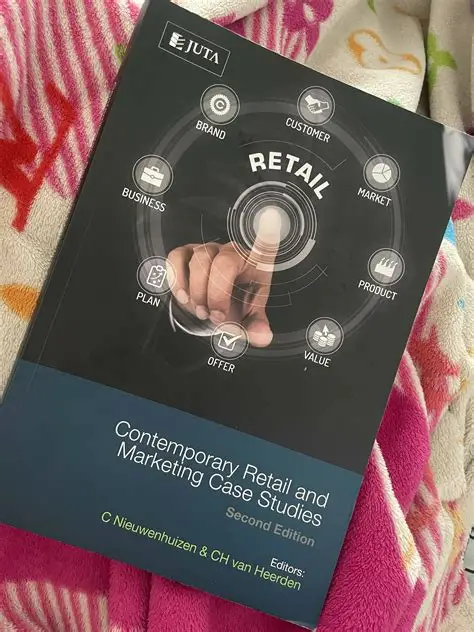
A retailer’s biggest decision is rarely made in the spotlight.
Customers see the final result: the store layout, the website experience, the product display, the price tag.
They do not see the decisions that shaped it.
They do not see the failed experiments, the inventory choices, the customer research, the operational changes, or the leadership debates that determined whether a retail strategy would succeed or disappear.
That is why retail case studies are valuable.
They reveal the thinking behind the outcome.
A successful retailer is not successful because of one isolated action. It usually succeeds because multiple decisions reinforce each other. A struggling retailer often fails for the opposite reason: small problems accumulate until customers notice.
I learned this lesson while analyzing a retailer that appeared successful from the outside. Sales were strong, customer traffic was increasing, and the brand had loyal followers. Yet internal challenges were developing around inventory accuracy and customer experience consistency. The company discovered that growth itself created new problems. Expansion required better systems, not simply more locations.
The lesson was simple:
Retail success is not a destination. It is a continuous management process.
Case studies allow businesses to examine that process. They transform abstract concepts into real decisions.
Why Retail Case Studies Matter
Retail is an industry where theory meets reality quickly.
A pricing strategy affects customer behavior.
A supply chain decision affects product availability.
A store design choice affects purchasing patterns.
A technology investment affects customer relationships.
Case studies help explain:
- Why certain strategies work
- Why others fail
- How companies adapt
- What managers can learn from real situations
A textbook may explain customer loyalty.
A case study shows how a retailer earned it.
A textbook may describe inventory management.
A case study shows what happens when inventory decisions go wrong.
Case Study 1: Walmart — Winning Through Operational Efficiency
Walmart’s retail strategy has long been built around a powerful idea:
Make products affordable by creating one of the most efficient operating systems possible.
The company’s advantage has not come only from selling products at low prices. It has come from coordinating thousands of operational decisions.
Key elements of Walmart’s approach include:
- Large-scale purchasing power
- Advanced supply chain systems
- Efficient distribution networks
- Data-driven inventory management
- Broad store accessibility
The company’s model demonstrates a central retail principle:
Efficiency becomes a customer benefit when it creates better value.
Customers do not see the distribution centers, supplier negotiations, or inventory systems. They experience the result through competitive pricing and product availability.
The Management Lesson
Walmart’s case shows that operational excellence can become a competitive advantage.
A retailer does not always need a completely unique product.
Sometimes the advantage comes from executing ordinary activities better than competitors.
Case Study 2: Amazon — Redefining Convenience
Amazon changed retail expectations by making convenience a central part of the shopping experience.
The company built its strategy around reducing customer friction.
Customers gained:
- Easy product discovery
- Fast purchasing
- Delivery options
- Product reviews
- Personalized recommendations
Amazon’s success illustrates a major shift in retail:
The product is no longer the entire experience.
The process surrounding the product matters.
However, convenience requires significant operational investment.
Behind a simple online order are complex systems involving:
- Warehousing
- Inventory prediction
- Transportation
- Technology platforms
- Customer service
The Management Lesson
Amazon demonstrates that customer expectations are created by the best experiences consumers encounter.
Once customers experience a higher level of convenience, competitors must respond.
Case Study 3: Apple — The Power of Experience-Based Retail
Apple’s retail strategy demonstrates that stores can serve purposes beyond transactions.
The company’s physical locations emphasize:
- Product discovery
- Customer education
- Technical support
- Brand experience
Apple stores are designed to encourage interaction.
Customers can explore products, ask questions, and receive assistance.
The retail environment communicates the brand’s values before a purchase occurs.
The Management Lesson
Retail spaces are not only places where products are sold.
They are places where customer relationships are created.
A store can function as a marketing channel, service center, and community space simultaneously.
Case Study 4: Target Corporation — Differentiation Through Experience
Target built a distinct position by combining affordability with a more curated shopping environment.
The company focused on creating a balance:
Affordable products.
Attractive design.
Convenient shopping.
A stronger emotional connection.
This approach demonstrates how retailers can compete without relying entirely on price.
Customers often make decisions based on how a retailer makes them feel.
The Management Lesson
Differentiation does not always require completely different products.
It can come from creating a different experience around familiar products.
Case Study 5: Zara — Speed as a Retail Advantage
Fashion retail presents a unique challenge.
Consumer preferences change quickly.
A product that is desirable today may lose relevance tomorrow.
Zara developed a model focused on speed and responsiveness.
The company’s approach emphasized:
- Rapid design cycles
- Frequent product updates
- Close monitoring of customer preferences
- Flexible production processes
Instead of predicting distant trends years ahead, Zara created systems that allowed it to react quickly.
The Management Lesson
Retailers can gain an advantage by reducing the distance between customer demand and business response.
Speed is not simply about moving faster.
It is about learning faster.
Retail Case Study Comparison Table
| Retail Company Example | Primary Strategy | Key Strength | Major Challenge | Main Lesson |
|---|---|---|---|---|
| Walmart | Operational efficiency | Low-cost scale | Maintaining flexibility at large size | Systems create competitive advantage |
| Amazon | Convenience and technology | Customer-focused logistics | Managing complexity and costs | Reduce customer friction |
| Apple | Experience-based retail | Brand connection | Maintaining premium expectations | Stores can build relationships |
| Target | Differentiated experience | Value combined with design | Balancing affordability and quality | Emotional connection matters |
| Zara | Speed and responsiveness | Fast market reaction | Managing constant product changes | Adaptability creates advantage |
Each company follows a different path.
There is no single formula for retail success.
What Failed Retail Case Studies Teach Us
Successful companies often receive attention, but failures can reveal equally valuable lessons.
Many retail failures share common patterns:
Ignoring Customer Behavior Changes
Retailers that rely too heavily on past success may miss changing expectations.
Customers evolve.
Shopping habits evolve.
Retail strategies must evolve as well.
Expanding Too Quickly
Growth can create pressure.
More locations require:
- Better management systems
- Stronger supply chains
- Consistent customer experiences
Expansion without operational readiness can weaken a brand.
Failing to Define a Clear Identity
Retailers struggle when customers cannot answer a basic question:
Why should I shop here?
A strong identity gives customers a reason to choose one retailer over another.
The Role of Data in Modern Retail Case Studies
Data has become central to retail decision-making.
Companies analyze:
- Customer purchasing patterns
- Inventory movement
- Website behavior
- Store performance
- Marketing results
However, data does not replace strategic thinking.
Numbers can reveal what happened.
Managers must determine why it happened.
The strongest retailers combine analytical tools with human understanding.
The Common Pattern Behind Successful Retailers
Although retail case studies involve different companies, several themes appear repeatedly.
Successful retailers:
Understand Their Customers
They know what customers value and why.
Build Strong Operations
They create systems that support their promises.
Adapt Quickly
They respond when conditions change.
Create Clear Differentiation
They provide a reason customers choose them.
Invest in Relationships
They recognize that loyalty comes from repeated positive experiences.
Conclusion: Retail Success Is Built Through Decisions, Not Moments
A retail success story often looks simple after the fact.
A company found its customers.
A strategy worked.
A brand grew.
But behind every successful retailer are thousands of decisions made under uncertainty.
Retail case studies matter because they reveal those decisions.
They show that success rarely comes from copying another company exactly. A retailer cannot simply become Amazon, Walmart, Apple, or Zara.
The valuable lesson is not the surface strategy.
It is the thinking behind it.
The strongest retailers understand their customers, build systems that support those customers, and adapt before change becomes unavoidable.
Because retail is not won through one perfect idea.
It is won through consistent execution.
The customer sees the purchase.
The case study reveals the choices that made the purchase possible.
- Arts
- Business
- Computers
- Oyunlar
- Health
- Home
- Kids and Teens
- Money
- News
- Personal Development
- Recreation
- Regional
- Reference
- Science
- Shopping
- Society
- Sports
- Бизнес
- Деньги
- Дом
- Досуг
- Здоровье
- Игры
- Искусство
- Источники информации
- Компьютеры
- Личное развитие
- Наука
- Новости и СМИ
- Общество
- Покупки
- Спорт
- Страны и регионы
- World

 English
 Russian
 French
 Spanish
 Portuguese
 Deutsch
 Dutch
Dutch
 Italiano
 Arabic
 Romaian
 Portuguese (Brazil)
 Greek
Greek
