
How Much Does SaaS Cost? The Price Tag Is Usually the Smallest Part of the Story
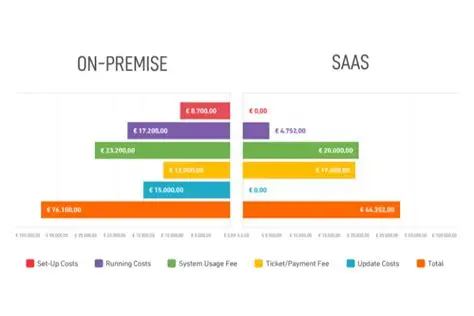
There is a moment in nearly every SaaS purchasing conversation when someone asks the obvious question.
“How much does it cost?”
It is a reasonable question.
It is also incomplete.
A software subscription appears simple on the surface. A monthly fee. A user count. A payment schedule.
But SaaS pricing rarely behaves like a restaurant menu.
The number displayed on the website is often only the beginning.
The real cost emerges through implementation, training, integrations, upgrades, administration, and the time required for people to actually adopt the platform.
I learned this while helping a company evaluate a new customer management system. The vendor’s advertised price seemed attractive. Leadership compared it with competing solutions and immediately focused on the monthly subscription.
The decision appeared easy.
Then the additional expenses surfaced.
Data migration.
Custom configuration.
Employee training.
Third-party integrations.
The “affordable” option became significantly more expensive than expected.
Nothing about the vendor was misleading.
The company simply evaluated the wrong number.
The lesson was straightforward:
SaaS cost is not the subscription price.
SaaS cost is the total investment required to create value.
That distinction separates thoughtful buyers from disappointed ones.
Why SaaS Pricing Is More Complicated Than It Looks
Traditional software often involved large upfront purchases.
A company bought licenses.
Installed the software.
Managed maintenance internally.
SaaS changed the financial model.
Instead of paying primarily upfront, organizations typically pay recurring subscription fees for ongoing access.
This creates several advantages:
- Lower initial investment
- Predictable recurring expenses
- Faster deployment
- Automatic updates
- Reduced infrastructure requirements
But recurring payments introduce a different challenge.
A subscription that seems inexpensive monthly can become a significant long-term investment.
A $50-per-user monthly plan sounds manageable.
For 20 employees over five years, that becomes $60,000 before considering implementation, training, or additional services.
The monthly figure matters.
The lifetime figure matters more.
The Main Factors That Determine SaaS Cost
SaaS pricing varies dramatically depending on several variables.
The most important include:
- Number of users
- Software category
- Feature requirements
- Data volume
- Customization needs
- Integration complexity
- Support requirements
- Contract length
Two companies can purchase the same platform and experience completely different total costs.
Why?
Because software value is shaped by context.
SaaS Pricing Models Explained
Different vendors structure pricing in different ways.
Understanding these models makes comparison easier.
Per-User Pricing
This is one of the most common SaaS pricing approaches.
Businesses pay based on the number of people accessing the platform.
Example:
- 10 users
- $40 per user per month
- Monthly cost: $400
This model is easy to understand.
It also means costs increase as teams grow.
Common examples include:
- CRM platforms
- Collaboration tools
- Project management software
Advantages
- Predictable budgeting
- Easy scalability
- Simple calculations
Challenges
- Costs increase with hiring
- Unused licenses create waste
Tiered Pricing
Many SaaS companies offer multiple plans:
- Starter
- Professional
- Business
- Enterprise
Each tier provides different capabilities.
This model allows organizations to begin with basic functionality and upgrade later.
The challenge is determining whether premium features are truly necessary.
Many companies purchase advanced plans because they anticipate future needs that never arrive.
Usage-Based Pricing
Some platforms charge based on consumption.
Examples:
- Data storage
- Transactions
- API calls
- Processing volume
This approach can benefit companies with unpredictable usage patterns.
However, forecasting costs becomes more difficult.
Flat-Rate Pricing
Some vendors charge a fixed monthly or annual fee regardless of users or usage.
This provides simplicity.
It may also become expensive for smaller organizations with limited needs.
SaaS Cost Comparison by Business Software Category
| SaaS Category | Typical Monthly Cost Range | Primary Pricing Model | Common Additional Costs |
|---|---|---|---|
| CRM Software | $0–$300+ per user/month | Per-user tiers | Data migration, customization |
| Accounting Software | $15–$200/month | Tiered plans | Payroll, integrations |
| Project Management | $0–$30+ per user/month | Per-user tiers | Training, premium features |
| Marketing Automation | $20–$1,000+/month | Contacts or usage | Setup, consulting |
| Customer Support | $20–$150+ per agent/month | Per-user pricing | Knowledge base setup |
| Communication Tools | $0–$25+ per user/month | Per-user tiers | Administration |
| E-Commerce Platforms | $30–$400+/month | Tiered subscriptions | Payment fees, apps |
| Data Analytics | $50–$5000+/month | Usage or enterprise pricing | Data integration |
These ranges are broad because SaaS pricing reflects business complexity.
A small company and a global enterprise may use the same software category but experience entirely different costs.
The Hidden Costs Most Buyers Miss
The subscription fee receives attention because it is visible.
The hidden costs matter because they accumulate quietly.
Implementation Costs
Some SaaS platforms are ready immediately.
Others require significant setup.
Implementation may involve:
- Configuration
- Workflow design
- Data migration
- System connections
- Custom development
For complex platforms, implementation services can represent a substantial portion of the total investment.
Training Costs
Software adoption requires learning.
Employees need to understand:
- New processes
- New workflows
- New responsibilities
Training may involve:
- Vendor courses
- Internal workshops
- Documentation
- Consulting services
A platform that employees cannot use effectively becomes an expensive subscription.
Integration Costs
Modern businesses rarely operate with isolated systems.
A CRM may need to connect with:
- Email marketing tools
- Accounting platforms
- Customer support systems
- Data warehouses
Some integrations are simple.
Others require technical expertise.
Integration complexity can significantly affect total cost.
Administrative Costs
Every SaaS platform requires ownership.
Someone must manage:
- User permissions
- Settings
- Updates
- Reporting
- Security controls
These responsibilities often fall on existing employees.
Their time has value.
The Lesson I Learned From a “Cheap” SaaS Decision
Several years ago, I worked with a company that selected software based largely on price.
The platform cost significantly less than competitors.
Leadership considered the decision financially responsible.
At first, everything looked positive.
Then operational reality arrived.
The company needed extensive customization.
Employees required additional training.
Several important integrations were unavailable without expensive third-party solutions.
The organization eventually spent far more than the original subscription price suggested.
The experience changed how I evaluate SaaS.
Price is not the same as cost.
And low-cost software can become expensive when it creates friction.
How to Calculate the True Cost of SaaS
A more accurate calculation considers total cost of ownership.
A simple framework:
Total SaaS Cost = Subscription Fees + Implementation + Training + Integrations + Administration + Upgrades
For example:
| Cost Component | Example Annual Expense |
| Subscription | $12,000 |
| Implementation | $5,000 |
| Training | $2,000 |
| Integrations | $3,000 |
| Administration Time | $4,000 |
| Total First-Year Cost | $26,000 |
The first year is often the most expensive because setup costs occur upfront.
Over time, subscription costs typically become the largest expense.
Why the Cheapest SaaS Option Is Rarely the Best Choice
Software purchasing decisions often create a temptation to minimize immediate spending.
That instinct is understandable.
Budgets matter.
But cost reduction without value analysis can produce poor outcomes.
A cheaper platform may create:
- Lower productivity
- More manual work
- Poor adoption
- Limited scalability
A more expensive platform may ultimately cost less if it improves efficiency significantly.
The right question is not:
“What is the cheapest option?”
The better question is:
“What creates the strongest return?”
How to Reduce SaaS Costs Without Sacrificing Value
Smart SaaS management requires discipline.
Several strategies help control spending.
Audit Existing Subscriptions
Many companies pay for unused software.
Regular reviews identify unnecessary expenses.
Remove Unused Licenses
User counts often change.
Subscriptions should change with them.
Negotiate Contracts
Annual commitments may provide discounts.
Enterprise customers often have additional negotiation opportunities.
Consolidate Tools
Multiple overlapping platforms create unnecessary expense.
Sometimes one well-chosen solution can replace several smaller subscriptions.
Start Small
Many vendors offer entry-level plans.
Begin with essential functionality.
Expand when value is proven.
The Future of SaaS Pricing: More Flexible, More Complex
SaaS pricing continues to evolve.
Artificial intelligence features.
Usage-based models.
Industry-specific platforms.
Embedded automation.
These trends create new opportunities.
They also create new questions.
What exactly are customers paying for?
Users?
Data?
Computing power?
Results?
The traditional subscription model may continue changing as vendors experiment with new approaches.
Regardless of the model, one principle remains consistent.
Buyers need clarity.
Conclusion: SaaS Cost Is About Value, Not Just Dollars
The easiest SaaS cost question is:
“How much does it cost per month?”
The more important question is:
“What does this investment help us accomplish?”
A platform that saves employees hours every week may justify a significant subscription.
A platform that nobody uses is expensive at any price.
The strongest SaaS decisions balance affordability with effectiveness.
They examine subscription fees.
They calculate hidden expenses.
They measure adoption.
They evaluate long-term value.
Because software is not simply an expense line.
It is an operational decision.
And the organizations that understand this do not ask only what SaaS costs.
They ask what it is worth.
- Arts
- Business
- Computers
- Juegos
- Health
- Home
- Kids and Teens
- Money
- News
- Personal Development
- Recreation
- Regional
- Reference
- Science
- Shopping
- Society
- Sports
- Бизнес
- Деньги
- Дом
- Досуг
- Здоровье
- Игры
- Искусство
- Источники информации
- Компьютеры
- Личное развитие
- Наука
- Новости и СМИ
- Общество
- Покупки
- Спорт
- Страны и регионы
- World

 English
 Russian
 French
 Portuguese
 Deutsch
 Turkish
 Dutch
Dutch
 Italiano
 Arabic
 Romaian
 Portuguese (Brazil)
 Greek
Greek
