
How Do I Create a Sponsorship Package?
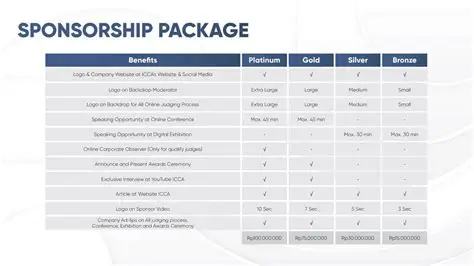
A sponsorship package is not a menu of prices.
That distinction matters.
Too many organizations build a package by listing what they can give away: logo placement, social media mentions, tickets, banners, booth space. Then they attach a dollar amount and send it to companies they barely know.
That is not a sponsorship strategy. It is an inventory sheet.
A strong sponsorship package does something much more valuable. It translates what you have—an audience, an event, a community, a platform, a relationship—into opportunities a business can use.
The sponsor is not buying your event.
The sponsor is buying access to a business outcome.
That might mean brand awareness. Customer acquisition. Community credibility. Employee engagement. Content. Lead generation. Hospitality. Sampling. Local visibility.
Your job is to connect the dots.
Start With the Sponsor, Not Your Logo
Before you create a single sponsorship level, answer one question:
Why would a company want this?
If your answer is, “Because we need funding,” start over.
Your financial need may be genuine. It may even be substantial. But it is rarely the reason a company should invest.
Sponsors have their own objectives.
A regional bank may want to reach small-business owners. A healthcare company may want community visibility. A restaurant may want trial from local families. A technology company may want access to professionals in a particular industry.
Those companies are looking for something specific.
Your package should make that something easy to see.
Build the package around assets
Think beyond physical signage.
Your sponsorship assets might include:
- Audience access
- Email exposure
- Social media promotion
- Event naming rights
- Speaking opportunities
- Product demonstrations
- Sampling
- Content creation
- VIP hospitality
- Customer experiences
- Employee engagement
- Lead-generation opportunities
- Community goodwill
- Media exposure
- Exclusivity within a category
The more strategically you think about these assets, the less your sponsorship package becomes a commodity.
The Five Parts of a Strong Sponsorship Package
A professional package usually has five essential components:
- The opportunity
- The audience
- The benefits
- The investment
- The activation plan
Everything else supports those five pieces.
1. Define the opportunity
Start with a concise description of what the sponsor is being invited to join.
If it is an event, explain what makes the event distinctive.
If it is a personal brand, explain the platform and audience.
If it is a nonprofit initiative, explain the mission and the specific program being sponsored.
Avoid spending three pages describing your history.
The sponsor needs context, not a biography.
A useful opening might answer:
- What is this?
- Who does it reach?
- Why does it matter?
- What makes the opportunity distinctive?
- What is the sponsor being invited to accomplish?
That is enough to earn attention.
2. Show the audience
This is where many sponsorship packages become vague.
“Thousands of people attend.”
Fine. Who are they?
A sponsor wants to know whether your audience overlaps with its customers.
Include relevant information such as:
| Audience Metric | What to Include | Why Sponsors Care |
|---|---|---|
| Total reach | Attendance, subscribers, followers, viewers | Potential exposure |
| Geography | Local, regional, national | Market relevance |
| Demographics | Age ranges, household characteristics, profession | Customer fit |
| Purchasing behavior | Relevant buying patterns | Commercial potential |
| Engagement | Open rates, attendance rates, interaction | Quality of reach |
| Decision-makers | Executives, business owners, professionals | B2B value |
| Community profile | Schools, families, nonprofits, associations | Local credibility |
You don't need every statistic imaginable.
You need the statistics that help a sponsor make a decision.
“10,000 followers” tells me very little.
“10,000 followers, 68% located within 50 miles of the event, with an average monthly engagement rate of X” tells me much more.
Specificity creates credibility.
3. Create Sponsorship Levels
Now you can build the actual package.
A tiered structure gives sponsors choices without forcing you to negotiate every benefit from scratch.
Here is a sample framework:
| Sponsorship Level | Example Investment | Core Benefits | Best For |
|---|---|---|---|
| Presenting Partner | $15,000 | Naming rights, premium branding, major activation, speaking opportunity, VIP access, digital promotion | Major strategic partner |
| Gold Sponsor | $7,500 | Prominent branding, activation space, social/email promotion, tickets | Established regional brand |
| Silver Sponsor | $3,500 | Logo placement, event recognition, digital promotion, tickets | Brand awareness |
| Community Sponsor | $1,000 | Website recognition, event acknowledgment, select promotional benefits | Local businesses |
| In-Kind Partner | Variable | Recognition tied to goods or services provided | Product/service partners |
These dollar amounts are examples, not rules.
Your pricing should reflect your audience, reach, exclusivity, benefits, market, track record, and the sponsor's potential value.
Do not create a $10,000 package simply because $10,000 sounds impressive.
Price the opportunity based on its commercial value.
Don't make every tier identical
A common mistake is creating four packages that differ only by logo size.
That creates a pricing problem.
If the Gold Sponsor receives the same basic experience as the Silver Sponsor, why should anyone pay more?
Higher tiers should unlock materially different opportunities.
Think access, not decoration.
A premium sponsor might receive an exclusive customer experience. A lower-level sponsor might receive recognition.
Those are different propositions.
4. Make Benefits Concrete
“Prominent exposure” sounds impressive until someone asks what it actually means.
Be specific.
Instead of:
Prominent social media exposure
Try:
Two dedicated sponsor posts on the event's Instagram and Facebook accounts, plus inclusion in three event-related promotional posts.
Instead of:
VIP access
Try:
Eight VIP credentials with access to the sponsor hospitality area and reserved seating.
Instead of:
Brand visibility
Try:
Logo placement on the event landing page, printed program, registration confirmation email, and main-stage sponsor slide.
The second version gives the sponsor something they can evaluate.
That is the standard.
5. Include Activation Opportunities
This may be the most important part of your package.
A logo is passive.
Activation is active.
If a sponsor can simply put its logo on a banner, you are selling visibility. If that sponsor can demonstrate a product, host an experience, collect qualified leads, create branded content, offer samples, or engage directly with customers, you're selling participation.
And participation is usually more valuable.
Think beyond the event itself
Suppose you are producing a three-day community event.
The sponsorship opportunity does not have to begin when the doors open.
You might offer:
Before the event
- Sponsored announcement
- Email placement
- Social content
- Contest or giveaway
- Media opportunity
During the event
- Product activation
- Sampling
- Branded experience
- Stage recognition
- Customer interaction
- VIP hospitality
After the event
- Recap content
- Sponsor thank-you campaign
- Photo and video assets
- Lead follow-up
- Performance report
Suddenly, the sponsor is not buying a banner.
They're participating in a campaign.
The Lesson I Learned About Sponsorship Packages
I learned an important lesson after seeing enough sponsorship proposals from the other side of the table.
Organizations tend to describe themselves beautifully.
They tell you about their history. Their mission. Their accomplishments. Their awards.
But sponsors are quietly asking a different set of questions:
Who will I reach?
What can I actually do with this opportunity?
Why is this audience valuable to me?
How will you help me activate?
How will we know whether it worked?
That changed the way I think about sponsorship packaging.
The strongest package is not necessarily the prettiest one.
It is the one that anticipates the sponsor's questions.
That means research comes before design.
Find out what the company is trying to accomplish. Understand its customers. Look at its current marketing. Identify gaps your audience can help fill.
Then build the package.
Not the other way around.
Give Sponsors Room to Customize
A package should provide structure without becoming a straitjacket.
Your standard levels create an easy starting point. But your best prospects may want something different.
A healthcare company might want a wellness activation.
A financial institution might want a financial education component.
A technology company might want a demonstration area.
A local retailer might want customer traffic.
Build your package so those conversations are possible.
One useful phrase is:
“Custom sponsorship opportunities are available based on your marketing objectives.”
That single sentence tells a sophisticated prospect that you understand partnerships aren't always one-size-fits-all.
Include Measurement
Don't promise vague results.
Promise reporting.
Depending on the opportunity, you might measure:
- Attendance
- Impressions
- Website traffic
- Email exposure
- Social engagement
- Leads generated
- Samples distributed
- Contest entries
- Content views
- QR-code scans
- Customer interactions
- Media mentions
The exact metrics depend on what you are selling.
And here's an important distinction:
Exposure is not the same as impact.
A logo being seen 20,000 times may matter.
But 300 qualified prospects interacting directly with a sponsor could matter far more.
Your reporting should reflect that difference.
What Should You Leave Out?
A sponsorship package becomes weaker when it tries to say everything.
Avoid:
- Long organizational histories
- Unverified audience claims
- Generic marketing language
- Benefits you cannot deliver
- Inflated media-value calculations
- Too many sponsorship levels
- Tiny print
- Complicated pricing
- Vague promises
- A package built entirely around your needs
And never pad a package with worthless benefits simply to make it look substantial.
Twenty weak benefits do not beat six strong ones.
A sponsor can tell the difference.
Make the Package Easy to Buy
Your final page should answer the practical questions.
Who is the contact?
What is the investment?
What does the sponsor receive?
When do benefits need to be confirmed?
What are the next steps?
If the sponsor has to hunt through twelve pages to figure out how to move forward, you've created unnecessary friction.
A sponsorship package should feel like a business conversation that has already been organized for them.
That's the goal.
The Real Purpose of a Sponsorship Package
Here is the provocative part:
Your sponsorship package is not supposed to close the sale.
Its first job is to earn a serious conversation.
That changes how you build it.
You stop trying to impress everyone.
You start trying to attract the right companies.
You stop counting logos.
You start explaining outcomes.
You stop asking, “What can we offer a sponsor?”
And start asking:
“What could this sponsor accomplish with our audience that would be difficult to accomplish somewhere else?”
That is the question worth building around.
A great sponsorship package doesn't make you look needy.
It makes the opportunity understandable.
It gives the sponsor choices. It provides evidence. It creates a path to activation. And, most importantly, it gives both sides a reason to believe the relationship could produce something worthwhile.
Build that kind of package, and you're no longer selling sponsorship inventory.
You're proposing a partnership.
- Arts
- Business
- Computers
- Games
- Health
- Home
- Kids and Teens
- Money
- News
- Personal Development
- Recreation
- Regional
- Reference
- Science
- Shopping
- Society
- Sports
- Бизнес
- Деньги
- Дом
- Досуг
- Здоровье
- Игры
- Искусство
- Источники информации
- Компьютеры
- Личное развитие
- Наука
- Новости и СМИ
- Общество
- Покупки
- Спорт
- Страны и регионы
- World

 Russian
 French
 Spanish
 Portuguese
 Deutsch
 Turkish
 Dutch
Dutch
 Italiano
 Arabic
 Romaian
 Portuguese (Brazil)
 Greek
Greek