
What Is a Gold, Silver, or Bronze Sponsorship?
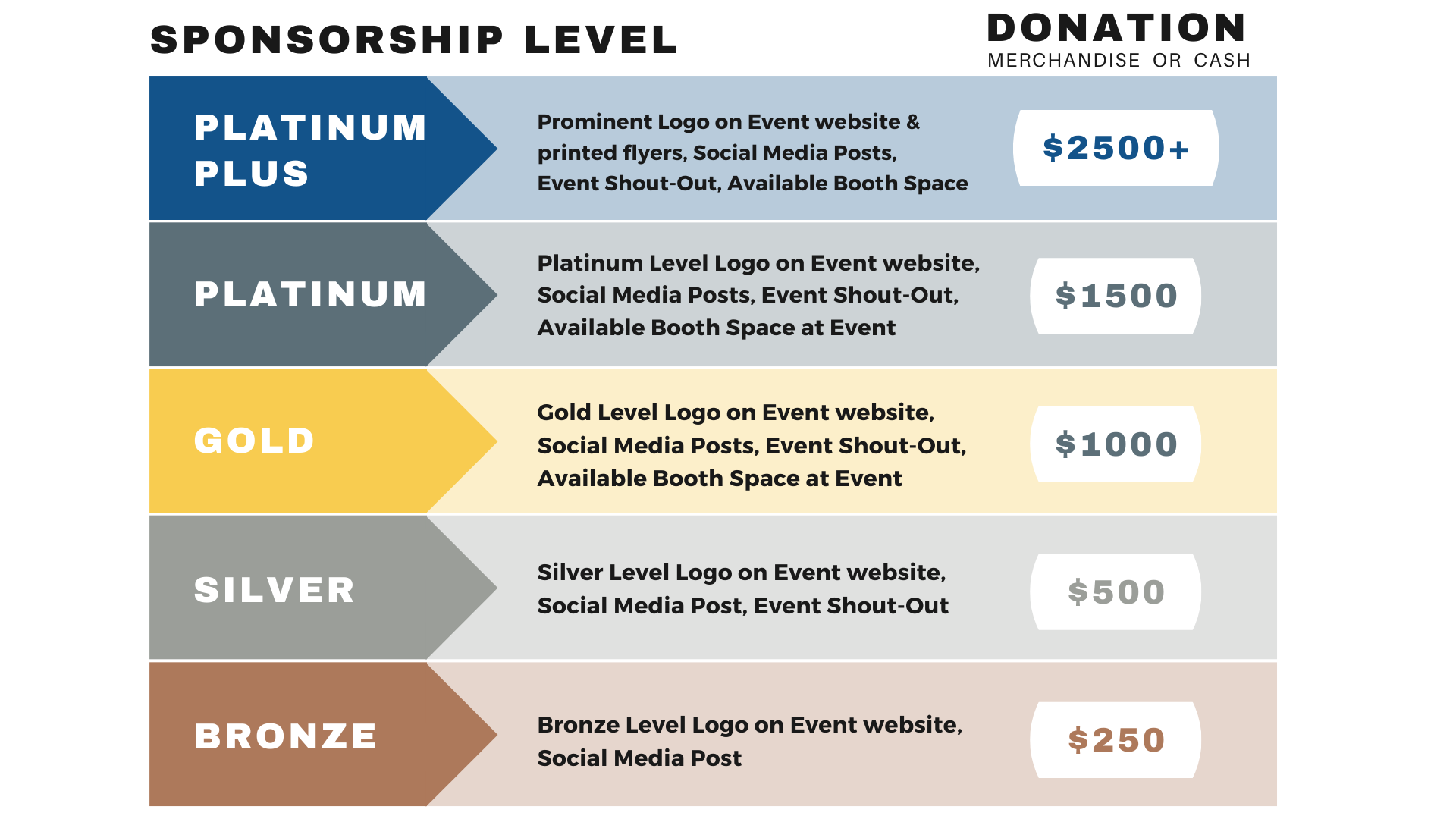
Three words show up in sponsorship proposals again and again:
Gold. Silver. Bronze.
They sound simple.
They aren't.
A Gold sponsorship isn't automatically valuable because it's called Gold. A Bronze sponsorship isn't automatically a bargain. And Silver isn't supposed to be the awkward package sitting between two more exciting choices.
These labels are simply a way to organize sponsorship opportunities by value, visibility, benefits, access, and investment.
The real question isn't, “Which package sounds best?”
It's this:
Which sponsorship level gives the sponsor the right combination of exposure and business value for what they want to accomplish?
That's where smart sponsorship strategy begins.
A well-designed tier system makes it easier for prospects to understand their options. It gives them a logical path from a modest commitment to a major partnership. And it gives the event organizer a structure that can accommodate businesses with very different budgets and objectives.
But there is a danger.
If the only difference between Gold, Silver, and Bronze is the size of the logo, you haven't created a sponsorship strategy.
You've created a pricing ladder.
What Do Gold, Silver, and Bronze Sponsorships Mean?
Gold, Silver, and Bronze are sponsorship levels.
Each level represents a different degree of financial commitment and, ideally, a different degree of sponsor value.
A typical hierarchy might look like this:
- Gold: highest standard tier, with the greatest visibility and benefits
- Silver: mid-level tier, balancing meaningful exposure with a lower investment
- Bronze: entry-level tier, offering basic recognition and participation
But here's the important part:
There is no universal definition of Gold, Silver, or Bronze.
One event's Gold package might cost $10,000.
Another organization's Gold package might cost $100,000.
The label doesn't establish the value.
The benefits do.
That means sponsorship sellers should never assume that a prospect understands what “Gold” means.
Show them.
Spell it out.
Quantify it wherever possible.
Gold Sponsorship: The Premium Standard Tier
Gold is typically the highest level among the standard sponsorship packages.
It should feel meaningfully different from Silver.
That could mean:
- Premium logo placement
- More event tickets
- Greater social media exposure
- Website prominence
- Speaking opportunities
- VIP access
- Exhibitor space
- Product demonstrations
- Inclusion in promotional campaigns
- Hospitality opportunities
- Lead-generation opportunities
- Category exclusivity
- More prominent on-site recognition
Gold sponsors are usually looking for more than visibility.
They may want access.
Influence.
Relationships.
Thought leadership.
Customer engagement.
Or a stronger association with the event's brand.
That's why a Gold package should not simply contain “more.”
It should contain better.
For example, adding 10 additional social media mentions may technically increase the number of benefits.
But giving the sponsor an opportunity to host a private executive reception could create substantially more value.
The goal isn't to fill a package with perks.
The goal is to create a compelling business proposition.
Silver Sponsorship: The Strategic Middle Ground
Silver is often the most interesting tier.
Why?
Because it can appeal to sponsors that want meaningful exposure but aren't ready—or don't need—to make the investment required for Gold.
A Silver sponsor might receive:
- Strong logo visibility
- Website recognition
- Event tickets
- Social media mentions
- Program advertising
- Exhibitor or display space
- Sponsor recognition during the event
- Selected networking opportunities
Silver can also serve as an important stepping stone.
A company might begin as a Silver sponsor, evaluate the experience, and upgrade to Gold in the following year.
That makes Silver more than a cheaper package.
It can become an entry point into a long-term relationship.
And that's something sponsorship sellers should think about carefully.
The goal isn't always to extract the largest possible check today.
Sometimes the better outcome is creating enough value that the sponsor wants to deepen the relationship tomorrow.
Bronze Sponsorship: The Accessible Entry Point
Bronze is typically the most affordable standard sponsorship tier.
That doesn't mean it should be an afterthought.
A Bronze package can be particularly useful for:
- Small businesses
- Local companies
- First-time sponsors
- Community organizations
- Service providers
- Companies testing a new audience
- Businesses with limited marketing budgets
Benefits might include:
- Logo placement
- Website recognition
- Event signage
- Social media acknowledgment
- A limited number of tickets
- Inclusion in printed materials
- Basic sponsor recognition
Bronze sponsors may not need a speaking slot or VIP reception.
They may simply want to demonstrate community involvement and gain exposure to a relevant audience.
That is a legitimate sponsorship objective.
The mistake is treating smaller sponsors as less important.
A $2,500 sponsor today can become a $25,000 sponsor later if the relationship is handled well.
Gold vs. Silver vs. Bronze: What Really Changes?
Here's a simplified example of how a three-tier structure could work.
| Benefit | Bronze | Silver | Gold |
|---|---|---|---|
| Illustrative investment | $2,500 | $7,500 | $15,000 |
| Logo on event website | Yes | Yes | Premium placement |
| Event signage | Standard | Prominent | Top-tier |
| Social media recognition | 1–2 mentions | 3–5 mentions | 6+ mentions |
| Event tickets | 2 | 5 | 10 |
| Exhibitor space | — | Optional | Included |
| Program recognition | Name/logo | Featured logo | Premium placement |
| Speaking opportunity | — | Possible | Included/priority |
| VIP access | — | Limited | Included |
| Hospitality | — | — | Included |
| Lead-generation activation | Limited | Available | Priority |
| Category exclusivity | — | Possible | Often included |
| Dedicated sponsor promotion | — | Limited | Included |
| Strategic activation | Basic | Moderate | Extensive |
These numbers are illustrative. Actual pricing and benefits should reflect the event's audience, reach, reputation, geography, industry, and sponsor demand.
Notice something important in the table.
Gold doesn't just provide more logo placement.
It opens doors.
That's the distinction between inventory and value.
Why Sponsorship Tiers Work
A tiered structure solves a very practical problem.
Not every sponsor has the same budget.
Not every sponsor wants the same benefits.
And not every sponsor needs the same level of exposure.
Imagine an event with 100 potential sponsors.
A single $20,000 package eliminates many of them immediately.
But a structure with Bronze, Silver, and Gold gives prospects somewhere to enter.
The local accounting firm may choose Bronze.
The regional healthcare company may choose Silver.
The national technology company may choose Gold.
You haven't changed the event.
You've changed the way sponsors can participate.
That's powerful.
Tiers Also Create a Natural Upgrade Path
A good package structure gives sponsors room to move.
Bronze → Silver → Gold.
But don't make the upgrade decision purely financial.
Show the prospect what they gain.
For example:
Bronze: visibility
Silver: visibility + engagement
Gold: visibility + engagement + exclusivity + leadership
Now the packages tell a story.
The prospect can see why paying more might make sense.
Don't Overload Your Packages
Here's a lesson I learned from working with sponsorship packages:
More benefits do not automatically create more value.
It's tempting to keep adding things.
Logo here.
Mention there.
Newsletter inclusion.
Banner.
Booth.
Tickets.
Flyer.
Video.
Social post.
Program ad.
Eventually the package becomes a giant list that nobody wants to read.
And worse, the sponsor can't tell which benefits actually matter.
A Gold package should be easy to understand.
A sponsor should be able to look at it and say:
“I see why this costs more.”
That's the standard.
A First-Person Lesson: The Package Isn't the Product
One of the most useful lessons I've learned is that sponsors rarely buy sponsorship packages exactly as they are presented.
They buy solutions to problems.
I remember reviewing a package that looked impressive on paper. It had dozens of benefits, prominent signage, social media exposure, tickets, advertising, and multiple mentions.
Everything was there.
Except the thing the prospective sponsor actually wanted.
They weren't primarily looking for more visibility.
They wanted meaningful conversations with decision-makers.
That changed the conversation.
Instead of emphasizing the number of impressions, we focused on hospitality, networking, introductions, and opportunities to engage the right people.
The package became simpler.
It also became more valuable.
That experience reinforced something I now consider fundamental:
Don't start with your inventory. Start with the sponsor's objective.
Then build the package backward.
Should Every Event Have Gold, Silver, and Bronze?
No.
Three tiers are common, but they're not mandatory.
A smaller event might need only two options.
A major conference might have five or six levels.
Another organization may prefer customized sponsorships altogether.
The right number depends on your market.
If you have too few choices, prospects may feel boxed in.
If you have too many, decision-making becomes exhausting.
Three primary tiers often work well because they create a clear hierarchy without overwhelming the buyer.
But don't follow the Gold-Silver-Bronze model simply because everyone else does.
Your structure should reflect your audience.
How Should You Price the Three Levels?
Start with value.
Then work backward.
Ask:
What is the audience worth to this sponsor?
How many people will attend?
Who are they?
What industries do they represent?
How much decision-making authority do they have?
How much media exposure will the event generate?
What activation opportunities exist?
Can the sponsor access customers directly?
Is there category exclusivity?
How much scarcity exists?
The more compelling the answers, the stronger your pricing case becomes.
You can also use a benefit-value analysis.
Assign an internal value to each major benefit, estimate its importance to the sponsor, and compare the package against your target investment.
The numbers don't need to appear in the final proposal.
But they should exist behind the scenes.
A sponsor should never be able to ask, “Why does Gold cost twice as much?” and leave you searching for an answer.
Make the Differences Obvious
Your sponsorship packages should pass what I call the five-second test.
A prospect should be able to glance at the comparison and understand:
- What each level costs.
- What each level includes.
- What makes the higher level more valuable.
- What is exclusive.
- Which package is most appropriate for a serious strategic partner.
If they have to decode your proposal, you've created friction.
And friction kills momentum.
Use clear package names.
Use concise benefit descriptions.
Highlight the major differences.
Don't hide the most valuable benefits in paragraphs of small print.
The Biggest Mistake Sponsors Make
Sponsors sometimes choose Gold because they assume higher is better.
That's not always true.
A company selling primarily to a local audience may get more value from a focused Silver sponsorship than an expensive Gold package designed for national visibility.
Likewise, a national brand may find Bronze almost useless if it needs significant reach and activation.
The right sponsorship level is the one that matches the sponsor's objectives.
Not its ego.
Not its competitors.
Not the color of the package.
The objective.
The Biggest Mistake Organizers Make
Organizers make the opposite mistake.
They create Bronze, Silver, and Gold packages based entirely on what they have available.
Then they expect sponsors to figure out why the inventory matters.
That's backward.
Start with the audience.
Then the sponsor.
Then the objective.
Then the experience.
Then the benefits.
Then the price.
That sequence produces dramatically stronger sponsorship packages.
The Bottom Line
Gold, Silver, and Bronze sponsorships aren't really about metals.
They're about levels of value.
Gold should represent your strongest standard partnership.
Silver should offer meaningful participation without requiring the highest commitment.
Bronze should create an accessible entry point for organizations that still want to be part of the event.
But don't let the labels do the selling.
They won't.
Your job is to demonstrate why each level exists, what problem it solves, and what the sponsor receives in return.
And here's the provocative truth:
If your Gold, Silver, and Bronze packages differ only by logo size and the number of mentions, you're leaving money on the table.
The best sponsorship hierarchy doesn't ask, “How much can we charge for a bigger logo?”
It asks a much more important question:
“What can we give this sponsor that becomes more valuable as their commitment increases?”
That's where Gold becomes more than Gold.
Silver becomes more than Silver.
And Bronze becomes the beginning of a relationship—not the bottom of a pricing chart.
- Arts
- Business
- Computers
- Games
- Health
- Home
- Kids and Teens
- Money
- News
- Personal Development
- Recreation
- Regional
- Reference
- Science
- Shopping
- Society
- Sports
- Бизнес
- Деньги
- Дом
- Досуг
- Здоровье
- Игры
- Искусство
- Источники информации
- Компьютеры
- Личное развитие
- Наука
- Новости и СМИ
- Общество
- Покупки
- Спорт
- Страны и регионы
- World

 Russian
 French
 Spanish
 Portuguese
 Deutsch
 Turkish
 Dutch
Dutch
 Italiano
 Arabic
 Romaian
 Portuguese (Brazil)
 Greek
Greek