
What Are the Key Elements of a Successful Startup?
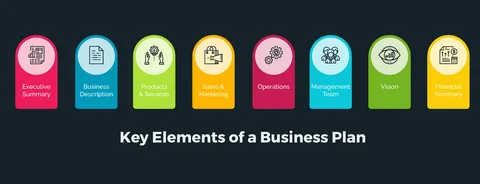
Starting a new business is an exciting venture, but it comes with its own set of challenges. To turn your startup into a thriving enterprise, there are several key elements that you must focus on. These elements not only help in building a strong foundation but also ensure sustainable growth as your business evolves. Below are the key success factors that every entrepreneur should consider when launching their startup.
1. Clear Value Proposition
A successful startup begins with a clear value proposition. This is the unique offering or solution that your product or service provides to solve a specific problem or meet a need in the market. A compelling value proposition sets you apart from competitors and communicates why your product or service is worth the customer’s attention. Without this, potential customers may struggle to understand why they should choose your business over others.
To create a solid value proposition, focus on answering these critical questions:
- What pain point does your product or service solve?
- How is your solution different from what’s already available in the market?
- What benefits do customers gain by choosing your product or service?
2. Understanding of the Target Market
Knowing your target market is another crucial element of a successful startup. Entrepreneurs must take the time to research and understand the demographics, behaviors, and preferences of the customers they intend to serve. A deep understanding of your target audience allows you to tailor your product, marketing strategies, and sales approaches to meet their specific needs.
Effective ways to gain insight into your target market include:
- Conducting surveys and interviews with potential customers.
- Analyzing competitors to see what they are offering and how they are connecting with their audience.
- Utilizing online tools and platforms to track consumer behavior trends.
3. Scalable Business Model
A scalable business model is one of the most important elements of a startup that aspires to grow. Scalability means that your business has the potential to expand without proportional increases in costs. For example, if your business can grow its revenue without having to significantly increase its workforce or operational expenses, it’s considered scalable.
To build a scalable business model, focus on:
- Automating key processes to increase efficiency.
- Creating a flexible infrastructure that can handle growth.
- Leveraging technology to streamline operations and reduce costs.
Having a scalable business model is particularly important when seeking investors, as they are more likely to fund businesses that can demonstrate potential for long-term growth.
4. Strong Team
No startup can succeed without a strong team behind it. The individuals you bring on board are just as important as the idea itself. A strong team provides the expertise, creativity, and execution necessary to transform a business concept into a reality. A diverse team with complementary skills can help overcome obstacles, generate innovative ideas, and drive the business forward.
Key qualities to look for in team members include:
- Passion for the mission and vision of the startup.
- Relevant industry experience and skills.
- The ability to collaborate and work in a fast-paced, dynamic environment.
In addition, building a strong company culture where employees feel valued and aligned with the startup’s goals is essential for long-term success.
5. Sufficient Funding
Finally, sufficient funding is essential to bring your startup to life and scale it successfully. Funding helps cover the costs of product development, marketing, hiring, operations, and other expenses that arise as the business grows. Without adequate financial resources, even the best ideas can struggle to gain traction.
There are various funding options available, such as:
- Bootstrapping (self-funding through personal savings).
- Angel investors who provide early-stage funding in exchange for equity.
- Venture capital which is typically sought after when a startup shows significant growth potential.
- Crowdfunding platforms where you can raise capital from a large number of small investors.
Having sufficient funding not only helps you execute your business plan but also provides a safety net during the initial stages when cash flow may be unpredictable.
Conclusion
Building a successful startup is no easy feat, but by focusing on the key elements of a clear value proposition, a deep understanding of your target market, a scalable business model, a strong team, and sufficient funding, you set your business up for long-term success. Each of these factors plays a pivotal role in navigating the challenges that come with entrepreneurship and turning your vision into a thriving business.
- Arts
- Business
- Computers
- Jocuri
- Health
- Home
- Kids and Teens
- Money
- News
- Personal Development
- Recreation
- Regional
- Reference
- Science
- Shopping
- Society
- Sports
- Бизнес
- Деньги
- Дом
- Досуг
- Здоровье
- Игры
- Искусство
- Источники информации
- Компьютеры
- Личное развитие
- Наука
- Новости и СМИ
- Общество
- Покупки
- Спорт
- Страны и регионы
- World

 English
 Russian
 French
 Spanish
 Portuguese
 Deutsch
 Turkish
 Dutch
Dutch
 Italiano
 Arabic
 Portuguese (Brazil)
 Greek
Greek