
What Are the Different Types of Feedback?
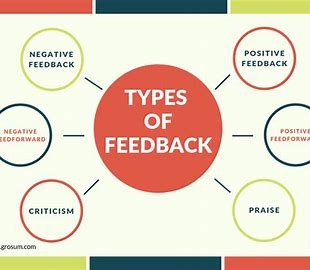
Understanding Various Feedback Forms: Positive, Negative, Constructive, and Destructive
Feedback is an essential part of communication in personal and professional settings. Whether it’s a teacher guiding a student, a manager evaluating an employee, or a friend offering advice, feedback plays a critical role in growth and improvement. However, not all feedback is created equal. Understanding the different types of feedback helps us deliver and receive messages more effectively, fostering growth rather than conflict.
1. Positive Feedback
Positive feedback focuses on what someone is doing well. It reinforces desirable behaviors or outcomes and boosts confidence and motivation. For example, an employer saying, “Your presentation was clear and engaging—great job!” is using positive feedback.
This type of feedback is crucial in maintaining morale and encouraging individuals to continue performing well. It is often used in educational, workplace, and social settings to celebrate achievements and reinforce good practices.
2. Negative Feedback
Negative feedback highlights areas where performance or behavior did not meet expectations. Although it may be hard to hear, it can be beneficial if delivered constructively. For instance, a supervisor might say, “The report lacked the detail we needed; please review the data more thoroughly next time.”
When given respectfully and with the intention to help, negative feedback can prompt reflection and improvement. However, the key is in the delivery—harsh or vague criticism can be demotivating.
3. Constructive Feedback
Constructive feedback is a balanced blend of both positive and negative input aimed at helping someone improve. It is specific, actionable, and focuses on behaviors rather than personal traits. For example: “You’ve done a good job organizing your thoughts. To make your writing clearer, consider breaking up longer paragraphs.”
This form of feedback is often used in coaching, mentoring, and performance reviews. It builds trust and promotes growth by offering solutions rather than just pointing out problems.
4. Destructive Feedback
Destructive feedback, unlike the other forms, is harmful and often lacks clarity or purpose. It may be overly critical, vague, or personally targeted. An example might be, “You’re terrible at this—you’ll never get it right.” Such feedback can damage self-esteem and relationships, and it usually hinders progress rather than supporting it.
Destructive feedback tends to come from a place of frustration or judgment and is often more about expressing anger than helping the recipient improve.
Why Understanding Feedback Types Matters
Recognizing the different types of feedback allows individuals and organizations to foster healthier communication. Effective feedback—whether positive or critical—should aim to support improvement, build confidence, and nurture relationships. By avoiding destructive criticism and embracing constructive dialogue, we create environments where people feel valued and motivated to grow.
- Arts
- Business
- Computers
- Spiele
- Health
- Startseite
- Kids and Teens
- Geld
- News
- Personal Development
- Recreation
- Regional
- Reference
- Science
- Shopping
- Society
- Sports
- Бизнес
- Деньги
- Дом
- Досуг
- Здоровье
- Игры
- Искусство
- Источники информации
- Компьютеры
- Личное развитие
- Наука
- Новости и СМИ
- Общество
- Покупки
- Спорт
- Страны и регионы
- World

 English
 Russian
 French
 Spanish
 Portuguese
 Turkish
 Dutch
Dutch
 Italiano
 Arabic
 Romaian
 Portuguese (Brazil)
 Greek
Greek