
How Do Customer Needs Align with Product Requirements?
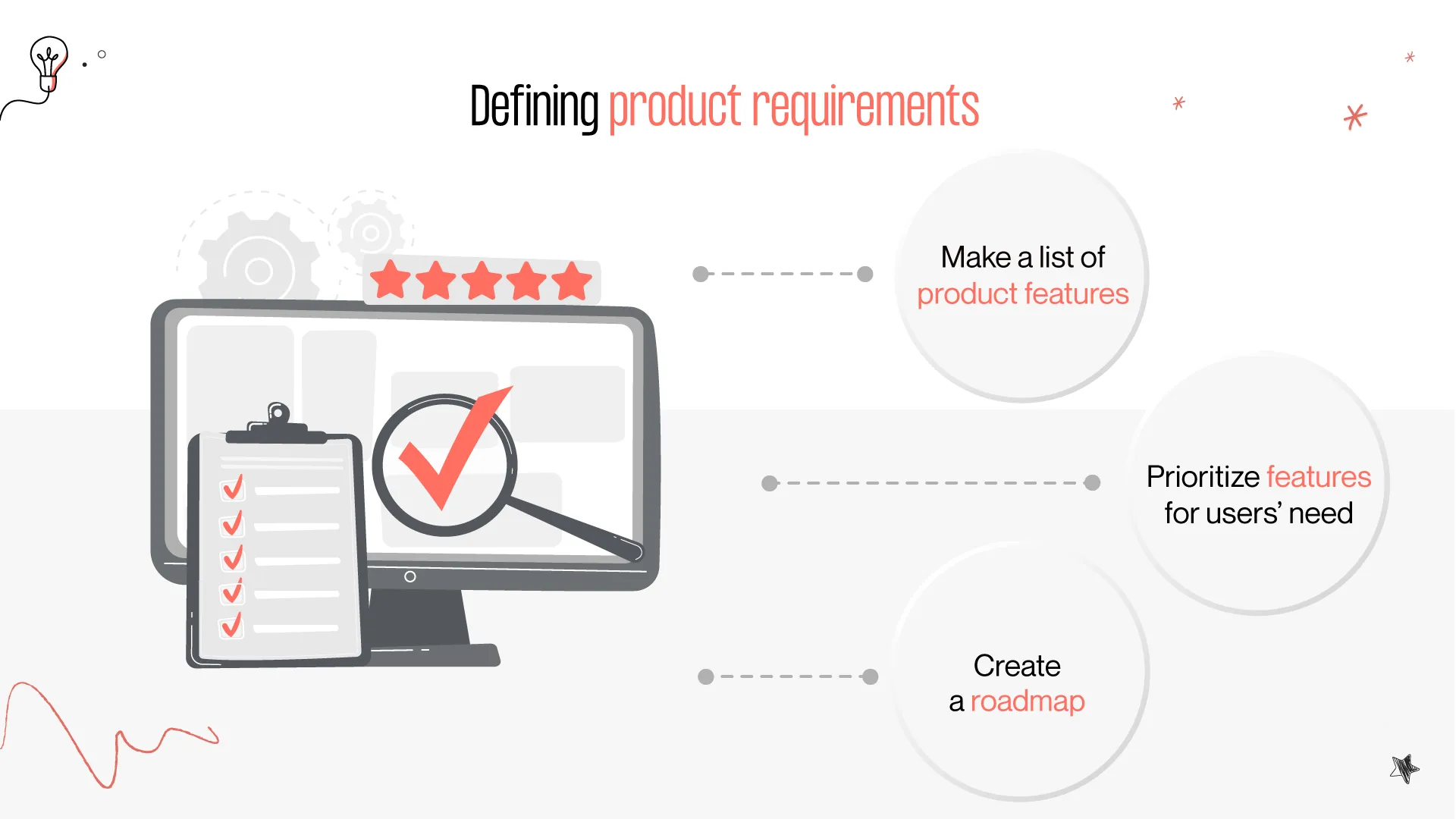
At the heart of product development lies one essential principle: building something that customers truly need and value. Yet, this is often easier said than done. Many products fail not because they weren’t innovative, but because they solved the wrong problem or didn’t align closely enough with what customers were looking for. The bridge between customer needs and product requirements is where successful products are born.
Understanding Customer Needs
Customer needs can be defined as the problems, desires, or goals that motivate someone to seek out a product or service. These needs may be explicit — directly stated by the customer — or implicit, meaning they are unspoken but observable through behavior.
Types of customer needs include:
-
Functional needs – what the customer wants the product to do (e.g., a car that is fuel-efficient).
-
Emotional needs – how the product makes them feel (e.g., driving a car that feels safe or prestigious).
-
Social needs – how the product impacts their social identity (e.g., owning an eco-friendly car as a statement of values).
Understanding all three layers ensures that a product doesn’t just work but also resonates on a deeper level.
From Needs to Requirements
While customer needs are broad and sometimes vague, product requirements are the detailed, technical, and measurable specifications that guide product design and development.
For example:
-
Customer need: “I want to listen to music anywhere, anytime.”
-
Product requirement: “The product must support offline playback and have at least 12 hours of battery life.”
Bridging this gap requires careful translation. Misinterpreting needs can lead to building features that don’t solve the real problem.
The Role of Research
To align customer needs with requirements, product teams rely heavily on research methods, such as:
-
Surveys and interviews – to directly capture customer input.
-
Observation and ethnographic studies – to uncover unspoken behaviors.
-
Data analytics – to analyze how customers actually use the product.
-
Focus groups and testing – to refine features before launch.
This research helps teams distinguish between what customers say they want and what they truly need.
Prioritization: Not All Needs Are Equal
One of the hardest parts of aligning needs with requirements is prioritization. Customers may express dozens of needs, but resources are limited. Product managers must evaluate which needs are most critical based on:
-
Impact on customer satisfaction.
-
Alignment with company vision and strategy.
-
Technical feasibility and cost.
-
Market differentiation.
Frameworks like the Kano Model or MoSCoW (Must-have, Should-have, Could-have, Won’t-have) help rank needs and translate them into actionable requirements.
Agile Alignment: Iteration and Feedback
In modern product development, aligning customer needs with requirements isn’t a one-time event. Instead, it’s a continuous process. Agile and lean methodologies emphasize small iterations, frequent feedback, and adaptability.
-
A minimum viable product (MVP) is often used to test whether identified needs are truly being met.
-
Feedback loops from customers guide refinements and new feature development.
-
Requirements evolve dynamically, staying aligned with changing customer expectations.
Common Pitfalls
Even with the best intentions, many organizations struggle with this alignment. Common pitfalls include:
-
Over-engineering: Adding features customers never asked for.
-
Listening only to vocal customers: Ignoring silent but critical user segments.
-
Confirmation bias: Seeing what you expect to see in research rather than what’s actually there.
-
Short-term focus: Meeting immediate needs but ignoring long-term customer goals.
Avoiding these pitfalls requires strong communication between product teams, customers, and stakeholders.
Case Study: Apple iPhone
Apple provides a strong example of aligning needs with requirements. Customers wanted a device that combined phone, music, and internet. Apple translated these needs into requirements like a capacitive touchscreen, an intuitive user interface, and app ecosystem support.
What made Apple stand out was its ability to anticipate unspoken needs — customers didn’t explicitly ask for multitouch gestures, but once introduced, they became an industry standard.
Measuring Alignment
To know whether customer needs are being met, organizations track metrics such as:
-
Customer satisfaction scores (CSAT).
-
Net Promoter Score (NPS).
-
Feature adoption rates.
-
Churn and retention rates.
These indicators show whether requirements are successfully addressing the underlying needs.
Conclusion
The relationship between customer needs and product requirements is the foundation of effective product management. Needs are the why, while requirements are the what and how. To align them, companies must:
-
Conduct thorough research.
-
Translate needs into clear, actionable requirements.
-
Prioritize based on impact and feasibility.
-
Continuously iterate and adapt based on feedback.
When done well, this alignment ensures that products are not only functional but also meaningful and competitive in the marketplace.
- Arts
- Business
- Computers
- Juegos
- Health
- Home
- Kids and Teens
- Money
- News
- Personal Development
- Recreation
- Regional
- Reference
- Science
- Shopping
- Society
- Sports
- Бизнес
- Деньги
- Дом
- Досуг
- Здоровье
- Игры
- Искусство
- Источники информации
- Компьютеры
- Личное развитие
- Наука
- Новости и СМИ
- Общество
- Покупки
- Спорт
- Страны и регионы
- World

 English
 Russian
 French
 Portuguese
 Deutsch
 Turkish
 Dutch
Dutch
 Italiano
 Arabic
 Romaian
 Portuguese (Brazil)
 Greek
Greek