
What Is Price Skimming?
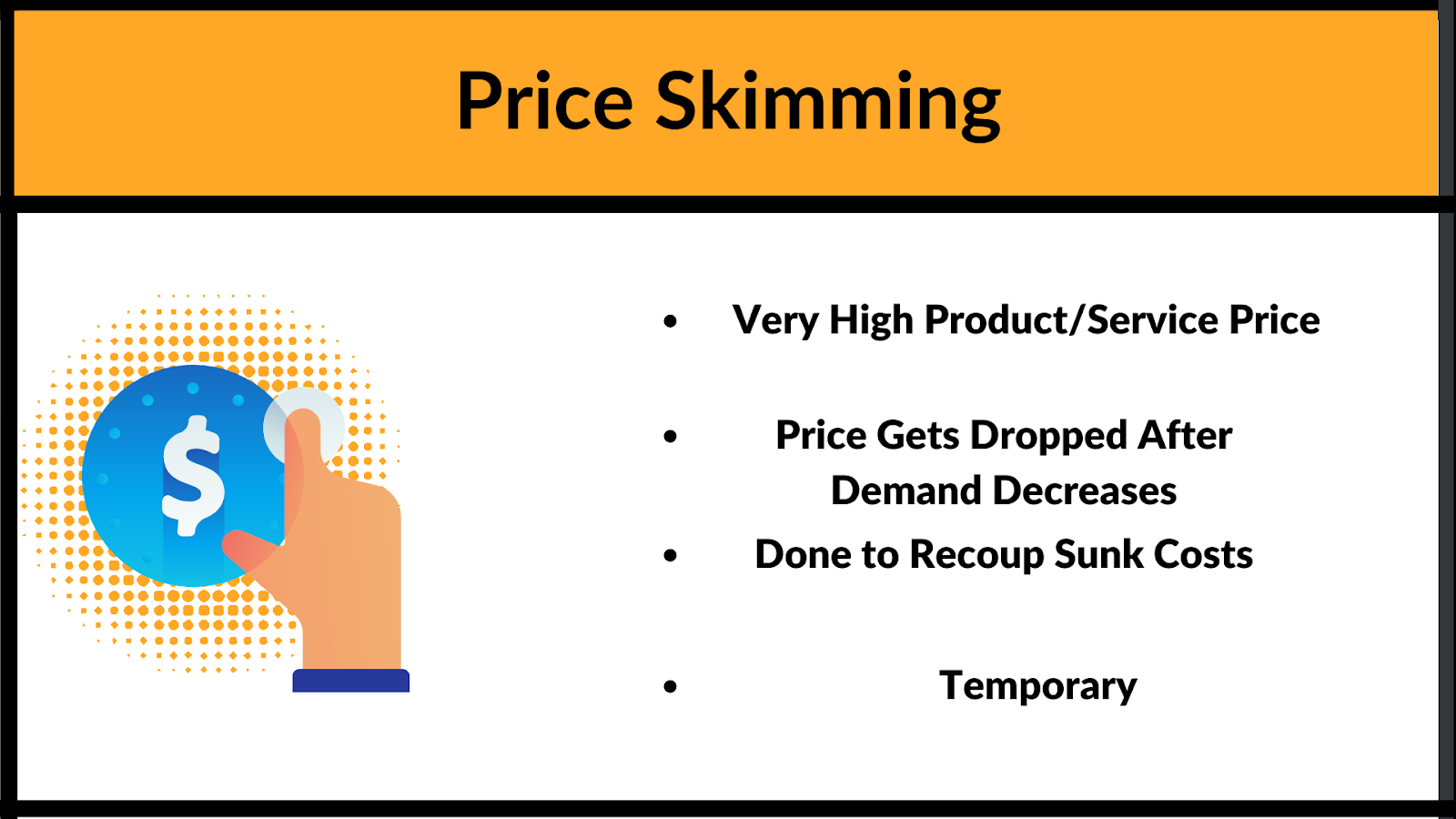
In the world of pricing strategies, price skimming is one of the most well-known approaches for introducing new products to the market. It involves launching with a high initial price to capture early adopters who are willing to pay a premium, then gradually lowering the price over time to attract broader market segments.
This strategy has been used successfully by technology companies, luxury brands, and innovators across industries. But it also comes with risks if not managed carefully.
In this article, we’ll explore what price skimming is, how it works, its advantages and drawbacks, real-world examples, and when businesses should (or shouldn’t) use it.
1. Defining Price Skimming
Price skimming is a pricing strategy that sets high prices initially and lowers them later. The “skim” comes from capturing the top layer of the market—early adopters who value innovation, exclusivity, or status.
Over time, as competitors enter and demand shifts, prices are reduced to appeal to more price-sensitive buyers.
Example: When a new iPhone is released, it often costs $999 or more. Months later, prices drop as new models arrive and competition grows.
2. How Price Skimming Works
Price skimming typically follows a step-down approach:
-
High Initial Price: At launch, the product targets early adopters willing to pay extra for being first.
-
Market Saturation: Once the premium market is tapped, sales slow down.
-
Price Reductions: The company lowers prices to attract mid-tier buyers.
-
Mass Market Appeal: Prices eventually reach levels accessible to the largest customer segment.
This approach allows businesses to maximize revenue across different market segments over time.
3. Why Businesses Use Price Skimming
Several motivations drive companies to adopt this strategy:
-
Recover R&D Costs: High upfront prices help recoup heavy investments in innovation.
-
Position as Premium: High launch prices signal exclusivity and high quality.
-
Leverage Early Adopters: Tech-savvy or loyal customers often pay more to access products first.
-
Control Supply and Demand: High prices can slow demand until production ramps up.
-
Create Buzz: Premium launches attract attention and signal innovation.
4. Advantages of Price Skimming
-
Maximizes Early Revenue: Companies earn more per unit from early adopters.
-
Funds Future Development: High margins can support new product lines.
-
Strengthens Brand Image: Premium pricing reinforces exclusivity and quality.
-
Segments the Market: Captures different levels of willingness to pay over time.
-
Discourages Immediate Competitors: High pricing may deter rivals until later stages.
5. Risks and Drawbacks
While effective in many industries, price skimming has risks:
-
Limited Market Size: Only a small portion of consumers are willing to pay early premiums.
-
Competitor Entry: Rivals may undercut pricing and steal market share quickly.
-
Customer Backlash: Later buyers may feel exploited if prices drop too fast.
-
Shorter Product Lifecycle: In fast-moving markets, high initial prices can limit adoption before products become obsolete.
-
Reputation Risks: If quality doesn’t match the high price, trust erodes.
6. Industries Where Price Skimming Works Best
-
Technology & Electronics: Smartphones, gaming consoles, and new gadgets often launch at premium prices.
-
Luxury Goods: Designer handbags, watches, or fashion items use high pricing to maintain exclusivity.
-
Pharmaceuticals: New drugs often launch at high costs before generics arrive.
-
Entertainment: Early-release movie tickets or exclusive access events can command higher prices.
7. Real-World Examples of Price Skimming
-
Apple: Launches new iPhones at premium prices, later discounting older models.
-
Sony PlayStation: New consoles debut at high prices, eventually dropping as production scales.
-
Pharmaceuticals: Patented drugs start with high prices until generics enter the market.
-
Luxury Cars: Limited editions launch with sky-high prices, later expanding to broader offerings.
8. When Not to Use Price Skimming
Price skimming isn’t suitable for every product or industry. Avoid it when:
-
The Market Is Price-Sensitive: If customers primarily shop on price, high launches will fail.
-
Low Barriers to Entry: Competitors can quickly copy or undercut products.
-
Minimal Differentiation: Products without strong unique value won’t justify premiums.
-
Customer Trust Is Crucial: Frequent price drops may anger loyal buyers.
9. Alternatives to Price Skimming
If price skimming isn’t the right fit, businesses may consider:
-
Penetration Pricing: Launching at low prices to quickly gain market share.
-
Value-Based Pricing: Pricing according to perceived customer value rather than costs.
-
Tiered Pricing: Offering multiple versions at different price points from launch.
10. Best Practices for Price Skimming
For companies considering this strategy, success comes from:
-
Clear Differentiation: Show why your product is worth a premium.
-
Strong Brand Story: Position as innovative, exclusive, or luxurious.
-
Gradual Price Reductions: Avoid sudden drops that upset early buyers.
-
Customer Communication: Justify pricing with benefits, features, or R&D investments.
-
Monitoring Competitors: Adjust strategy as rivals enter the market.
Final Thoughts
Price skimming is a proven strategy for businesses launching innovative, premium, or exclusive products. By starting high and gradually lowering prices, companies can capture different market segments, recover costs, and reinforce their brand positioning.
However, it requires careful execution. Without clear differentiation or strong brand equity, price skimming can backfire, leading to backlash or competitive threats.
The key is balance: offer enough value to justify the initial premium while managing transitions to broader markets gracefully.
- Arts
- Business
- Computers
- Jeux
- Health
- Domicile
- Kids and Teens
- Argent
- News
- Personal Development
- Recreation
- Regional
- Reference
- Science
- Shopping
- Society
- Sports
- Бизнес
- Деньги
- Дом
- Досуг
- Здоровье
- Игры
- Искусство
- Источники информации
- Компьютеры
- Личное развитие
- Наука
- Новости и СМИ
- Общество
- Покупки
- Спорт
- Страны и регионы
- World

 English
 Russian
 Spanish
 Portuguese
 Deutsch
 Turkish
 Dutch
Dutch
 Italiano
 Arabic
 Romaian
 Portuguese (Brazil)
 Greek
Greek
