
How to Check Your Credit Score
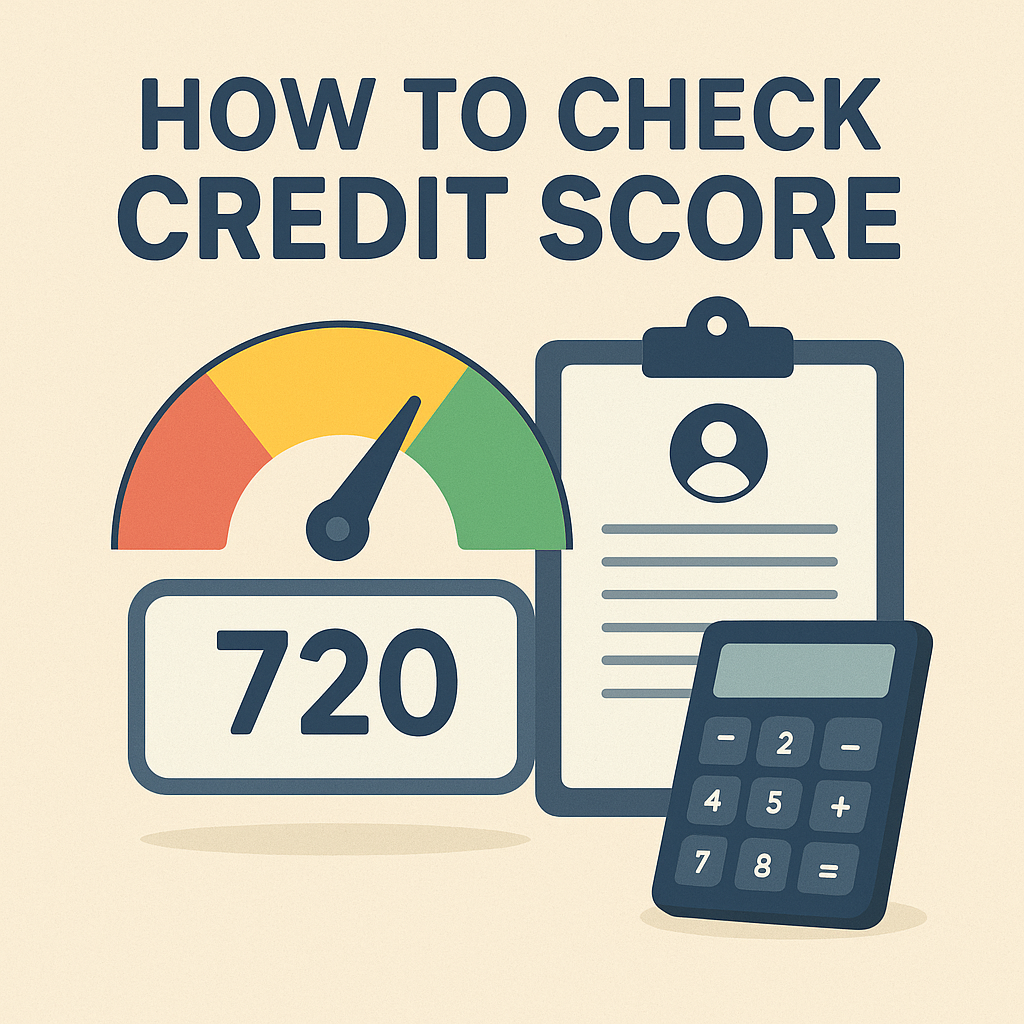
How to Check Your Credit Score
Your credit score is one of the most important numbers in your financial life. Lenders, landlords, and even some employers use it to gauge your reliability and financial habits. Knowing your score can help you plan for major purchases, negotiate better loan terms, and improve your overall financial health. If you’re wondering how to check your credit score, here’s a step-by-step guide.
1. Understand What a Credit Score Is
A credit score is a three-digit number, typically ranging from 300 to 850, that represents your creditworthiness. It’s calculated based on factors like payment history, credit utilization, length of credit history, types of credit accounts, and recent inquiries. The higher the score, the lower the risk you pose to lenders.
2. Use Free Credit Score Services
Many banks, credit card companies, and financial apps provide free access to your credit score. Check your online account dashboard to see if your provider offers this feature. These scores are usually updated monthly, giving you a reliable snapshot of your progress.
3. Request Reports from the Major Credit Bureaus
In the U.S., the three main credit bureaus are Experian, Equifax, and TransUnion. While your official credit report doesn’t always show your score for free, you’re entitled to one free report per year from each bureau through AnnualCreditReport.com. Some reports may include your score, or you can pay a small fee to add it.
4. Try Personal Finance Apps
Apps like Credit Karma, NerdWallet, or Mint offer free access to your credit score along with tips on how to improve it. Keep in mind that the score you see may be a VantageScore rather than a FICO® Score, but both are widely used by lenders.
5. Ask Your Lender or Financial Institution
If you’re applying for a loan or credit product, lenders often check your score. Some may be willing to share the result with you, especially if you’re an existing customer.
6. Watch Out for Scams
When checking your credit score online, always use trusted sources. Avoid websites that require sensitive information but don’t clearly explain how they’ll use it. Stick with reputable financial institutions, major bureaus, or well-known apps.
7. Monitor Regularly
Your credit score can change frequently depending on your financial activity. By checking it regularly, you’ll be able to spot errors, detect identity theft, and track your progress toward financial goals.
Final Thoughts
Checking your credit score is simple, free, and an essential part of managing your financial health. By knowing where you stand, you can make smarter borrowing decisions, improve your score over time, and move closer to achieving your financial goals.
Would you like me to make this article SEO-optimized (with keywords like “how to check credit score for free,” “credit score apps,” etc.), or keep it as a straightforward informational piece?
- Arts
- Business
- Computers
- Jeux
- Health
- Domicile
- Kids and Teens
- Argent
- News
- Personal Development
- Recreation
- Regional
- Reference
- Science
- Shopping
- Society
- Sports
- Бизнес
- Деньги
- Дом
- Досуг
- Здоровье
- Игры
- Искусство
- Источники информации
- Компьютеры
- Личное развитие
- Наука
- Новости и СМИ
- Общество
- Покупки
- Спорт
- Страны и регионы
- World

 English
 Russian
 Spanish
 Portuguese
 Deutsch
 Turkish
 Dutch
Dutch
 Italiano
 Arabic
 Romaian
 Portuguese (Brazil)
 Greek
Greek
