
How to Invest in Stocks
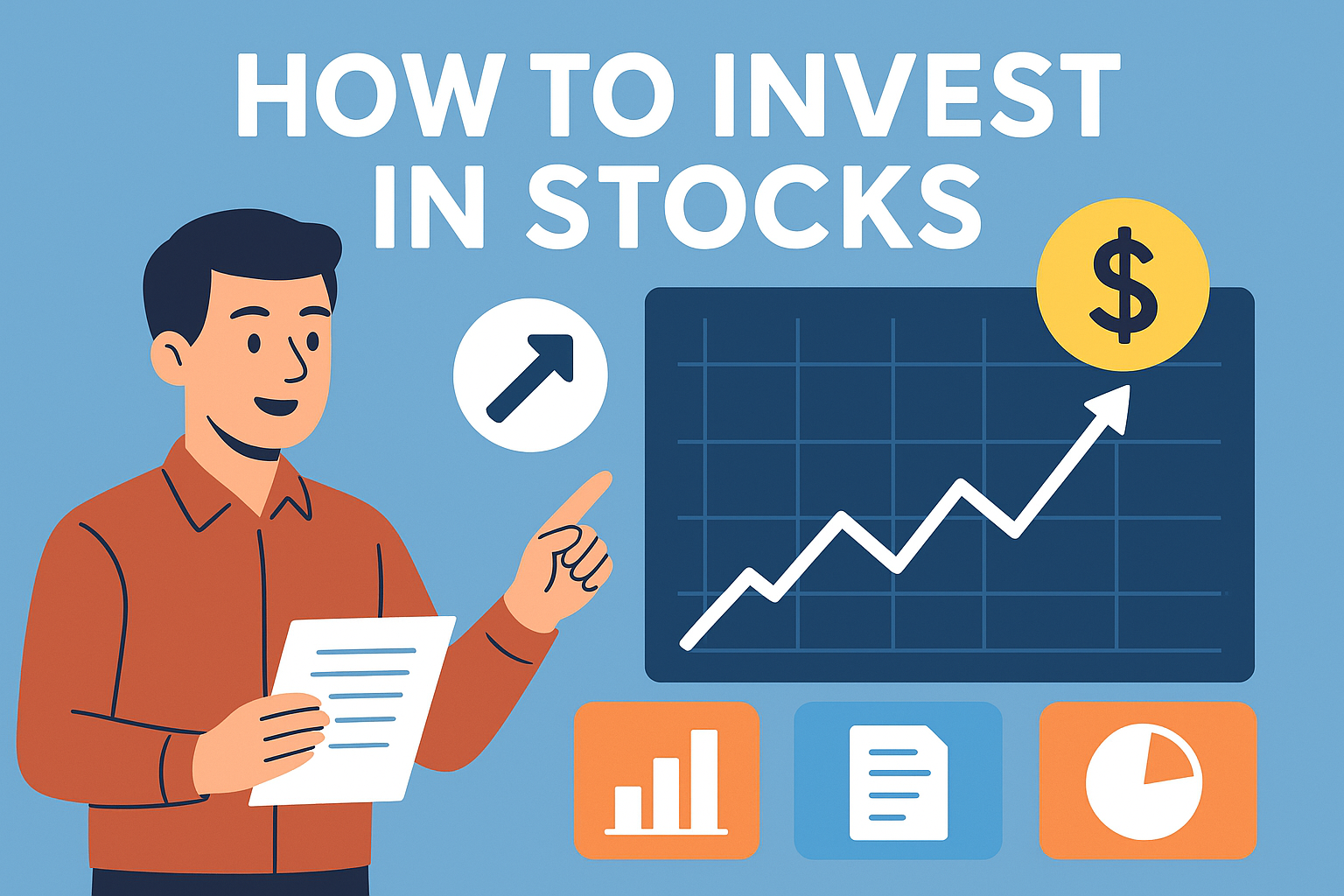
How to Invest in Stocks
Investing in stocks is one of the most popular ways to build wealth over time. Stocks represent ownership in a company, giving you the potential to share in its profits and growth. While the stock market may seem intimidating at first, with the right approach and mindset, anyone can learn to invest effectively.
1. Understand the Basics
Before diving in, it’s important to know what stocks are and how they work. A stock is a share of ownership in a company. When you buy a stock, you become a shareholder and benefit when the company does well (through rising stock prices or dividends). Conversely, if the company struggles, the value of your investment may fall.
2. Define Your Investment Goals
Ask yourself: Why am I investing? Common goals include saving for retirement, building wealth, or generating income. Your goals will determine your strategy, timeline, and level of risk tolerance.
-
Short-term goals (1–5 years): Consider safer investments, as stocks can be volatile.
-
Long-term goals (10+ years): Stocks are ideal because they historically provide higher returns compared to other assets.
3. Choose Your Investing Style
There are several ways to invest in stocks:
-
Active investing: Picking individual stocks based on research.
-
Passive investing: Buying index funds or exchange-traded funds (ETFs) that track the market.
-
Hybrid approach: Combining both methods.
For beginners, passive investing through index funds or ETFs is often recommended due to its simplicity and diversification benefits.
4. Open a Brokerage Account
To buy stocks, you’ll need a brokerage account. Many online brokerages offer user-friendly platforms with low or no commissions. When choosing one, consider:
-
Fees and commissions
-
Available investment options
-
Tools and research resources
-
Ease of use
5. Start Small and Diversify
Diversification—spreading investments across multiple companies or sectors—reduces risk. Instead of putting all your money into one stock, consider investing in different industries or using ETFs. Beginners can start small and gradually add to their portfolios over time.
6. Focus on the Long Term
Stock prices fluctuate daily, but over the long term, markets tend to grow. Avoid making emotional decisions based on short-term market movements. Consistent investing—sometimes called “dollar-cost averaging”—helps smooth out volatility.
7. Keep Learning and Stay Informed
Successful investing requires ongoing learning. Stay updated on financial news, read investment books, and follow market trends. However, avoid chasing every new trend or “hot stock tip.”
Final Thoughts
Investing in stocks is a powerful way to build long-term wealth, but it requires patience, discipline, and a clear strategy. Start with a solid foundation, focus on your goals, and remember: the earlier you begin, the more time your money has to grow.
Frequently Asked Questions (FAQ)
1. How much money do I need to start investing in stocks?
You don’t need a lot—many brokerages let you start with as little as $1 through fractional shares.
2. What’s the difference between stocks and ETFs?
A stock is a share in a single company. An ETF (exchange-traded fund) is a collection of many stocks (or other assets), which makes it more diversified.
3. Is investing in stocks risky?
Yes, but risk is part of the reward. Stocks can be volatile in the short term but tend to grow in value over the long term. Diversification helps reduce risk.
4. Should I invest in individual stocks or funds?
It depends on your comfort level. Beginners often do better with index funds or ETFs, while more experienced investors may choose individual stocks.
5. How do I know which stocks to buy?
Research is key—look at a company’s financial health, industry trends, and long-term growth potential. If you’re unsure, consider broad market index funds.
6. Can I lose all my money in stocks?
It’s rare unless a company goes bankrupt and you hold only that stock. Diversifying your investments protects you from losing everything.
7. When is the best time to invest?
The best time to start is as soon as possible. Time in the market is usually more important than timing the market.
- Arts
- Business
- Computers
- Παιχνίδια
- Health
- Κεντρική Σελίδα
- Kids and Teens
- Money
- News
- Personal Development
- Recreation
- Regional
- Reference
- Science
- Shopping
- Society
- Sports
- Бизнес
- Деньги
- Дом
- Досуг
- Здоровье
- Игры
- Искусство
- Источники информации
- Компьютеры
- Личное развитие
- Наука
- Новости и СМИ
- Общество
- Покупки
- Спорт
- Страны и регионы
- World

 English
 Russian
 French
 Spanish
 Portuguese
 Deutsch
 Turkish
 Dutch
Dutch
 Italiano
 Arabic
 Romaian
 Portuguese (Brazil)