
What Are the Main B2C Business Models?
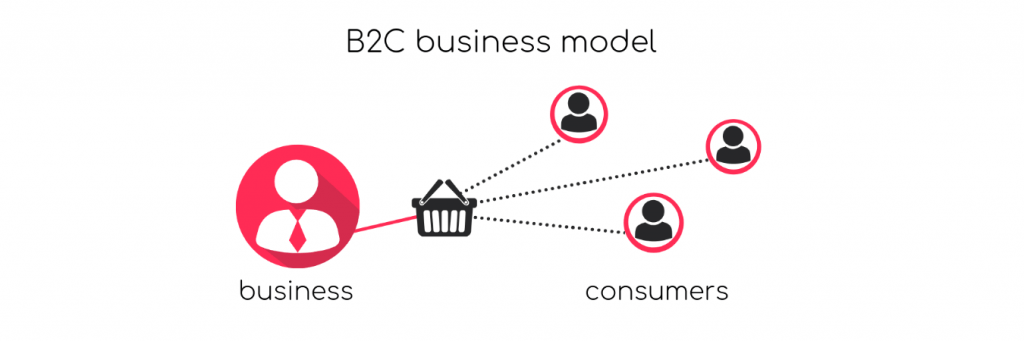
Business-to-Consumer (B2C) marketing is the backbone of the global economy. Every time an individual buys a pair of sneakers online, subscribes to a streaming platform, or pays for a mobile app upgrade, they’re interacting with a B2C business model.
But not all B2C businesses operate the same way. Understanding the different models is essential for entrepreneurs, marketers, and executives who want to build, optimize, or scale consumer-focused companies.
This article explores the five main B2C business models, their advantages, challenges, real-world examples, and how to decide which one is right for your business.
What Is a B2C Business Model?
A B2C business model is the framework that defines how a company delivers products or services to consumers and generates revenue.
Unlike B2B models, which focus on selling to other businesses, B2C emphasizes:
-
Speed: Shorter sales cycles.
-
Emotion: Consumer decisions often driven by feelings and brand loyalty.
-
Volume: Many transactions, often at lower individual price points.
The 5 Primary B2C Business Models
1. Direct Sellers
Direct sellers are companies that sell goods or services directly to consumers, without intermediaries.
Examples:
-
Apple (online store + retail locations)
-
Nike (direct-to-consumer via Nike.com and apps)
-
Warby Parker (eyewear through online and offline stores)
Advantages:
-
Higher profit margins by avoiding middlemen.
-
Direct customer relationships (valuable for retention and personalization).
-
Greater control over branding and pricing.
Challenges:
-
Higher responsibility for logistics, customer service, and fulfillment.
-
Requires investment in marketing to generate traffic.
2. Online Intermediaries
These businesses act as middlemen, connecting buyers and sellers without owning the actual product.
Examples:
-
Amazon (marketplace sellers)
-
eBay
-
Etsy
-
Uber (drivers provide the service, Uber connects them to customers)
Advantages:
-
Scalable with less inventory management.
-
Attracts large audiences due to variety and convenience.
-
Revenue comes from commissions or listing fees.
Challenges:
-
High competition among sellers on the platform.
-
Customers may have more loyalty to the platform than individual sellers.
3. Advertising-Based Model
Businesses provide free content or services to consumers and generate revenue through advertising.
Examples:
-
Google (search is free, ads drive revenue)
-
Facebook/Instagram (free use, ad-based revenue)
-
YouTube (free video content, ads drive monetization)
Advantages:
-
Free access attracts large user bases.
-
Highly profitable once a large audience is built.
-
Allows niche targeting for advertisers.
Challenges:
-
Requires massive traffic to sustain.
-
Increasing privacy regulations make ad-targeting harder.
-
Users may experience ad fatigue.
4. Community-Based Model
This model builds communities around shared interests or needs and monetizes through memberships, ads, or premium features.
Examples:
-
Reddit (ad revenue + premium memberships)
-
Discord (Nitro subscriptions)
-
Patreon (community support for creators)
Advantages:
-
Builds loyalty through a sense of belonging.
-
Creates strong organic growth via word of mouth.
-
Supports multiple monetization streams (ads, subs, events).
Challenges:
-
Scaling community moderation can be difficult.
-
Requires constant engagement to maintain activity.
5. Fee-Based (Subscription) Model
Consumers pay a recurring fee for access to a product, service, or platform.
Examples:
-
Netflix (streaming content)
-
Spotify (music streaming)
-
Peloton (fitness content subscriptions)
-
Dropbox (cloud storage)
Advantages:
-
Predictable, recurring revenue.
-
High customer lifetime value (CLV).
-
Encourages brand loyalty if experience is strong.
Challenges:
-
Subscription fatigue (consumers cancel if not seeing value).
-
Requires continuous value creation (content, updates).
Hybrid Models: The New B2C Reality
Most modern companies blend models.
-
Amazon = Intermediary + Direct Seller + Subscription (Prime).
-
Apple = Direct Seller + Fee-Based (iCloud, Apple Music).
-
Meta (Facebook) = Advertising + Community.
Hybrid models allow businesses to diversify revenue and reach wider audiences.
Choosing the Right B2C Model
When deciding which model to adopt, consider:
-
Product/Service Type:
-
Physical goods → Direct seller or intermediary.
-
Digital goods/services → Subscription or ad-based.
-
-
Target Market Behavior:
-
Do consumers expect free access first? → Ad or freemium model.
-
Do they value exclusivity? → Subscription or community.
-
-
Resources and Scale:
-
Startups may benefit from intermediary models (low overhead).
-
Established brands can invest in direct selling.
-
-
Revenue Goals:
-
For quick cash flow → Direct selling.
-
For long-term recurring revenue → Subscription.
-
The Future of B2C Business Models
Several trends are reshaping B2C models:
-
Personalization at Scale: AI-driven recommendations (e.g., Netflix, Amazon).
-
Creator Economy Growth: More individuals monetizing communities (Patreon, Substack).
-
Ethical & Sustainable Models: Consumers reward eco-friendly and transparent brands.
-
Subscription Fatigue Solutions: Bundling services (e.g., Apple One, Amazon Prime).
-
Social Commerce: Platforms like TikTok Shop and Instagram Shopping merging community + direct selling.
Case Studies
Case Study 1: Netflix (Fee-Based Model)
-
Launched as DVD rental, evolved into subscription streaming.
-
Key success driver: exclusive original content (e.g., “Stranger Things”).
-
Challenge: Rising competition from Disney+, HBO Max.
-
Lesson: Continuous innovation is necessary in subscription models.
Case Study 2: Amazon (Hybrid Model)
-
Started as an intermediary marketplace.
-
Expanded to direct selling (AmazonBasics) and subscription (Prime).
-
Lesson: Hybrid models create multiple revenue streams and user loyalty.
Case Study 3: Etsy (Community + Intermediary)
-
Built around a community of crafters and creators.
-
Scaled by monetizing listings and ads.
-
Lesson: Strong community trust drives differentiation in saturated markets.
FAQs
1. Can small businesses adopt these models?
Yes—many small businesses succeed as direct sellers through Shopify, or as creators using community-based or subscription platforms.
2. Which model is most profitable?
Fee-based subscription models often deliver the highest long-term ROI, but success depends on execution.
3. What’s the difference between B2C and D2C?
B2C includes all consumer-facing businesses, while D2C specifically means brands that bypass intermediaries to sell directly to customers.
4. Are hybrid models always better?
Not necessarily—hybrids require more resources. Start lean with one model, then expand.
Final Thoughts
The five core B2C business models—direct sellers, intermediaries, advertising-based, community-based, and fee-based—form the foundation of modern consumer commerce. But in practice, the most successful companies blend multiple models, tailoring strategies to their audience and market conditions.
Whether you’re launching a startup or scaling a global brand, understanding these frameworks helps you align your value proposition, marketing, and revenue strategy. In today’s evolving digital economy, flexibility and customer-centricity will determine success.
- Arts
- Business
- Computers
- Spiele
- Health
- Startseite
- Kids and Teens
- Geld
- News
- Personal Development
- Recreation
- Regional
- Reference
- Science
- Shopping
- Society
- Sports
- Бизнес
- Деньги
- Дом
- Досуг
- Здоровье
- Игры
- Искусство
- Источники информации
- Компьютеры
- Личное развитие
- Наука
- Новости и СМИ
- Общество
- Покупки
- Спорт
- Страны и регионы
- World

 English
 Russian
 French
 Spanish
 Portuguese
 Turkish
 Dutch
Dutch
 Italiano
 Arabic
 Romaian
 Portuguese (Brazil)
 Greek
Greek
