
What’s a Credit Score?
What’s a Credit Score?
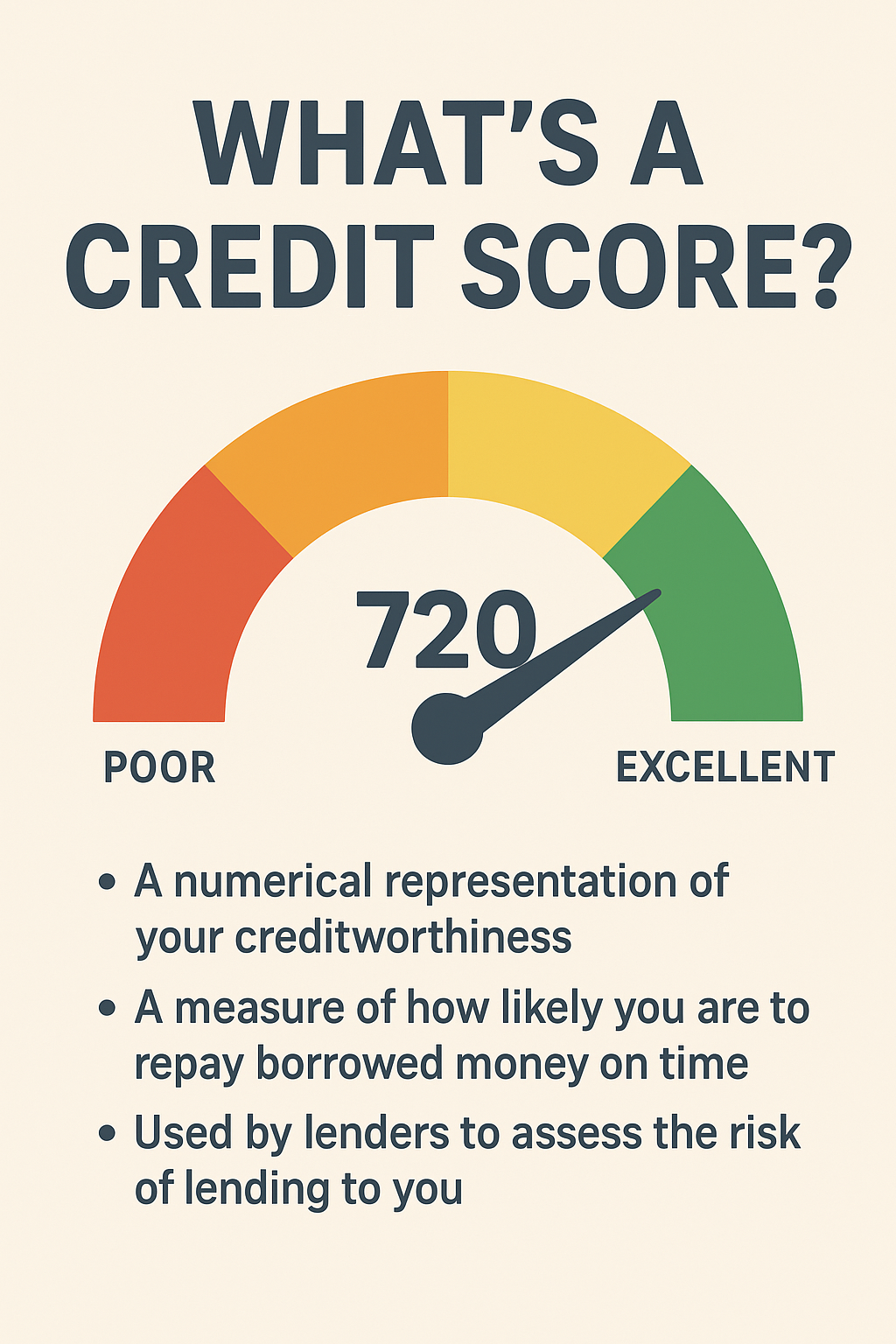
A credit score is a numerical representation of your creditworthiness, or in simpler terms, how likely you are to repay borrowed money on time. It plays a significant role in your financial life, influencing your ability to get loans, credit cards, or even rent an apartment. Understanding your credit score and how it’s calculated can help you make smarter financial decisions.
How a Credit Score Works
Credit scores are usually calculated by credit reporting agencies using information from your credit report. The most common scoring model is the FICO score, which ranges from 300 to 850. The higher your score, the better your credit standing. Lenders use this score to assess the risk of lending money to you.
Here’s what typically influences your credit score:
-
Payment History (35%)
Making payments on time is crucial. Late payments, defaults, or bankruptcies can significantly lower your score. -
Amounts Owed (30%)
This refers to your credit utilization—the percentage of available credit you’re using. Lower utilization (ideally below 30%) is better for your score. -
Length of Credit History (15%)
The longer your credit history, the more information lenders have to judge your reliability. -
Credit Mix (10%)
Having a mix of credit types, such as credit cards, auto loans, or mortgages, can improve your score. -
New Credit (10%)
Opening multiple new accounts in a short time can signal risk and lower your score temporarily.
Why Credit Scores Matter
Your credit score affects more than just loan approvals. It can impact:
-
Interest rates: Higher scores often qualify for lower interest rates, saving you money.
-
Rental applications: Landlords may check your score before approving a lease.
-
Insurance premiums: Some insurers use credit scores to determine rates.
-
Employment opportunities: Certain employers review credit reports for financial responsibility.
How to Improve Your Credit Score
Improving your credit score is a gradual process, but these strategies help:
-
Pay bills on time every month.
-
Keep credit card balances low relative to your limits.
-
Avoid opening too many new accounts at once.
-
Regularly check your credit report for errors and dispute inaccuracies.
Conclusion
A credit score is more than just a number—it’s a key indicator of your financial health. By understanding how it’s calculated and taking steps to maintain it, you can unlock better financial opportunities and make smarter money choices.
- Arts
- Business
- Computers
- Игры
- Health
- Главная
- Kids and Teens
- Деньги
- News
- Personal Development
- Recreation
- Regional
- Reference
- Science
- Shopping
- Society
- Sports
- Бизнес
- Деньги
- Дом
- Досуг
- Здоровье
- Игры
- Искусство
- Источники информации
- Компьютеры
- Личное развитие
- Наука
- Новости и СМИ
- Общество
- Покупки
- Спорт
- Страны и регионы
- World

 English
 French
 Spanish
 Portuguese
 Deutsch
 Turkish
 Dutch
Dutch
 Italiano
 Arabic
 Romaian
 Portuguese (Brazil)
 Greek
Greek
