
What Are KPIs in Sales?
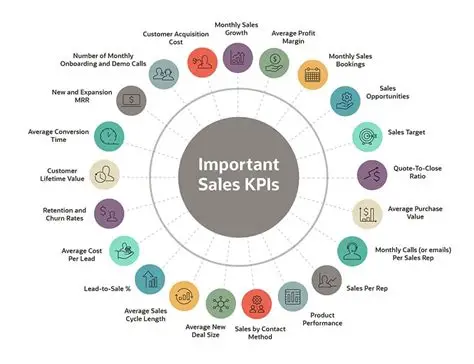
KPIs are one of the most important concepts in sales — and also one of the most misunderstood. Many people hear the term “KPIs” and think it’s complicated or only for managers. In reality, KPIs are what make sales predictable, improvable, and scalable.
If you don’t track KPIs, you’re guessing.
If you track KPIs, you can improve almost everything.
This article explains what sales KPIs are, why they matter, the most important KPIs to track, and how to use them to increase performance, whether you’re a beginner, a salesperson, or a business owner.
1. What Does KPI Mean in Sales?
KPI = Key Performance Indicator
A KPI is a measurable number that shows how well something is performing.
In sales, KPIs help you answer questions like:
-
Are we on track to hit our goal?
-
Where are deals getting stuck?
-
What should we improve?
-
Which activities actually drive revenue?
KPIs turn sales from guessing into a system.
2. Why KPIs Are Critical in Sales
Sales without KPIs feels like:
-
working hard but not knowing why results change
-
being stressed at the end of the month
-
relying on luck
-
reacting instead of planning
Sales with KPIs feels like:
-
control
-
clarity
-
predictability
-
confidence
KPIs allow you to diagnose problems early instead of discovering them when it’s too late.
3. The Difference Between Activity KPIs and Result KPIs
Sales KPIs fall into two major categories.
3.1 Activity KPIs (Inputs)
These measure what you do.
Examples:
-
calls made
-
emails sent
-
meetings booked
-
follow-ups sent
-
demos completed
You control activity KPIs directly.
3.2 Result KPIs (Outputs)
These measure what you achieve.
Examples:
-
deals closed
-
revenue
-
win rate
-
quota attainment
Result KPIs depend on activity KPIs.
If results are bad, you fix the activities — not just the outcome.
4. The Most Important Sales KPIs (Explained One by One)
Let’s break down the most important sales KPIs in detail.
5. Sales Quota
What Is a Sales Quota?
A quota is a target you’re expected to hit within a specific time period.
Quotas can be based on:
-
revenue
-
number of deals
-
units sold
-
profit
Examples:
-
$50,000 per month
-
10 deals per quarter
-
120 units per year
Why Quota Matters
Quota:
-
sets direction
-
defines success
-
creates accountability
Without a quota, sales efforts lack focus.
Quota Attainment KPI
This measures how close you are to your target.
Formula:
(Actual Sales ÷ Quota) × 100
Example:
-
Quota: $100,000
-
Sales: $80,000
-
Quota attainment: 80%
This KPI tells you how well you're performing overall.
6. Conversion Rate
Conversion rate shows how efficiently leads move through each stage of the sales process.
6.1 Lead-to-Meeting Conversion Rate
Formula:
(Meetings Booked ÷ Leads Contacted) × 100
This KPI tells you:
-
how good your outreach is
-
how relevant your targeting is
-
how strong your messaging is
Low rate = messaging or targeting problem.
6.2 Meeting-to-Deal Conversion Rate
Formula:
(Deals Closed ÷ Meetings Held) × 100
This shows:
-
quality of discovery
-
strength of your pitch
-
effectiveness of objection handling
Low rate = sales skill issue.
6.3 Overall Conversion Rate
Formula:
(Deals Closed ÷ Total Leads) × 100
This KPI shows how efficient your entire funnel is.
7. Sales Pipeline Metrics
Your pipeline is the collection of all active deals at different stages.
Pipeline KPIs help answer:
-
How much revenue is coming?
-
Where are deals stuck?
-
Are we likely to hit quota?
7.1 Pipeline Value
Total value of all open deals.
Example:
-
10 deals × $5,000 = $50,000 pipeline
If your pipeline is smaller than your quota, you have a problem.
7.2 Pipeline Coverage Ratio
This shows whether your pipeline is large enough to hit quota.
Formula:
Pipeline Value ÷ Quota
Example:
-
Pipeline: $300,000
-
Quota: $100,000
-
Coverage ratio: 3×
Many teams aim for 3–5× pipeline coverage.
7.3 Pipeline by Stage
Tracking how many deals sit in each stage helps you see bottlenecks.
Example stages:
-
Prospecting
-
Discovery
-
Proposal
-
Negotiation
-
Close
If deals pile up in one stage, that stage needs improvement.
8. Win Rate (Close Rate)
What Is Win Rate?
Win rate shows how often you win deals.
Formula:
(Deals Won ÷ Deals Pursued) × 100
Example:
-
20 deals pursued
-
5 deals won
-
Win rate = 25%
Why Win Rate Matters
Win rate tells you:
-
how effective your sales process is
-
whether leads are qualified
-
how strong your value proposition is
Low win rate usually means:
-
poor lead quality
-
weak discovery
-
unclear differentiation
9. Average Contract Value (ACV)
What Is ACV?
ACV is the average value of a closed deal.
Formula:
Total Revenue ÷ Number of Deals
Example:
-
$100,000 revenue
-
10 deals
-
ACV = $10,000
Why ACV Matters
ACV helps you:
-
forecast revenue
-
set quotas
-
choose pricing strategies
You can increase revenue by:
-
closing more deals
-
increasing ACV
-
improving both
10. Sales Cycle Length
What Is Sales Cycle Length?
Sales cycle length measures how long it takes to close a deal.
Formula:
Close Date − First Contact Date
Example:
-
First contact: Jan 1
-
Closed: Feb 15
-
Sales cycle: 45 days
Why Sales Cycle Length Matters
Shorter cycles mean:
-
faster cash flow
-
higher efficiency
-
more deals per year
Long cycles often signal:
-
complex decision-making
-
unclear value
-
weak urgency
11. Activity KPIs Every Salesperson Should Track
Even if you're not a manager, track these daily.
11.1 Calls Made
Tracks effort and consistency.
11.2 Emails Sent
Helps measure outreach volume.
11.3 Follow-Ups Completed
Most deals are won in follow-up.
11.4 Meetings Booked
Shows how effective your outreach is.
11.5 Meetings Held
Booked meetings don’t matter if people don’t show up.
12. Forecast Accuracy
Forecast accuracy measures how close your predictions are to actual results.
Formula:
(Forecasted Revenue ÷ Actual Revenue) × 100
Accurate forecasts help:
-
planning
-
hiring
-
budgeting
Poor forecasts cause surprises and stress.
13. KPIs for Individual Salespeople vs Teams
Individual KPIs
-
activity metrics
-
conversion rates
-
quota attainment
Team KPIs
-
total revenue
-
pipeline health
-
average win rate
-
average cycle length
Both matter, but they serve different purposes.
14. How to Use KPIs to Improve Sales (Not Just Track Them)
Tracking KPIs alone does nothing.
Action is what matters.
Example:
-
Low lead-to-meeting rate → improve messaging
-
Low win rate → improve discovery
-
Long cycle → add urgency or clarity
-
Small pipeline → increase outreach
KPIs tell you what to fix.
15. Common KPI Mistakes in Sales
❌ Tracking too many KPIs
❌ Only tracking revenue
❌ Ignoring activity metrics
❌ Not reviewing KPIs regularly
❌ Punishing people based only on KPIs
KPIs should guide improvement — not create fear.
16. How Often Should You Review Sales KPIs?
-
Daily: activity KPIs
-
Weekly: pipeline and conversion rates
-
Monthly: quota, revenue, win rate
-
Quarterly: trends and strategy
Consistency matters more than perfection.
17. KPIs Turn Sales Into a System
When KPIs are clear:
-
goals become realistic
-
performance becomes measurable
-
improvement becomes predictable
Sales stops being emotional and starts being logical.
18. Final Takeaway
Sales KPIs are not just numbers — they are signals.
They tell you:
-
where you are
-
what’s working
-
what’s broken
-
what to improve next
If you want consistent sales results, KPIs are not optional.
They are the foundation.
- Arts
- Business
- Computers
- Juegos
- Health
- Home
- Kids and Teens
- Money
- News
- Personal Development
- Recreation
- Regional
- Reference
- Science
- Shopping
- Society
- Sports
- Бизнес
- Деньги
- Дом
- Досуг
- Здоровье
- Игры
- Искусство
- Источники информации
- Компьютеры
- Личное развитие
- Наука
- Новости и СМИ
- Общество
- Покупки
- Спорт
- Страны и регионы
- World

 English
 Russian
 French
 Portuguese
 Deutsch
 Turkish
 Dutch
Dutch
 Italiano
 Arabic
 Romaian
 Portuguese (Brazil)
 Greek
Greek