
What Is the Sales Funnel?
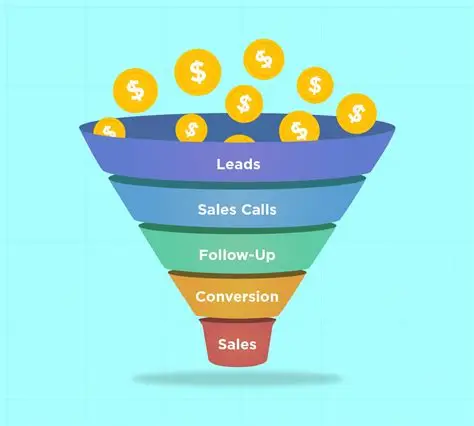
The sales funnel is one of the most important concepts in sales and marketing. Almost every sales strategy, lead generation system, and revenue model is built around it. Yet many people misunderstand what a sales funnel really is, how it works, or how to use it effectively.
This article gives you a complete, practical understanding of the sales funnel — what it is, why it matters, the different stages, real-world examples, and exactly how to build one that actually converts.
1. What Is a Sales Funnel? (Simple Definition)
A sales funnel is a visual and strategic model that shows the journey a potential customer takes from first discovering your business to becoming a paying customer.
It’s called a “funnel” because:
-
many people enter at the top
-
fewer move forward at each stage
-
only a portion reach the bottom and buy
In simple terms:
A sales funnel explains how strangers become customers.
2. Why the Sales Funnel Matters
Without a funnel, sales feels random.
You don’t know:
-
where leads come from
-
why deals stall
-
where people drop off
-
what to improve
With a funnel:
-
you understand buyer behavior
-
you can improve each stage
-
you can predict revenue
-
you can scale results
The sales funnel turns sales into a system, not a guessing game.
3. Sales Funnel vs Sales Process (Important Difference)
These two are often confused.
Sales Funnel
-
customer-focused
-
represents the buyer’s journey
-
shows how many people are at each stage
Sales Process
-
seller-focused
-
represents actions you take
-
calls, emails, demos, follow-ups
The funnel shows what’s happening.
The process defines what you do.
They work together.
4. The Core Stages of a Sales Funnel
While funnels vary by business, most follow the same core structure.
4.1 Awareness (Top of Funnel – TOFU)
This is where people first learn you exist.
Examples:
-
seeing an ad
-
finding a blog post
-
hearing about you from a friend
-
discovering you on social media
At this stage:
-
they’re not ready to buy
-
they’re learning
-
they may not even know they have a problem
Your goal: get attention and awareness.
4.2 Interest (Early Consideration)
Now the person shows curiosity.
Examples:
-
visiting your website
-
reading multiple pages
-
watching a video
-
signing up for a newsletter
They’re starting to think:
“This might be relevant to me.”
Your goal: educate and build trust.
4.3 Consideration (Middle of Funnel – MOFU)
Here, leads actively evaluate options.
Examples:
-
booking a call
-
downloading a guide
-
attending a webinar
-
requesting more info
They’re comparing:
-
different solutions
-
different providers
Your goal: position your solution as the best fit.
4.4 Decision (Bottom of Funnel – BOFU)
This is where buying decisions happen.
Examples:
-
pricing discussions
-
proposals
-
negotiations
-
trials or demos
Your goal: remove doubt and help them decide.
4.5 Action (Purchase / Conversion)
The final step:
-
they buy
-
they sign up
-
they commit
But the funnel doesn’t end here — retention and referrals come next.
5. A Simple Sales Funnel Example
Let’s say you sell online coaching.
1,000 people see your content
↓
200 visit your website
↓
50 sign up for a free call
↓
20 attend the call
↓
5 become customers
That entire flow is your sales funnel.
Each stage filters people naturally.
6. Why People Drop Off the Funnel
Drop-off is normal.
People leave because:
-
timing isn’t right
-
problem isn’t urgent
-
value isn’t clear
-
trust isn’t strong
-
price doesn’t fit
Your job is not to force everyone through — it’s to improve conversion at each stage.
7. Sales Funnels in B2B vs B2C
7.1 B2B Sales Funnel
Typically:
-
longer
-
more decision-makers
-
more education required
Stages often include:
-
discovery calls
-
demos
-
proposals
-
approvals
7.2 B2C Sales Funnel
Typically:
-
shorter
-
emotion-driven
-
fewer stakeholders
Stages focus on:
-
offers
-
urgency
-
simplicity
Same funnel concept — different execution.
8. Sales Funnel vs Marketing Funnel
Marketing often owns the top of the funnel.
Sales often owns the bottom of the funnel.
Marketing funnel:
-
awareness
-
interest
-
lead capture
Sales funnel:
-
qualification
-
conversion
-
closing
Strong businesses align both.
9. Key Metrics at Each Funnel Stage
You can’t improve what you don’t measure.
9.1 Top of Funnel Metrics
-
traffic
-
impressions
-
reach
9.2 Middle of Funnel Metrics
-
lead conversion rate
-
meeting bookings
-
engagement
9.3 Bottom of Funnel Metrics
-
close rate
-
deal size
-
sales cycle length
Each metric reveals a different problem or opportunity.
10. How to Build a Sales Funnel (Step-by-Step)
Step 1: Define Your Target Audience
Ask:
-
Who is this for?
-
What problem do they have?
-
What do they want solved?
A funnel without a clear audience doesn’t convert.
Step 2: Choose an Entry Point
How do people enter the funnel?
Examples:
-
ads
-
social content
-
referrals
-
cold outreach
-
SEO
This is the top of your funnel.
Step 3: Create a Lead Capture Mechanism
You need a way to collect contact info.
Examples:
-
email signup
-
form
-
free resource
-
booking link
No capture = no funnel.
Step 4: Nurture the Lead
Most leads aren’t ready immediately.
Use:
-
emails
-
follow-ups
-
education
-
value-based messaging
Nurture builds trust over time.
Step 5: Convert With a Sales Action
This could be:
-
a sales call
-
a checkout page
-
a trial
-
a proposal
Make the next step clear and easy.
11. Sales Funnel Examples by Business Type
11.1 Service Business Funnel
Content → Contact form → Call → Proposal → Close
11.2 SaaS Funnel
Ad → Free trial → Email nurture → Upgrade
11.3 E-commerce Funnel
Ad → Product page → Checkout → Upsell
Different formats — same funnel logic.
12. Common Sales Funnel Mistakes
❌ no clear stages
❌ too many steps
❌ weak follow-up
❌ unclear value
❌ poor qualification
Most funnel problems happen in the middle.
13. Funnels Are Not Static
Funnels must be adjusted.
Improve by:
-
analyzing drop-off points
-
testing messaging
-
improving follow-up
-
refining targeting
Small changes compound.
14. Sales Funnel and Lead Quality
A funnel doesn’t just generate customers — it filters them.
Good funnels:
-
attract the right people
-
repel poor-fit leads
-
save time
Quality matters more than volume.
15. Sales Funnel vs Flywheel (Quick Note)
Some modern models use a “flywheel” instead of a funnel.
Difference:
-
funnel focuses on conversion
-
flywheel focuses on retention
In practice, businesses use both.
16. Tools Used to Manage Sales Funnels
Common tools:
-
CRM systems
-
email platforms
-
analytics dashboards
Tools don’t replace strategy — they support it.
17. How Funnels Reduce Sales Stress
Funnels give clarity:
-
what to do
-
when to do it
-
who to focus on
Clear funnels reduce guesswork and anxiety.
18. The Sales Funnel Is About People, Not Pressure
A funnel is not manipulation.
It’s about:
-
guiding
-
educating
-
helping people decide
Good funnels respect the buyer’s pace.
19. Final Takeaway
The sales funnel is a map of the buying journey.
When built correctly, it:
-
attracts the right people
-
builds trust
-
increases conversions
-
creates predictable revenue
Sales success isn’t about convincing everyone — it’s about guiding the right people through the right steps.
- Arts
- Business
- Computers
- Jocuri
- Health
- Home
- Kids and Teens
- Money
- News
- Personal Development
- Recreation
- Regional
- Reference
- Science
- Shopping
- Society
- Sports
- Бизнес
- Деньги
- Дом
- Досуг
- Здоровье
- Игры
- Искусство
- Источники информации
- Компьютеры
- Личное развитие
- Наука
- Новости и СМИ
- Общество
- Покупки
- Спорт
- Страны и регионы
- World

 English
 Russian
 French
 Spanish
 Portuguese
 Deutsch
 Turkish
 Dutch
Dutch
 Italiano
 Arabic
 Portuguese (Brazil)
 Greek
Greek
