
How Many People See a Billboard Each Day?
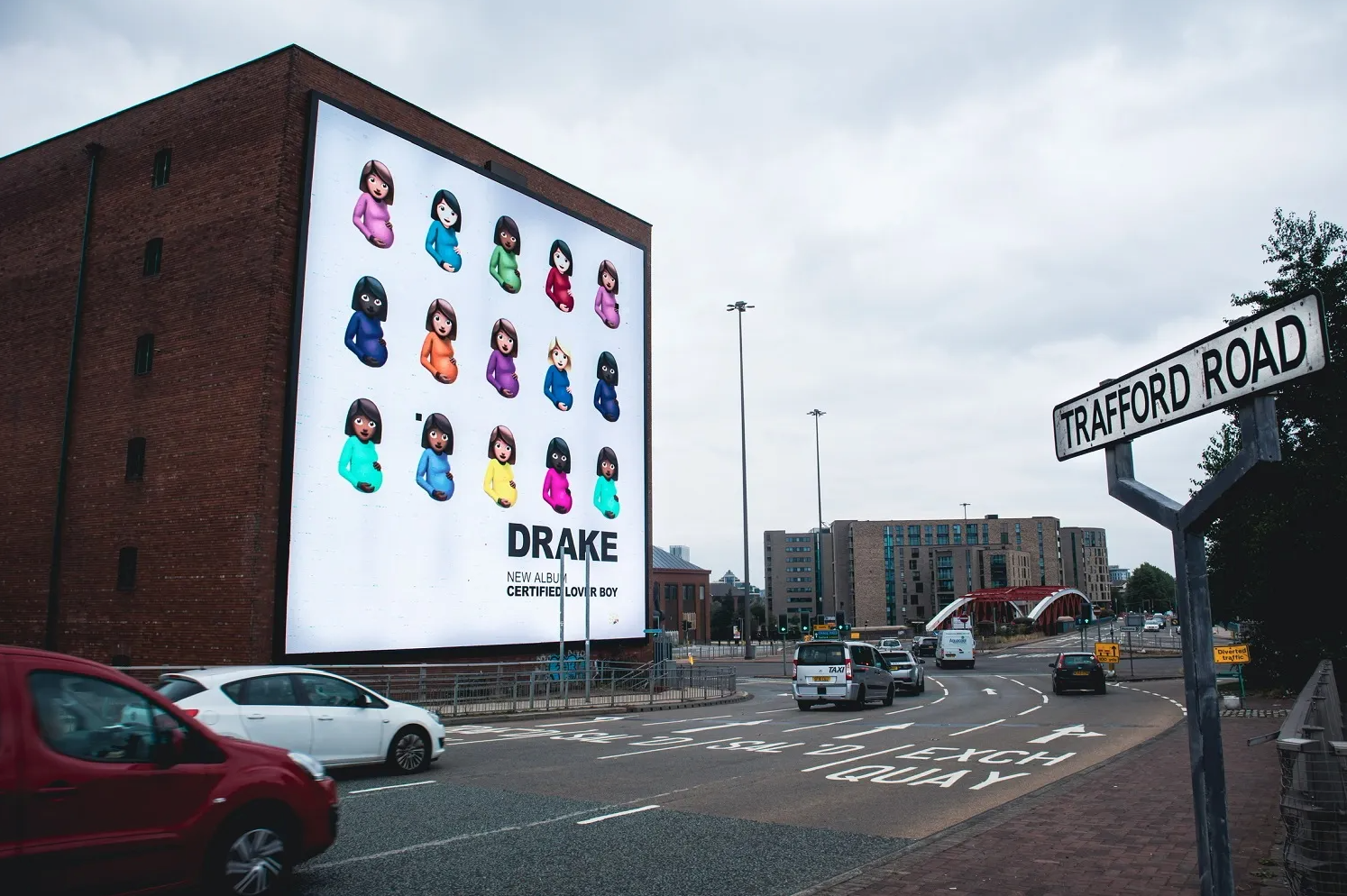
One of the most common questions advertisers ask when considering billboard advertising is simple but important: How many people will actually see my ad? Unlike digital advertising—where impressions, clicks, and conversions are tracked precisely—billboard advertising relies on estimated audience exposure. These estimates are often referred to as billboard impressions or billboard reach.
While billboard audience measurement is less precise than online metrics, it is far from guesswork. The outdoor advertising industry uses standardized methodologies, traffic data, and modeling systems to estimate how many people are likely to see a billboard each day. Understanding how these numbers are calculated helps advertisers evaluate value, compare placements, and set realistic expectations.
This article explains how billboard impressions are measured, what reach really means, and how advertisers should interpret billboard audience data when planning campaigns.
What Are Billboard Impressions?
A billboard impression represents one potential viewing opportunity.
In simple terms:
-
One impression = one person having the chance to see the billboard
-
Impressions are estimates, not guarantees
-
Multiple impressions can come from the same person
Impressions measure exposure, not attention.
Billboard Reach vs Impressions
Reach and impressions are related but different.
-
Reach = number of unique people exposed
-
Impressions = total number of exposures
A commuter may contribute many impressions but only one reach count.
Daily, Weekly, and Monthly Impressions
Billboard exposure is often reported as:
-
Daily impressions
-
Weekly impressions
-
4-week or monthly impressions
Longer timeframes provide more reliable estimates.
How Billboard Impressions Are Calculated
Impression estimates rely on:
-
Traffic count data
-
Road type and speed
-
Viewing angles and visibility
-
Population demographics
These factors are modeled, not directly observed.
Traffic Count Data as the Foundation
Traffic counts measure:
-
Number of vehicles passing a location
-
Average daily traffic (ADT)
-
Peak vs off-peak volume
This data is usually provided by transportation authorities.
Accounting for Vehicle Occupancy
Vehicles often carry more than one person.
Impression models account for:
-
Average passengers per vehicle
-
Differences between commuter and leisure traffic
This increases estimated impressions.
Pedestrian and Public Transit Traffic
In urban areas, impressions include:
-
Pedestrians
-
Cyclists
-
Transit riders
These audiences significantly boost reach in city centers.
Visibility and Viewing Opportunity
Not everyone passing a billboard sees it.
Models consider:
-
Viewing angle
-
Distance from roadway
-
Obstructions
-
Speed of traffic
Visibility adjustments improve accuracy.
Speed and Dwell Time
Slower traffic increases exposure.
Factors include:
-
Stoplights
-
Congestion
-
Intersections
Longer dwell time improves message retention.
The Role of Billboard Size and Placement
Larger billboards:
-
Are visible from farther away
-
Generate higher impression value
Placement height and orientation matter.
Urban vs Highway Billboard Impressions
Highway billboards:
-
Generate high daily impressions
-
Shorter viewing time
Urban billboards:
-
Lower traffic volume
-
Longer exposure duration
Both can be effective.
What Is Average Daily Traffic (ADT)?
ADT is a key metric.
It represents:
-
Average number of vehicles passing a location per day
ADT helps estimate potential impressions.
Industry Standards for Impression Measurement
The outdoor advertising industry uses standardized systems.
These systems:
-
Apply consistent methodologies
-
Enable comparisons across locations
-
Improve advertiser confidence
Standardization reduces uncertainty.
How Media Owners Report Billboard Reach
Media owners provide:
-
Estimated impressions
-
Demographic breakdowns
-
Frequency estimates
These are planning tools, not guarantees.
Billboard Impressions vs Digital Impressions
Digital impressions:
-
Are precise but fleeting
Billboard impressions:
-
Are estimated but often more impactful
Both measure opportunity, not attention.
Frequency: How Often People See the Same Billboard
Frequency measures repeated exposure.
High frequency:
-
Improves recall
-
Builds familiarity
Billboards often deliver high frequency to commuters.
The Commuter Effect
Daily commuters:
-
See the same billboard repeatedly
-
Develop strong recall
This makes billboards powerful for local markets.
Billboard Reach in Major Cities
Large cities generate:
-
Hundreds of thousands of daily impressions
-
Dense exposure patterns
Urban billboards can reach massive audiences.
Billboard Reach in Small Towns
Smaller towns offer:
-
Lower impressions
-
Higher saturation
-
Strong local familiarity
Reach quality can outweigh quantity.
How Demographics Are Estimated
Demographics are modeled using:
-
Census data
-
Mobile location data
-
Travel surveys
These provide audience composition estimates.
Common Demographic Breakdowns
Reports often include:
-
Age ranges
-
Gender distribution
-
Income brackets
These help align ads with target audiences.
Limitations of Billboard Impression Data
Impression estimates:
-
Are not exact
-
Cannot confirm attention
-
Do not track behavior directly
They are directional metrics.
Why Billboard Impressions Still Matter
Despite limitations, impressions:
-
Enable media planning
-
Support budget decisions
-
Provide scale benchmarks
They are useful planning tools.
Using Impressions to Compare Locations
Advertisers compare:
-
Impressions per dollar
-
Traffic quality
-
Audience relevance
Not all impressions are equal.
Quality vs Quantity of Impressions
A smaller, relevant audience can outperform a larger, generic one.
Consider:
-
Audience intent
-
Geographic relevance
-
Message alignment
Context matters.
Impressions and Cost Per Thousand (CPM)
Billboard value is often evaluated using CPM.
CPM = cost per 1,000 impressions.
Lower CPMs indicate cost efficiency.
Typical Billboard Impression Ranges
While numbers vary:
-
Small-town billboards may generate thousands daily
-
Urban billboards may generate hundreds of thousands
Context determines scale.
How Long It Takes for Impressions to Add Up
Impressions compound over time.
Longer campaigns:
-
Increase total impressions
-
Improve frequency
Duration enhances impact.
Impressions vs Memorability
Seeing an ad does not guarantee memory.
Memorability depends on:
-
Creative strength
-
Simplicity
-
Emotional resonance
Creative quality amplifies impressions.
Combining Impression Data With Other Metrics
Smart advertisers combine impressions with:
-
Brand lift studies
-
Search trends
-
Sales data
Multi-metric evaluation improves insight.
Using Technology to Improve Measurement
New tools include:
-
Mobile location data
-
Geofencing
-
Exposure modeling
Measurement accuracy is improving.
Are Billboard Impressions Inflated?
Some critics argue impressions are overstated.
However:
-
Methodologies are standardized
-
Assumptions are disclosed
Transparency is improving.
Interpreting Impression Numbers Realistically
Advertisers should:
-
Treat impressions as estimates
-
Focus on trends, not precision
-
Combine data sources
Expect directional insights, not exact counts.
Best Practices for Using Billboard Reach Data
Use reach data to:
-
Plan placements
-
Compare markets
-
Estimate exposure
Avoid over-optimization.
Why Reach Alone Is Not Enough
Reach does not measure:
-
Message understanding
-
Brand impact
-
Conversion
It is one piece of the puzzle.
The Role of Frequency in Billboard Effectiveness
Frequency drives:
-
Recognition
-
Recall
-
Brand trust
Billboards excel at frequency.
How Advertisers Should Think About Billboard Audiences
Think in terms of:
-
Repeated exposure
-
Geographic relevance
-
Long-term influence
Billboards shape perception over time.
Conclusion
While billboard advertising does not offer the precise, real-time metrics of digital advertising, its audience measurement methods are well-established and reliable for planning purposes. Billboard impressions and reach provide valuable estimates of how many people are likely to see an ad and how often they may be exposed to it.
Understanding how these numbers are calculated—and their limitations—allows advertisers to evaluate billboard opportunities realistically. When combined with strong creative, strategic placement, and sufficient campaign duration, billboard impressions translate into meaningful brand awareness and influence that extend well beyond the roadside.
- Arts
- Business
- Computers
- Spellen
- Health
- Home
- Kids and Teens
- Money
- News
- Personal Development
- Recreation
- Regional
- Reference
- Science
- Shopping
- Society
- Sports
- Бизнес
- Деньги
- Дом
- Досуг
- Здоровье
- Игры
- Искусство
- Источники информации
- Компьютеры
- Личное развитие
- Наука
- Новости и СМИ
- Общество
- Покупки
- Спорт
- Страны и регионы
- World

 English
 Russian
 French
 Spanish
 Portuguese
 Deutsch
 Turkish
 Italiano
 Arabic
 Romaian
 Portuguese (Brazil)
 Greek
Greek
