
How Does SEO Help With Customer Acquisition?
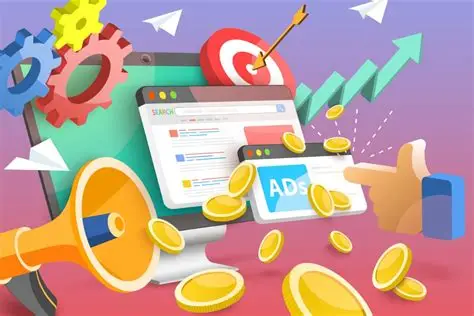
Search engine optimization (SEO) is one of the most powerful and sustainable customer acquisition channels available to modern businesses. Unlike paid advertising, SEO does not stop working when budgets pause. Instead, it compounds over time, attracts high-intent users, and lowers customer acquisition cost (CAC) as it scales.
This article explores how SEO helps with customer acquisition, why it plays a central role in growth strategies, how it impacts CAC and LTV, and how businesses across B2B, B2C, and startups can use SEO to acquire customers efficiently.
What Is SEO in Customer Acquisition?
SEO (Search Engine Optimization) is the process of improving a website’s visibility in organic (non-paid) search engine results.
In the context of customer acquisition, SEO is used to:
-
Attract potential customers actively searching for solutions
-
Educate prospects during the decision-making process
-
Convert organic traffic into leads or customers
-
Reduce reliance on paid channels
SEO aligns marketing with user intent, making it one of the highest-quality acquisition channels.
Why SEO Is Critical for Customer Acquisition
SEO helps customer acquisition because it targets people who already want what you offer.
Key benefits include:
-
High-intent traffic
-
Lower long-term CAC
-
Compounding growth
-
Trust and credibility
-
Scalability without linear cost increases
While SEO takes time, its long-term impact on acquisition efficiency is unmatched.
SEO vs Paid Advertising in Acquisition
SEO and paid advertising often complement each other, but they differ fundamentally.
SEO Advantages
-
No cost per click
-
Builds long-term assets
-
Higher trust among users
-
Lower CAC over time
Paid Ads Advantages
-
Immediate traffic
-
Predictable volume
-
Faster testing
Businesses that rely only on paid ads often struggle with rising CAC, while SEO-driven acquisition becomes more efficient as it scales.
How SEO Attracts High-Intent Customers
Search behavior reveals intent.
Examples:
-
“Best accounting software for small business”
-
“CRM for real estate agents”
-
“Affordable online therapy”
These queries signal strong purchase intent. SEO allows businesses to capture this demand without paying for every click.
SEO Across the Customer Acquisition Funnel
SEO supports every stage of the acquisition funnel.
Top-of-Funnel SEO (Awareness)
Top-of-funnel content introduces potential customers to a problem or topic.
Examples:
-
Blog posts
-
Guides
-
Educational articles
-
Industry trends
These users may not be ready to buy yet, but SEO brings them into your ecosystem early.
Middle-of-Funnel SEO (Consideration)
Mid-funnel SEO helps users compare options and evaluate solutions.
Examples:
-
“Best tools” lists
-
Product comparisons
-
Case studies
-
Use-case content
This content builds trust and positions your brand as a solution.
Bottom-of-Funnel SEO (Conversion)
Bottom-funnel SEO targets users ready to take action.
Examples:
-
“Buy”
-
“Pricing”
-
“Reviews”
-
“Free trial” searches
These pages often drive the highest conversion rates in organic acquisition.
SEO and Customer Acquisition Cost (CAC)
SEO has a direct impact on CAC.
How SEO Lowers CAC
-
No direct cost per visitor
-
Traffic increases without proportional cost increases
-
High-intent users convert better
-
Content continues acquiring customers long after publication
Over time, SEO often becomes the lowest CAC channel in the acquisition mix.
SEO and Lifetime Value (LTV)
SEO-acquired customers often have:
-
Higher trust
-
Better product understanding
-
Lower churn
This increases lifetime value (LTV), improving the LTV:CAC ratio and overall profitability.
SEO Content Types That Drive Customer Acquisition
Different content types serve different acquisition goals.
Blog Content
Educational blog posts attract organic traffic and build topical authority.
Benefits:
-
Supports keyword coverage
-
Builds trust
-
Feeds other channels (email, social, paid)
Pillar Pages and Topic Clusters
Pillar content organizes SEO efforts around core topics.
Benefits:
-
Improves rankings
-
Guides users through the funnel
-
Increases internal linking strength
Product and Service Pages
These pages convert organic traffic into customers.
Key optimization areas:
-
Clear value propositions
-
Keyword alignment
-
Conversion-focused copy
-
Trust signals
Comparison and Alternative Pages
These pages capture high-intent users evaluating options.
Examples:
-
“X vs Y”
-
“Best alternatives to X”
They are often among the highest-converting SEO pages.
Technical SEO and Acquisition Performance
Technical SEO ensures search engines can access and rank your content.
Key factors:
-
Page speed
-
Mobile optimization
-
Site architecture
-
Indexing and crawlability
-
Core Web Vitals
Poor technical SEO limits acquisition regardless of content quality.
SEO and Brand Trust in Customer Acquisition
Organic search results are often perceived as more trustworthy than ads.
Ranking highly:
-
Builds credibility
-
Signals authority
-
Reinforces brand legitimacy
Trust reduces friction during conversion and improves acquisition efficiency.
Local SEO and Customer Acquisition
For local businesses, SEO is often the primary acquisition channel.
Local SEO includes:
-
Google Business Profile optimization
-
Local citations
-
Reviews
-
Location-based keywords
Local SEO drives high-intent traffic with strong conversion potential.
SEO for B2B Customer Acquisition
B2B SEO Characteristics
-
Longer sales cycles
-
Educational content focus
-
Lower volume, higher value keywords
-
Lead generation over direct sales
SEO supports B2B acquisition by nurturing prospects over time.
Account-Based SEO
B2B companies increasingly align SEO with account-based marketing (ABM).
This includes:
-
Industry-specific pages
-
Role-based content
-
Use-case targeting
SEO feeds sales pipelines with qualified leads.
SEO for B2C Customer Acquisition
B2C SEO Characteristics
-
Higher volume
-
Faster conversions
-
Emotion-driven search behavior
-
Strong product page optimization
SEO is often a primary growth driver for ecommerce and consumer brands.
SEO for Startups and Early-Stage Companies
Startups benefit from SEO by:
-
Reducing reliance on paid ads
-
Building authority early
-
Creating scalable acquisition assets
SEO allows startups to compete with larger brands through content and niche targeting.
SEO Metrics for Customer Acquisition
SEO performance should be measured by acquisition impact, not just rankings.
Key metrics:
-
Organic traffic growth
-
Conversion rate from organic
-
CAC from SEO
-
LTV of SEO-acquired customers
-
Keyword-to-customer attribution
SEO success is measured in customers, not clicks.
SEO Attribution Challenges in Acquisition
SEO often supports acquisition indirectly.
Examples:
-
First-touch attribution
-
Multi-touch journeys
-
Assisted conversions
Proper attribution models help teams understand SEO’s true value.
Common SEO Mistakes That Hurt Acquisition
-
Targeting low-intent keywords only
-
Ignoring conversion optimization
-
Publishing content without strategy
-
Neglecting technical SEO
-
Measuring vanity metrics
SEO must align with acquisition goals to be effective.
How SEO Supports Other Acquisition Channels
SEO amplifies other marketing efforts:
-
Improves paid ad performance via landing pages
-
Fuels email and social content
-
Supports retargeting campaigns
-
Enhances brand searches
SEO works best as part of a multi-channel acquisition system.
SEO and Customer Acquisition Timelines
SEO is a long-term investment.
Typical timelines:
-
3–6 months: Early traction
-
6–12 months: Consistent acquisition
-
12+ months: Compounding growth
Patience and consistency are essential.
The Future of SEO in Customer Acquisition
Trends shaping SEO-driven acquisition:
-
AI-assisted search
-
Increased emphasis on topical authority
-
First-party data integration
-
Experience-based ranking signals
-
Brand-driven search behavior
SEO continues to evolve, but intent-driven acquisition remains its core strength.
Final Thoughts
SEO is one of the most effective customer acquisition channels available. It aligns marketing with user intent, reduces long-term CAC, and builds sustainable growth engines that compound over time.
Businesses that invest in SEO:
-
Acquire higher-quality customers
-
Improve profitability
-
Reduce dependency on paid ads
-
Build durable competitive advantages
While SEO requires patience, its impact on customer acquisition is unmatched when executed strategically.
- Arts
- Business
- Computers
- Jeux
- Health
- Domicile
- Kids and Teens
- Argent
- News
- Personal Development
- Recreation
- Regional
- Reference
- Science
- Shopping
- Society
- Sports
- Бизнес
- Деньги
- Дом
- Досуг
- Здоровье
- Игры
- Искусство
- Источники информации
- Компьютеры
- Личное развитие
- Наука
- Новости и СМИ
- Общество
- Покупки
- Спорт
- Страны и регионы
- World

 English
 Russian
 Spanish
 Portuguese
 Deutsch
 Turkish
 Dutch
Dutch
 Italiano
 Arabic
 Romaian
 Portuguese (Brazil)
 Greek
Greek
