
What Is Product-Led Customer Acquisition?
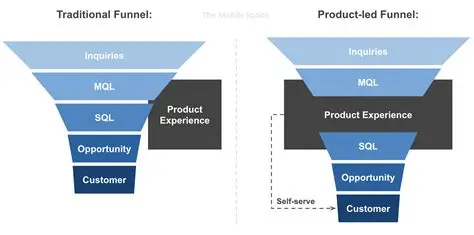
Product-led customer acquisition (PLCA) is a growth strategy where the product itself is the primary driver of acquiring new customers. Instead of relying heavily on sales teams, paid advertising, or outbound marketing, product-led acquisition allows users to discover, experience, and adopt a product before ever speaking to a salesperson—or sometimes without speaking to one at all.
This approach has reshaped how modern SaaS companies, apps, and digital platforms grow. Businesses like Slack, Zoom, Dropbox, Notion, and Figma didn’t scale primarily through aggressive sales outreach. They scaled because their products were designed to sell themselves.
This article explains what product-led customer acquisition is, how it works, why it’s effective, when it makes sense, and how companies can implement it successfully.
What Is Product-Led Customer Acquisition?
Product-led customer acquisition is a strategy where customers are acquired through direct interaction with the product rather than through traditional marketing or sales-led tactics.
In a product-led model:
-
Users experience value before paying
-
The product demonstrates its own benefits
-
Adoption happens through usage, not persuasion
-
Growth is driven by users, not just campaigns
The product is not just what customers buy—it’s how they discover, evaluate, and adopt the solution.
Product-Led Acquisition vs Traditional Acquisition Models
To understand product-led acquisition, it helps to compare it with other common models.
Sales-Led Acquisition
-
Relies on outbound sales
-
Requires demos, calls, and negotiations
-
High CAC
-
Long sales cycles
Marketing-Led Acquisition
-
Driven by paid ads, SEO, and campaigns
-
Generates leads for sales or self-serve conversion
-
Moderate CAC
-
Funnel-focused
Product-Led Acquisition
-
Driven by product usage
-
Free trials or freemium models
-
Low CAC
-
Short or no sales cycle
Product-led acquisition removes friction by letting customers experience value first.
Why Product-Led Customer Acquisition Works
Product-led acquisition works because it aligns with how modern buyers behave.
Today’s customers:
-
Research independently
-
Avoid aggressive sales tactics
-
Want hands-on experience
-
Trust real usage more than promises
Product-led acquisition meets customers where they are—curious, skeptical, and self-directed.
Core Principles of Product-Led Customer Acquisition
Successful product-led acquisition strategies share a few core principles.
1. Value Before Payment
Users must experience meaningful value before being asked to pay.
Examples:
-
Completing a task faster
-
Solving a real problem
-
Seeing measurable improvement
If value comes only after purchase, the product is not truly product-led.
2. Low Barrier to Entry
The easier it is to start using the product, the more effective acquisition becomes.
Low barriers include:
-
No credit card required
-
Fast onboarding
-
Simple setup
-
Clear guidance
Friction kills product-led growth.
3. Self-Serve Discovery
Users should be able to:
-
Sign up on their own
-
Explore features independently
-
Learn through in-product guidance
This reduces reliance on sales and support during acquisition.
4. Usage-Based Conversion
In product-led acquisition, usage drives conversion, not pressure.
Common conversion triggers:
-
Feature limits
-
Usage thresholds
-
Collaboration needs
-
Advanced functionality
The product naturally nudges users toward paid plans.
Common Product-Led Acquisition Models
Freemium Model
Users get a free version indefinitely, with limits.
Examples:
-
Slack (message limits)
-
Notion (block limits)
-
Zoom (time limits)
Freemium works best when:
-
Marginal costs are low
-
Viral sharing is built in
-
Value is obvious early
Free Trial Model
Users get full or near-full access for a limited time.
Examples:
-
SaaS tools with 7–14 day trials
-
Design and productivity software
Trials work best when:
-
Time-to-value is short
-
Onboarding is strong
-
Product value is quickly apparent
Open-Core Model
The core product is free, but advanced features are paid.
Common in:
-
Developer tools
-
Infrastructure software
This model attracts technical users and builds trust.
How Product-Led Acquisition Reduces CAC
One of the biggest advantages of product-led acquisition is its impact on customer acquisition cost (CAC).
Why CAC Is Lower
-
No sales commissions
-
Fewer paid ads
-
Organic word-of-mouth
-
Self-serve onboarding
The product does the work that marketing and sales traditionally handle.
Product-Led Acquisition and Virality
Many product-led products grow through built-in virality.
Examples:
-
Collaboration invites
-
Shared documents
-
Team onboarding
-
External sharing links
Each new user can bring in additional users at little or no cost.
The Role of UX and Onboarding in Product-Led Acquisition
In product-led acquisition, user experience is marketing.
Key elements include:
-
Clear onboarding flows
-
In-app tutorials
-
Progressive feature discovery
-
Tooltips and walkthroughs
A confusing product cannot acquire customers on its own.
Time-to-Value (TTV) and Product-Led Growth
Time-to-value is the time it takes for a user to experience their first meaningful benefit.
Shorter TTV leads to:
-
Higher activation rates
-
Better conversion
-
Lower churn
-
Stronger acquisition performance
Product-led companies obsess over reducing TTV.
Product-Led Acquisition Funnel
The product-led funnel differs from traditional funnels.
Typical Product-Led Funnel
-
Signup
-
Activation (first value)
-
Engagement
-
Expansion
-
Conversion
-
Advocacy
Acquisition and retention are tightly connected.
Activation: The Heart of Product-Led Acquisition
Activation is when a user experiences the “aha moment.”
Examples:
-
Sending the first message
-
Completing the first task
-
Creating the first project
Without activation, acquisition fails—no matter how many users sign up.
Product-Led Acquisition for SaaS Companies
Product-led acquisition is especially effective for SaaS because:
-
Distribution is digital
-
Marginal costs are low
-
Usage data is trackable
-
Upgrades are seamless
Most modern SaaS leaders rely heavily on product-led acquisition.
Product-Led Acquisition for B2B
While traditionally sales-led, many B2B companies now adopt hybrid models.
How PLG Works in B2B
-
Individual users adopt the product
-
Teams expand usage internally
-
Sales engages later for larger deals
This bottom-up adoption shortens sales cycles and improves close rates.
Product-Led Acquisition for Startups
Startups benefit greatly from product-led acquisition because:
-
Budgets are limited
-
Brand awareness is low
-
Speed matters
A great product can outperform large competitors with bigger marketing budgets.
Metrics That Matter in Product-Led Acquisition
Key metrics include:
-
Signup-to-activation rate
-
Time-to-value
-
Free-to-paid conversion rate
-
Product-qualified leads (PQLs)
-
Expansion revenue
-
Churn
Traditional lead metrics matter less than product usage metrics.
Product-Qualified Leads (PQLs)
PQLs are users who:
-
Have experienced value
-
Show strong usage signals
-
Are likely to convert
PQLs often outperform traditional marketing-qualified leads (MQLs).
Product-Led Acquisition and Retention
Retention is built into product-led acquisition.
Why?
-
Users self-select
-
Expectations are clear
-
Value is proven early
High retention strengthens acquisition by increasing referrals and LTV.
Challenges of Product-Led Customer Acquisition
Product-led acquisition is powerful—but not easy.
Common challenges:
-
Poor onboarding
-
Long time-to-value
-
High support costs
-
Free users who never convert
-
Complex products
Product-led growth requires deep product investment.
When Product-Led Acquisition Does NOT Work Well
PLCA may be less effective when:
-
Products are highly complex
-
Implementation is heavy
-
Buyers are risk-averse
-
Value is not immediate
In these cases, sales-led or hybrid models may perform better.
Hybrid Models: Product-Led + Sales-Led
Many companies combine models.
Example:
-
Product-led onboarding
-
Sales-assisted expansion
-
Enterprise upgrades
This balances scalability with revenue optimization.
Product-Led Acquisition vs Marketing-Led Growth
Product-led growth doesn’t eliminate marketing—it changes its role.
Marketing supports:
-
Education
-
Activation
-
Adoption
-
Expansion
Instead of selling features, marketing helps users succeed with the product.
Building a Product-Led Acquisition Strategy
Key steps include:
-
Define your product’s core value
-
Reduce onboarding friction
-
Optimize activation moments
-
Instrument usage data
-
Design natural upgrade paths
-
Encourage sharing and referrals
Product-led acquisition is a system, not a tactic.
The Future of Product-Led Customer Acquisition
Trends shaping PLG include:
-
AI-driven onboarding
-
Personalized in-product experiences
-
Usage-based pricing
-
Community-led adoption
-
Data-driven PQL scoring
As buyers become more independent, product-led acquisition will continue to grow.
Final Thoughts
Product-led customer acquisition transforms the product into the primary growth engine. When done right, it lowers CAC, shortens sales cycles, improves retention, and creates powerful network effects.
The companies that win in the long run are not those with the loudest marketing—but those with products so good they market themselves.
- Arts
- Business
- Computers
- Spellen
- Health
- Home
- Kids and Teens
- Money
- News
- Personal Development
- Recreation
- Regional
- Reference
- Science
- Shopping
- Society
- Sports
- Бизнес
- Деньги
- Дом
- Досуг
- Здоровье
- Игры
- Искусство
- Источники информации
- Компьютеры
- Личное развитие
- Наука
- Новости и СМИ
- Общество
- Покупки
- Спорт
- Страны и регионы
- World

 English
 Russian
 French
 Spanish
 Portuguese
 Deutsch
 Turkish
 Italiano
 Arabic
 Romaian
 Portuguese (Brazil)
 Greek
Greek
