
What Size Are Newspaper Ads?
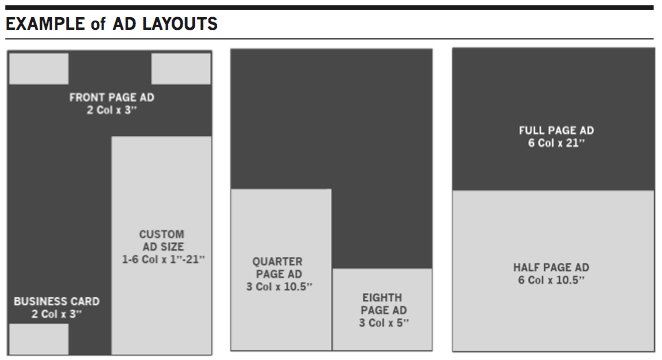
When businesses consider newspaper advertising, one of the first—and most confusing—questions is: “What size ad should I run?” Unlike digital ads, newspaper ads don’t use pixels, responsive layouts, or flexible containers. Instead, they rely on columns, inches, and page placement, all of which directly affect cost, visibility, and performance.
This article provides a complete guide to newspaper ad sizes, including standard formats, column widths, page placements, pricing implications, and how to choose the right size for your advertising goals.
Why Newspaper Ad Size Matters
Newspaper ad size affects:
-
How visible your ad is
-
How much information you can include
-
How readers perceive your brand
-
How much you pay
-
How effective the ad will be
Bigger is not always better—but too small can make an ad invisible.
How Newspaper Ads Are Measured
Column Inches Explained
Most newspapers measure ads in column inches, which combine:
-
Column width (horizontal)
-
Inch height (vertical)
A “column inch” equals:
-
One column wide
-
One inch tall
Cost is usually calculated as:
price per column inch × number of column inches
Why Newspapers Use Columns
Newspapers are laid out in vertical columns to:
-
Improve readability
-
Fit varying article lengths
-
Allow flexible ad placement
Ad sizes must align with this structure.
Standard Newspaper Column Widths
While exact dimensions vary by publication, most newspapers use:
-
1 column: ~1.5–2 inches wide
-
2 columns: ~3–4 inches wide
-
3 columns: ~5–6 inches wide
-
4 columns: ~7–8 inches wide
-
5–6 columns: Full page width
Always confirm specs with the publication.
Common Newspaper Ad Sizes and Formats
1. Full-Page Ads
Description:
Occupies an entire newspaper page.
Typical Use Cases:
-
Major brand campaigns
-
Corporate announcements
-
Government notices
-
High-impact promotions
Pros:
-
Maximum visibility
-
Strong branding presence
-
High credibility
Cons:
-
Expensive
-
Often unnecessary for small businesses
2. Half-Page Ads
Description:
Covers half of a page, either horizontally or vertically.
Best For:
-
Promotions
-
Product launches
-
Events
Balance of:
-
Visibility
-
Cost
-
Content space
A popular option for mid-sized businesses.
3. Quarter-Page Ads
Description:
Takes up one-quarter of a page.
Advantages:
-
Noticeable but affordable
-
Enough space for images and copy
-
Good ROI potential
Often the “sweet spot” for local advertisers.
4. Eighth-Page Ads
Description:
Smaller display ads, still visually formatted.
Best For:
-
Simple offers
-
Brand reinforcement
-
Budget-conscious campaigns
Design quality becomes critical at this size.
5. Column Ads (Vertical)
Description:
One or more columns tall, narrow width.
Common Sizes:
-
1×5
-
2×10
-
3×8 (columns × inches)
Strengths:
-
Fits naturally into article flow
-
Often cost-effective
6. Classified Ads
Description:
Text-only ads in classified sections.
Measured By:
-
Lines
-
Words
-
Inches
Best For:
-
Jobs
-
Rentals
-
Services
-
Announcements
Minimal design, maximum clarity.
Page Placement Options Explained
Front Page (Rare and Premium)
-
Extremely high visibility
-
Usually reserved
-
Very expensive
-
Often limited to specific ad types
Section Fronts
Ads placed at the beginning of sections:
-
Business
-
Sports
-
Lifestyle
-
Local news
Strong visibility at lower cost than front page.
Inside Pages
Most ads appear here.
Performance depends on:
-
Section relevance
-
Ad size
-
Design quality
Right-Hand Pages vs Left-Hand Pages
Right-hand pages are often:
-
Seen first
-
More valuable
-
More expensive
Placement can matter as much as size.
How Ad Size Affects Cost
Pricing Factors
Ad cost depends on:
-
Size (column inches)
-
Page placement
-
Day of the week
-
Color vs black-and-white
-
Frequency discounts
Example Cost Breakdown
If a newspaper charges:
-
$50 per column inch
Then a 3-column × 5-inch ad:
-
15 column inches
-
Total cost: $750
Larger ads scale quickly in price.
Choosing the Right Ad Size for Your Goals
Brand Awareness
Best sizes:
-
Half-page
-
Quarter-page
-
Consistent column ads
Visibility matters more than precision.
Promotions and Sales
Best sizes:
-
Quarter-page
-
Eighth-page
-
Column ads with offers
Clarity and repetition matter.
Classified Objectives
Best sizes:
-
Small, text-only formats
Efficiency beats size.
Local Small Businesses
Recommended starting sizes:
-
Quarter-page
-
Vertical column ad
Avoid going too small to save money—it often backfires.
Design Considerations by Ad Size
Larger Ads
Allow for:
-
Images
-
Headlines
-
White space
-
Branding
But require disciplined layout.
Smaller Ads
Require:
-
Strong headlines
-
Minimal text
-
High contrast
-
Clear CTA
Every element must earn space.
Color vs Black-and-White
Color ads:
-
Cost more
-
Increase visibility
-
Not always necessary
Black-and-white ads:
-
Cheaper
-
Can still perform well
-
Require strong contrast
Size often matters more than color.
Frequency vs Size Trade-Off
A common dilemma:
-
One large ad once
-
Or smaller ads multiple times?
In many cases:
Smaller ads run repeatedly outperform one large ad
Consistency builds familiarity.
Newspaper Size Specs Are Not Universal
Important reminder:
-
Every newspaper has unique specs
-
Column widths vary
-
Page dimensions differ
Always request a media kit.
Working With Newspaper Ad Reps
Ad representatives can help:
-
Recommend sizes
-
Suggest placements
-
Offer discounts
-
Provide specs
But advertisers should still understand sizing fundamentals.
Common Mistakes When Choosing Newspaper Ad Sizes
-
Choosing the smallest size to save money
-
Overpaying for full-page ads unnecessarily
-
Ignoring placement relevance
-
Not matching size to objective
-
Designing cluttered small ads
Size decisions should be strategic—not emotional.
How Newspaper Ad Sizes Compare to Digital Formats
Unlike digital ads:
-
Print size is fixed
-
No responsive resizing
-
Visibility is guaranteed
-
Space is limited
This makes upfront planning critical.
Final Thoughts
Understanding newspaper ad sizes is essential to running effective print campaigns. The right size balances:
-
Visibility
-
Budget
-
Message clarity
-
Placement relevance
Newspaper advertising rewards advertisers who choose sizes strategically—not impulsively. When size, design, and placement align with goals, even modest ads can deliver strong results.
- Arts
- Business
- Computers
- Jogos
- Health
- Início
- Kids and Teens
- Money
- News
- Personal Development
- Recreation
- Regional
- Reference
- Science
- Shopping
- Society
- Sports
- Бизнес
- Деньги
- Дом
- Досуг
- Здоровье
- Игры
- Искусство
- Источники информации
- Компьютеры
- Личное развитие
- Наука
- Новости и СМИ
- Общество
- Покупки
- Спорт
- Страны и регионы
- World

 English
 Russian
 French
 Spanish
 Portuguese
 Deutsch
 Turkish
 Dutch
Dutch
 Italiano
 Arabic
 Romaian
 Greek
Greek
