
What Is Retargeting or Remarketing?
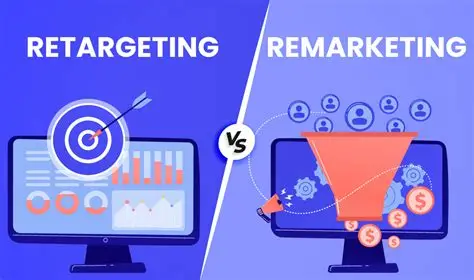
Retargeting, also known as remarketing, is one of the most powerful strategies in online advertising. It focuses on people who have already interacted with your brand, making it far more effective than advertising to cold audiences. If you’ve ever visited a website and later seen ads for that same brand across other sites or social media, you’ve experienced retargeting firsthand.
This article explains what retargeting or remarketing is, how it works, why it is so effective, and how businesses use it to increase conversions and lower advertising costs.
Understanding Retargeting and Remarketing
Retargeting and remarketing are often used interchangeably, though they originated with slightly different meanings.
-
Retargeting typically refers to showing ads to users based on online behavior, such as website visits.
-
Remarketing originally referred to re-engaging users through email or direct messaging.
In modern digital marketing, both terms describe the practice of re-engaging users who have previously interacted with a brand.
Why Retargeting Matters in Online Advertising
Most users do not convert the first time they visit a website. Distractions, hesitation, or lack of urgency often delay decisions.
Retargeting helps by:
-
Keeping your brand top of mind
-
Re-engaging interested users
-
Increasing conversion rates
-
Reducing acquisition costs
Instead of starting from zero, retargeting builds on existing interest.
How Retargeting Works
Retargeting relies on tracking technology to identify users who interact with your brand.
The basic process:
-
A user visits your website or app
-
A tracking signal records the visit
-
The user leaves without converting
-
Ads are shown to that user later
-
The user returns and converts
This process happens across websites, apps, and social platforms.
Types of Retargeting
Retargeting can take many forms, depending on the platform and strategy.
Website Retargeting
Website retargeting targets users who visited specific pages on your site.
Examples:
-
Homepage visitors
-
Product page viewers
-
Pricing page visitors
More specific page visits usually signal stronger intent.
Cart Abandonment Retargeting
Cart abandonment retargeting focuses on users who added products to their cart but did not complete checkout.
This is one of the highest-converting retargeting strategies because intent is extremely high.
Common tactics include:
-
Reminder ads
-
Discounts
-
Limited-time offers
Engagement-Based Retargeting
This targets users who interacted with your content.
Examples:
-
Video viewers
-
Social media engagers
-
Ad clickers
These users are familiar with your brand but may need further nurturing.
Email Remarketing
Email remarketing re-engages users who:
-
Opened emails
-
Clicked links
-
Started sign-ups
Email remarketing works well alongside paid retargeting campaigns.
Search Retargeting
Search retargeting targets users based on search behavior rather than site visits.
For example:
-
Users searching for competitor brands
-
Users researching specific products
This approach captures intent beyond your own website.
Why Retargeting Is So Effective
Retargeting outperforms many other advertising methods for several reasons.
Familiarity
Users are more likely to trust brands they recognize.
Relevance
Ads are based on actual user behavior, not assumptions.
Timing
Retargeting reaches users while interest is still fresh.
Personalization
Messages can be tailored to specific actions.
Retargeting vs Prospecting
Prospecting targets new audiences who have never interacted with your brand.
Retargeting targets users who already know you.
Prospecting:
-
Builds awareness
-
Reaches cold audiences
-
Requires education
Retargeting:
-
Focuses on conversion
-
Targets warm audiences
-
Shortens decision cycles
Successful strategies use both together.
Retargeting Across Platforms
Retargeting works across many platforms.
Common platforms include:
-
Google Display Network
-
Facebook and Instagram
-
YouTube
-
TikTok
-
Programmatic ad networks
Cross-platform retargeting increases frequency and recall.
Frequency and Timing in Retargeting
Showing ads too often can annoy users.
Best practices include:
-
Setting frequency caps
-
Limiting retargeting windows
-
Adjusting messaging over time
Shorter windows work best for high-intent actions, while longer windows suit consideration-based products.
Creative Strategies for Retargeting Ads
Retargeting ads should differ from prospecting ads.
Effective retargeting creatives:
-
Reference the previous interaction
-
Highlight benefits or social proof
-
Address objections
-
Offer incentives
Personalized messaging significantly improves performance.
Retargeting and Privacy Considerations
Privacy regulations have changed how retargeting works.
Modern retargeting focuses on:
-
Consent-based data
-
Aggregated signals
-
Platform-level targeting
Despite changes, retargeting remains effective when implemented responsibly.
Measuring Retargeting Performance
Retargeting success is measured using familiar metrics.
Key metrics include:
-
Conversion rate
-
Cost per conversion
-
ROAS
-
Frequency
-
Time to conversion
Retargeting campaigns often outperform cold campaigns on these metrics.
Common Retargeting Mistakes
Avoid these common issues:
-
Overexposing users to ads
-
Using generic messaging
-
Retargeting too broadly
-
Ignoring creative fatigue
Thoughtful execution is essential.
Retargeting for Different Business Models
eCommerce
Focus on:
-
Product views
-
Cart abandonment
-
Upsells
B2B
Focus on:
-
Content engagement
-
Demo page visits
-
Long-term nurturing
Local Businesses
Focus on:
-
Website visitors
-
Location-based retargeting
-
Call-to-action ads
When Retargeting Doesn’t Work
Retargeting may underperform when:
-
Traffic volume is too low
-
The offer lacks value
-
The sales cycle is extremely long
In these cases, retargeting should be combined with education and awareness campaigns.
Best Practices for Retargeting Success
To maximize results:
-
Segment audiences carefully
-
Match messages to user intent
-
Test multiple creatives
-
Monitor frequency
-
Refresh ads regularly
Retargeting thrives on relevance and timing.
The Future of Retargeting
Retargeting continues to evolve with:
-
Privacy-friendly technologies
-
Contextual signals
-
First-party data strategies
While methods change, the core principle remains the same: re-engage interested users effectively.
Final Thoughts
Retargeting or remarketing is one of the most efficient and cost-effective strategies in online advertising. By focusing on users who have already shown interest, it bridges the gap between awareness and conversion.
When done thoughtfully, retargeting feels less like advertising and more like a helpful reminder. For businesses looking to maximize the value of their traffic and improve conversion rates, retargeting is not optional—it’s essential.
- Arts
- Business
- Computers
- Jocuri
- Health
- Home
- Kids and Teens
- Money
- News
- Personal Development
- Recreation
- Regional
- Reference
- Science
- Shopping
- Society
- Sports
- Бизнес
- Деньги
- Дом
- Досуг
- Здоровье
- Игры
- Искусство
- Источники информации
- Компьютеры
- Личное развитие
- Наука
- Новости и СМИ
- Общество
- Покупки
- Спорт
- Страны и регионы
- World

 English
 Russian
 French
 Spanish
 Portuguese
 Deutsch
 Turkish
 Dutch
Dutch
 Italiano
 Arabic
 Portuguese (Brazil)
 Greek
Greek
