
What Is the Role of Government in the Economy?
What Is the Role of Government in the Economy?
Regulation, Taxation, and Market Stabilization
Every modern economy depends on both private markets and public institutions. Businesses, workers, and consumers make most economic decisions, but governments create the rules and conditions that allow markets to function. Without any government involvement, markets can become unstable, unfair, and even harmful. At the same time, too much intervention can limit innovation and efficiency.
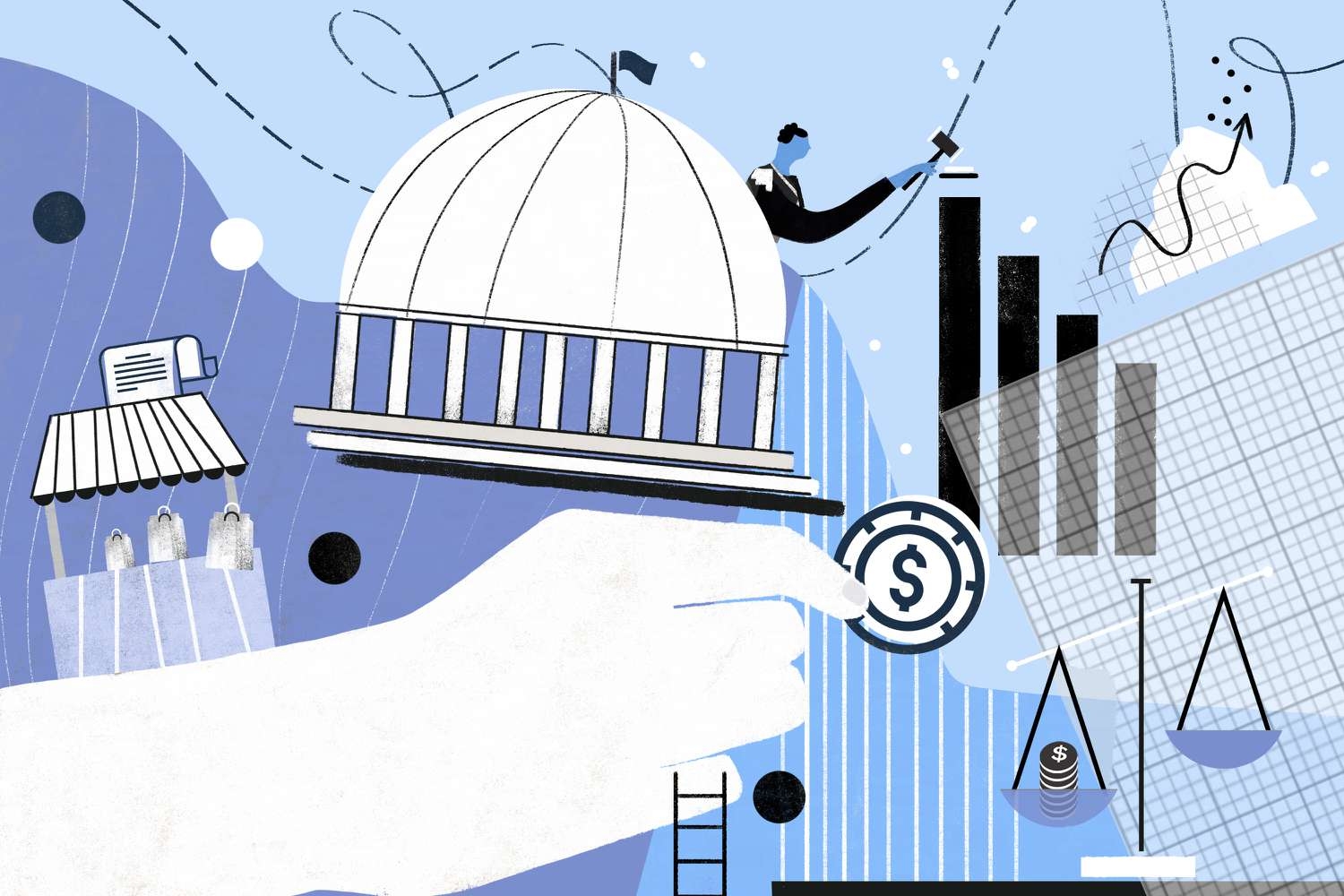
The role of government in the economy can be understood through three main responsibilities: regulation, taxation, and market stabilization. Together, these roles aim to support economic growth, protect citizens, and maintain stability.
1. Regulation: Setting the Rules for Fair and Safe Markets
Regulation refers to the laws and standards that guide how businesses and markets operate. One of the government’s most important economic tasks is to create rules that prevent harmful or unfair behavior.
Markets do not always regulate themselves effectively. Some firms may attempt to gain power by eliminating competitors, misleading consumers, or lowering safety standards to reduce costs. In these situations, government regulation protects both consumers and smaller businesses.
For example, competition or antitrust laws exist to prevent monopolies and unfair market dominance. When a single company controls an entire market, it can raise prices, reduce quality, and limit consumer choice. Government agencies monitor mergers and business practices to ensure that competition remains fair.
Regulation also plays a major role in protecting public health and safety. Food safety standards, environmental laws, and workplace safety rules exist because private firms may not always prioritize public well-being when profit is at stake. Without regulation, businesses might release harmful products, pollute communities, or expose workers to dangerous conditions.
Financial regulation is another critical area. Banks and investment firms manage large amounts of money and influence the entire economy. If they take excessive risks, the consequences can spread quickly to households and businesses. Governments regulate financial institutions to improve transparency, limit risky behavior, and protect consumers from fraud.
In addition, regulation helps correct what economists call “market failures.” These occur when markets do not reflect the true costs or benefits of economic activity. Environmental pollution is a common example. A factory may produce goods at a low cost while damaging air or water quality. Regulation forces firms to consider these wider social costs, encouraging cleaner and more responsible production.
However, regulation must be carefully designed. Poorly written rules can create unnecessary bureaucracy, slow innovation, and discourage new businesses from entering the market. The challenge for governments is to protect the public without restricting economic activity more than necessary.
2. Taxation: Financing Public Services and Shaping Economic Behavior
Taxation is the main way governments raise money to fund public services. These services include infrastructure, education, healthcare, public safety, and social support programs. Without taxes, governments would not be able to provide the basic foundations that modern economies depend on.
Roads, bridges, public transport systems, and digital infrastructure help businesses operate efficiently. Schools and universities develop skilled workers. Courts and legal systems protect property rights and contracts. All of these support economic activity even though they are not usually provided by private markets alone.
Beyond raising revenue, taxation also plays an important role in shaping economic behavior. Governments can use taxes to encourage or discourage certain activities. Higher taxes on tobacco, alcohol, or pollution aim to reduce harmful behavior and cover the social costs associated with these activities. Tax incentives for investment, research, or renewable energy can promote innovation and long-term growth.
Taxation is also closely connected to income distribution. In most countries, people with higher incomes pay a larger share of taxes than those with lower incomes. This progressive tax structure allows governments to fund social programs that support lower-income households, such as healthcare, education assistance, and income support.
This redistributive role is important because market outcomes are not always fair. Differences in family background, education, health, and access to opportunities can strongly affect income. Through taxation and public spending, governments can reduce extreme inequality and help create a more balanced society.
Still, taxation involves trade-offs. High tax rates may discourage investment, work, or entrepreneurship if individuals and businesses feel that the rewards of their efforts are too heavily reduced. On the other hand, taxes that are too low can weaken public services and increase inequality. An effective tax system must be efficient, fair, and simple enough for citizens to understand and comply with.
3. Market Stabilization: Protecting the Economy from Major Shocks
Markets are dynamic and constantly changing. While growth and innovation are positive, markets are also vulnerable to economic shocks such as financial crises, recessions, and sudden drops in demand. One of the government’s most important economic responsibilities is to reduce the severity of these disruptions.
Market stabilization refers to the actions governments take to limit large economic swings and maintain confidence in the economy. When businesses and consumers lose confidence, they may stop spending and investing. This can lead to rising unemployment and falling incomes.
Governments stabilize the economy mainly through fiscal policy and coordination with monetary authorities. Fiscal policy involves changes in government spending and taxation. During economic downturns, governments often increase public spending or reduce taxes to stimulate demand. By creating jobs through public projects and supporting household incomes, governments can help prevent recessions from becoming deeper and longer.
In contrast, when the economy is growing too quickly and inflation becomes a risk, governments may reduce spending or raise certain taxes to slow demand and prevent overheating.
Another important stabilization tool is the social safety net. Programs such as unemployment benefits and income support automatically increase when people lose jobs or incomes. These “automatic stabilizers” help households maintain spending during difficult times, which reduces the overall impact of economic downturns.
Governments also intervene directly during major financial crises. When large banks or key financial institutions collapse, the effects can spread rapidly throughout the economy. In extreme situations, governments may provide emergency support to prevent the failure of the financial system. While such actions are controversial, they are often justified as necessary to protect the wider economy rather than individual firms.
However, stabilization policies must be applied carefully. If governments repeatedly rescue poorly managed companies, firms may take greater risks, expecting future support. This creates what is known as moral hazard. For stabilization to be effective, governments must balance emergency intervention with strong regulation and long-term accountability.
Conclusion
The role of government in the economy is not to replace markets, but to make them work better. Through regulation, governments create rules that protect consumers, workers, and the environment while supporting fair competition. Through taxation, they finance essential public services, reduce inequality, and guide economic behavior. Through market stabilization, they limit the damage caused by economic crises and help maintain confidence and long-term growth.
A healthy economy depends on cooperation between the public and private sectors. Markets generate innovation and efficiency, while governments provide stability, fairness, and public goods. The real challenge is not deciding whether governments should play a role in the economy, but determining how that role can be designed to support growth, opportunity, and social well-being at the same time.
- Arts
- Business
- Computers
- Jeux
- Health
- Domicile
- Kids and Teens
- Argent
- News
- Personal Development
- Recreation
- Regional
- Reference
- Science
- Shopping
- Society
- Sports
- Бизнес
- Деньги
- Дом
- Досуг
- Здоровье
- Игры
- Искусство
- Источники информации
- Компьютеры
- Личное развитие
- Наука
- Новости и СМИ
- Общество
- Покупки
- Спорт
- Страны и регионы
- World

 English
 Russian
 Spanish
 Portuguese
 Deutsch
 Turkish
 Dutch
Dutch
 Italiano
 Arabic
 Romaian
 Portuguese (Brazil)
 Greek
Greek