
What Types of Remarketing Are There? A Complete Guide to Website, App, Customer List, Dynamic, and Video Remarketing
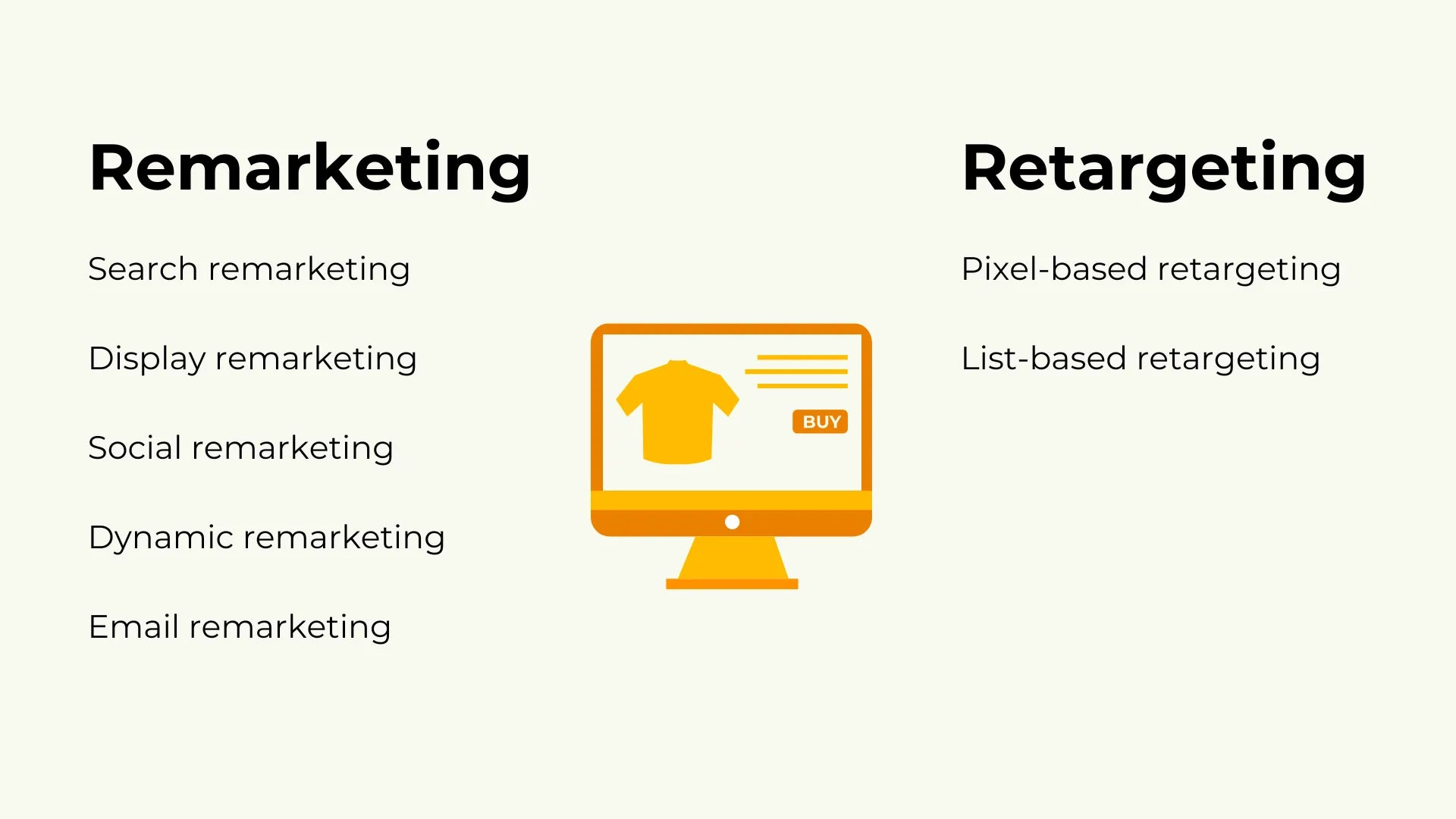
Remarketing is not a single strategy. It is a collection of specialized techniques designed to re-engage users based on how, where, and when they interacted with your brand.
Different users behave differently. Some browse websites. Others use mobile apps. Some subscribe to emails. Some watch videos. Each interaction creates a unique opportunity for remarketing.
To maximize performance, marketers must understand the different types of remarketing and know when to use each one.
In 2026, advanced tracking systems and privacy-first technologies have expanded remarketing options while improving personalization and compliance.
This article explains the main types of remarketing, how they work, their advantages, limitations, and best use cases.
Overview of Remarketing Types
The main types of remarketing include:
-
Website remarketing
-
App remarketing
-
Customer list remarketing
-
Dynamic remarketing
-
Video (YouTube) remarketing
Each type targets users through different data sources and platforms.
Website Remarketing
What Is Website Remarketing?
Website remarketing targets people who have visited your website.
It uses:
-
Cookies
-
Tracking pixels
-
First-party identifiers
Users are added to audiences based on pages visited and actions taken.
How Website Remarketing Works
-
Visitor lands on your website
-
Tracking tag records activity
-
User enters an audience list
-
Ads are shown on partner sites
This process is automated.
Common Website Audiences
Examples include:
-
All visitors
-
Product viewers
-
Pricing page visitors
-
Blog readers
-
Checkout abandoners
These audiences can be layered and refined.
Benefits
-
Easy to implement
-
Works for most businesses
-
Strong conversion recovery
-
Scalable
Limitations
-
Cookie restrictions
-
Anonymous users
-
Limited personalization
Best Use Cases
-
E-commerce
-
Lead generation
-
SaaS trials
-
Service inquiries
App Remarketing
What Is App Remarketing?
App remarketing targets users who have installed or used your mobile app.
It focuses on:
-
Re-engagement
-
Retention
-
Reactivation
This type is especially important for subscription and gaming apps.
How App Remarketing Works
App SDKs track:
-
Logins
-
Purchases
-
Level progress
-
In-app behavior
Platforms match users to ad networks.
Common App Audiences
-
New installers
-
Inactive users
-
High spenders
-
Trial users
-
Feature users
Benefits
-
High engagement potential
-
Personalized in-app messaging
-
Cross-device tracking
-
Strong lifetime value
Limitations
-
Technical integration required
-
Platform dependency
-
Privacy constraints
Best Use Cases
-
Mobile games
-
Fitness apps
-
Banking apps
-
Streaming services
-
Productivity tools
Customer List Remarketing
What Is Customer List Remarketing?
Customer list remarketing uses first-party contact data.
This includes:
-
Email addresses
-
Phone numbers
-
CRM IDs
Platforms match this data to user accounts.
This method is also called Customer Match.
How Customer List Remarketing Works
-
Business uploads customer data
-
Platform hashes data securely
-
Matches with user profiles
-
Delivers ads
No raw data is shared.
Common Customer List Audiences
-
Past buyers
-
Subscribers
-
Leads
-
Loyalty members
-
VIP customers
Benefits
-
High accuracy
-
Strong personalization
-
Privacy-friendly
-
Independent of cookies
Limitations
-
Requires large databases
-
Match rates vary
-
Consent required
Best Use Cases
-
B2B marketing
-
Subscription services
-
Membership programs
-
Financial services
Dynamic Remarketing
What Is Dynamic Remarketing?
Dynamic remarketing automatically shows users the exact products or services they viewed.
It pulls data from product feeds or catalogs.
Each ad is personalized in real time.
How Dynamic Remarketing Works
-
User views product
-
Pixel records ID
-
Platform matches with catalog
-
Personalized ad is generated
Ads are created dynamically.
Common Dynamic Formats
-
Shopping ads
-
Carousel ads
-
Product banners
-
Collection ads
Benefits
-
Highly relevant ads
-
Higher CTR
-
Better conversion rates
-
Scalable personalization
Limitations
-
Complex setup
-
Feed maintenance
-
Technical dependencies
Best Use Cases
-
E-commerce stores
-
Travel booking sites
-
Real estate platforms
-
Marketplaces
Video (YouTube) Remarketing
What Is Video Remarketing?
Video remarketing targets users who interacted with your video content.
Mainly used on YouTube.
Targets include:
-
Video viewers
-
Channel subscribers
-
Ad watchers
-
Playlist viewers
How Video Remarketing Works
YouTube tracks user interactions.
These are added to audience lists.
Ads are shown on YouTube and Display Network.
Common Video Audiences
-
Watched 25%+ of video
-
Viewed ads
-
Subscribed
-
Engaged commenters
Benefits
-
Strong emotional impact
-
High brand recall
-
Storytelling ability
-
Cross-device reach
Limitations
-
Higher production cost
-
Creative fatigue
-
Longer learning curves
Best Use Cases
-
Brand campaigns
-
Education platforms
-
Product launches
-
Influencer marketing
Comparing Remarketing Types
| Type | Data Source | Personalization | Cost | Best For |
|---|---|---|---|---|
| Website | Cookies | Medium | Low | General remarketing |
| App | SDKs | High | Medium | Mobile retention |
| Customer List | CRM | Very High | Low | Loyalty campaigns |
| Dynamic | Product feed | Very High | Medium | E-commerce |
| Video | YouTube data | Medium | Medium | Brand recall |
Combining Multiple Remarketing Types
Best results come from integration.
Example funnel:
-
Website visit → Display remarketing
-
Video view → YouTube remarketing
-
Signup → Customer list remarketing
-
Purchase → Dynamic ads
This creates layered engagement.
Privacy Considerations
All remarketing types must follow:
-
Consent regulations
-
Data minimization
-
Transparency rules
-
Platform policies
First-party data is becoming dominant.
Choosing the Right Remarketing Type
Consider:
-
Business model
-
Audience behavior
-
Technical resources
-
Budget
-
Compliance requirements
Small businesses often start with website remarketing.
E-commerce brands benefit most from dynamic remarketing.
Common Mistakes
-
Using only one type
-
Ignoring customer lists
-
Poor segmentation
-
Outdated product feeds
-
Weak creative strategy
Avoiding these improves performance.
Future of Remarketing Types
By 2026, emerging forms include:
-
Predictive remarketing
-
Voice assistant remarketing
-
AR-based remarketing
-
Privacy-safe identity graphs
Remarketing is becoming more intelligent.
Conclusion
Remarketing exists in multiple forms, each designed to re-engage users based on specific interactions. Website, app, customer list, dynamic, and video remarketing serve different roles within the customer journey.
Successful marketers understand these types and use them strategically rather than relying on a single approach. By combining multiple remarketing formats, businesses can deliver relevant, personalized experiences that increase conversions, loyalty, and lifetime value.
In 2026, mastering remarketing types is essential for building sustainable digital growth.
- Arts
- Business
- Computers
- Παιχνίδια
- Health
- Κεντρική Σελίδα
- Kids and Teens
- Money
- News
- Personal Development
- Recreation
- Regional
- Reference
- Science
- Shopping
- Society
- Sports
- Бизнес
- Деньги
- Дом
- Досуг
- Здоровье
- Игры
- Искусство
- Источники информации
- Компьютеры
- Личное развитие
- Наука
- Новости и СМИ
- Общество
- Покупки
- Спорт
- Страны и регионы
- World

 English
 Russian
 French
 Spanish
 Portuguese
 Deutsch
 Turkish
 Dutch
Dutch
 Italiano
 Arabic
 Romaian
 Portuguese (Brazil)
