
What Is Retargeting? A Complete Guide to Re-Engaging Website Visitors and Lost Prospects
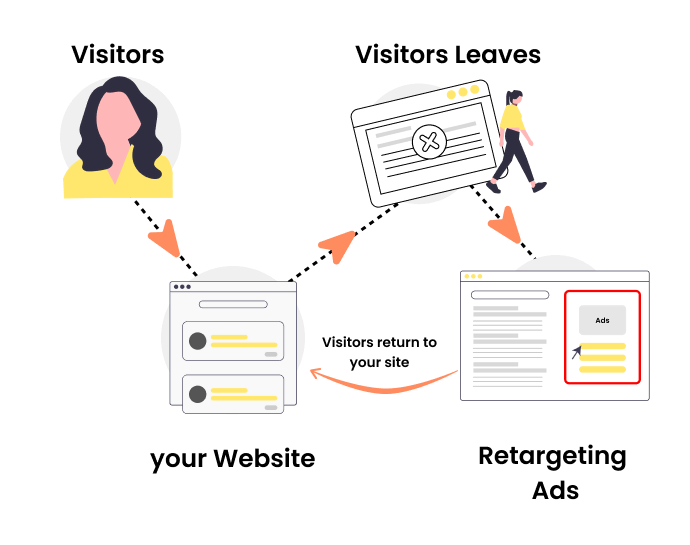
Most people who visit a website do not take action the first time.
They browse, compare, get distracted, and leave.
Without a follow-up strategy, these potential customers are lost.
This is where retargeting comes in.
Retargeting allows businesses to reconnect with users who have already interacted with their brand by showing them relevant ads across the internet. Platforms such as Google Ads, Meta Platforms, Inc., and YouTube have made retargeting one of the most powerful tools in digital marketing.
In 2026, with rising competition and shorter attention spans, retargeting is essential for converting interest into revenue.
This article explains what retargeting is, how it works, and why it matters.
What Is Retargeting?
Retargeting is a digital advertising strategy that targets users who have previously interacted with your business but did not convert.
These interactions may include:
-
Visiting your website
-
Viewing products
-
Adding items to cart
-
Watching videos
-
Clicking ads
-
Downloading content
Retargeting “follows” these users with relevant ads to encourage them to return and complete an action.
Simple Definition
Retargeting means:
Showing ads to people who already know your brand.
Instead of advertising only to strangers, retargeting focuses on warm prospects.
Why Retargeting Exists
Online behavior is fragmented.
Users:
-
Compare multiple brands
-
Switch devices
-
Get distracted
-
Delay decisions
Research shows that most conversions happen after multiple interactions.
Retargeting keeps your brand present during this decision process.
How Retargeting Fits Into Digital Marketing
Retargeting supports the middle and bottom of the marketing funnel.
| Funnel Stage | Strategy |
|---|---|
| Awareness | Prospecting |
| Consideration | Retargeting |
| Conversion | Retargeting |
| Loyalty | Remarketing |
It bridges interest and action.
What Happens Without Retargeting?
Without retargeting:
-
90%+ of visitors never return
-
Cart abandonment increases
-
Acquisition costs rise
-
Marketing ROI declines
Retargeting recovers lost opportunities.
Types of User Actions Used for Retargeting
Retargeting is based on behavioral signals.
Common examples include:
Website Visits
All visitors or specific pages.
Product Views
Users who viewed specific items.
Cart Activity
High-intent users.
Form Interactions
Partial or abandoned forms.
Video Engagement
Viewers of branded content.
App Activity
In-app actions.
These signals determine targeting.
How Retargeting Differs from Prospecting
| Feature | Prospecting | Retargeting |
|---|---|---|
| Audience | New users | Past visitors |
| Intent | Low | High |
| Cost | Higher | Lower |
| Conversion Rate | Lower | Higher |
Retargeting focuses on people already interested.
Main Goals of Retargeting
Retargeting is used to:
-
Increase conversions
-
Recover abandoned carts
-
Improve brand recall
-
Shorten sales cycles
-
Boost lifetime value
-
Lower acquisition costs
It maximizes existing traffic.
Where Retargeting Ads Appear
Retargeting ads can appear on:
-
Websites
-
Social media feeds
-
Video platforms
-
Mobile apps
-
Search results
-
News portals
Users see your brand across channels.
Common Retargeting Formats
Display Ads
Banner ads on websites.
Social Media Ads
Sponsored posts and stories.
Video Ads
Pre-roll and in-stream ads.
Native Ads
Content-style placements.
Search Retargeting Ads
Ads triggered by past behavior.
Different formats serve different goals.
Example: E-Commerce Retargeting
A shopper visits an online shoe store.
They:
-
View sneakers
-
Add to cart
-
Leave without buying
Later, they see:
-
A banner showing the same shoes
-
A social ad with a discount
-
A video review ad
They return and purchase.
This is retargeting in action.
Why Retargeting Is So Effective
Retargeting works because of psychology.
It leverages:
-
Familiarity
-
Repetition
-
Social proof
-
Reminder effect
-
Reduced uncertainty
People trust brands they recognize.
Performance Benefits
Well-optimized retargeting delivers:
-
2x–5x higher conversion rates
-
Lower cost per sale
-
Higher click-through rates
-
Better engagement
-
Stronger brand recall
It outperforms cold advertising.
Retargeting in B2C vs B2B
B2C Retargeting
Focuses on:
-
Products
-
Discounts
-
Urgency
-
Visual appeal
Short buying cycles.
B2B Retargeting
Focuses on:
-
Education
-
Case studies
-
Webinars
-
Demos
Longer sales cycles.
Strategy differs by market.
Role of Data in Retargeting
Retargeting depends on data.
Key sources include:
-
Website tracking
-
CRM systems
-
App analytics
-
Email platforms
-
Loyalty programs
Better data = better targeting.
Privacy and Consent in Retargeting
In 2026, retargeting requires user consent.
Businesses must:
-
Display cookie banners
-
Explain tracking
-
Offer opt-outs
-
Respect preferences
Ethical targeting builds trust.
First-Party Data and Retargeting
With cookie restrictions, first-party data is essential.
Examples:
-
Email subscribers
-
Account holders
-
App users
-
Members
These users enable reliable retargeting.
Common Retargeting Use Cases
Cart Abandonment
Recover lost sales.
Lead Nurturing
Convert prospects.
Upselling
Promote upgrades.
Cross-Selling
Recommend related products.
Re-Engagement
Bring back inactive users.
Challenges of Retargeting
Despite its benefits, retargeting has challenges.
These include:
-
Ad fatigue
-
Privacy restrictions
-
Small audience size
-
Tracking limitations
-
Platform dependency
Success requires careful management.
Mistakes to Avoid
Common errors include:
-
No frequency limits
-
Generic messaging
-
No exclusions
-
Poor creatives
-
Ignoring privacy
These reduce effectiveness.
How Retargeting Has Changed in 2026
Modern retargeting relies on:
-
AI optimization
-
Account-based tracking
-
Server-side data
-
Consent systems
-
Predictive targeting
It is more precise than ever.
Retargeting vs Remarketing
Although often used interchangeably:
-
Retargeting usually refers to paid ads
-
Remarketing often includes email and CRM follow-ups
Both aim to re-engage users.
Best Practices for Effective Retargeting
-
Segment audiences
-
Control frequency
-
Personalize ads
-
Rotate creatives
-
Exclude converters
-
Respect privacy
-
Test regularly
These maximize results.
The Future of Retargeting
Emerging trends include:
-
Cookieless targeting
-
Contextual retargeting
-
Zero-party data
-
Federated learning
-
User-controlled ads
Retargeting will become more transparent.
Conclusion
Retargeting is the practice of reconnecting with people who have already shown interest in your brand. By reminding, educating, and persuading these users, businesses turn lost visitors into loyal customers.
In 2026, retargeting remains one of the most powerful digital marketing tools—but only when it is done ethically, strategically, and intelligently. With strong data, respectful targeting, and relevant messaging, retargeting transforms casual interest into consistent revenue.
Retargeting is not about chasing users. It is about continuing the conversation.
- Arts
- Business
- Computers
- Παιχνίδια
- Health
- Κεντρική Σελίδα
- Kids and Teens
- Money
- News
- Personal Development
- Recreation
- Regional
- Reference
- Science
- Shopping
- Society
- Sports
- Бизнес
- Деньги
- Дом
- Досуг
- Здоровье
- Игры
- Искусство
- Источники информации
- Компьютеры
- Личное развитие
- Наука
- Новости и СМИ
- Общество
- Покупки
- Спорт
- Страны и регионы
- World

 English
 Russian
 French
 Spanish
 Portuguese
 Deutsch
 Turkish
 Dutch
Dutch
 Italiano
 Arabic
 Romaian
 Portuguese (Brazil)