
What is international commerce?
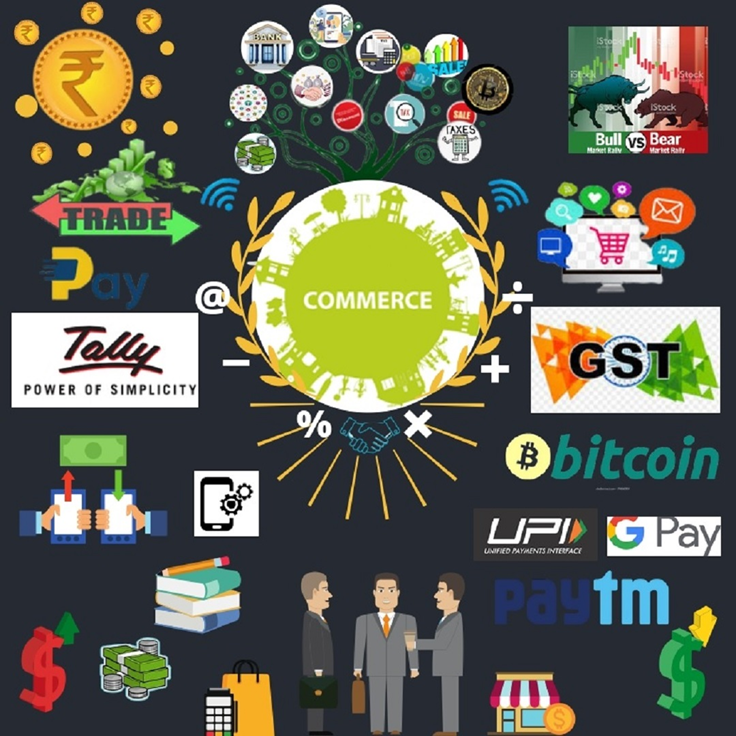
International commerce—often called international trade—is the exchange of goods, services, capital, and technology across national borders. It allows countries to sell what they produce well and buy what they cannot produce efficiently at home. In today’s interconnected world, international commerce is a central driver of economic growth, business expansion, and cultural exchange.
This article explains what international commerce is, how it works, why countries participate in it, and the challenges that come with it.
What does “international commerce” mean?
International commerce refers to all commercial activities that involve two or more countries. These activities include:
-
exporting and importing physical goods (such as food, cars, or electronics),
-
trading services (such as tourism, banking, software, and education),
-
international investment and finance,
-
licensing, franchising, and technology transfer.
Unlike domestic trade, international commerce must deal with different currencies, legal systems, languages, and political environments. This makes it more complex—but also more powerful in its impact.
Why do countries engage in international commerce?
Countries do not trade simply because they lack products. They trade because specialization makes production more efficient.
A country tends to specialize in what it can produce at a lower cost or with better quality than others. By focusing on those strengths and trading for the rest, countries can enjoy:
-
lower prices,
-
greater product variety,
-
faster technological development,
-
higher overall living standards.
For example, a country with advanced engineering skills may export machinery, while another with strong agricultural conditions may export food products. Both benefit from the exchange.
How international commerce works
At its core, international commerce follows the same basic logic as any trade:
-
A seller in one country offers a product or service.
-
A buyer in another country agrees to purchase it.
-
The transaction is completed using international transport, banking, and legal systems.
However, international transactions involve several additional elements:
1. Currency exchange
Payments usually require exchanging one national currency for another. Changes in exchange rates can make products more or less expensive for foreign buyers and sellers.
2. Transportation and logistics
Goods must travel long distances by ship, air, rail, or road. This creates additional costs and risks, such as delays, damage, or customs inspections.
3. Customs and regulations
Governments inspect and regulate goods entering and leaving their countries. Businesses must comply with documentation rules, safety standards, and product regulations.
Main forms of international commerce
International commerce is broader than just buying and selling products.
Trade in goods
This includes raw materials (such as oil and minerals), intermediate goods (such as electronic components), and finished products (such as smartphones or clothing).
Trade in services
Services now represent a large and fast-growing part of international commerce. Examples include:
-
tourism and travel,
-
financial and insurance services,
-
software development and digital platforms,
-
online education and consulting.
Foreign direct investment
Companies often invest directly in other countries by building factories, offices, or research centers. This allows firms to serve foreign markets more closely and reduce production costs.
The role of international organizations
International commerce is supported and regulated by several global institutions that help countries cooperate and resolve trade issues.
One of the most important is the World Trade Organization. It provides a framework for trade rules and helps countries settle disputes when conflicts arise over tariffs, subsidies, or market access.
Another key institution is the International Monetary Fund, which supports countries facing financial instability and promotes cooperation in international monetary systems—an important foundation for global trade.
The World Bank helps developing countries improve infrastructure, education, and productivity, making it easier for them to participate in international commerce.
In addition, the United Nations Conference on Trade and Development focuses on helping developing economies integrate into the global trading system in a fair and sustainable way.
Regional trade and economic integration
Besides global institutions, many countries form regional trading arrangements to make commerce easier among neighbors.
A well-known example is the European Union, where member states allow goods, services, capital, and people to move freely across internal borders. This deep level of economic integration reduces barriers and encourages cross-border business.
Such regional cooperation can strengthen economic ties, increase investment, and improve competitiveness in global markets.
Benefits of international commerce
International commerce offers important advantages to countries, businesses, and consumers.
More choice and lower prices for consumers
Imported goods increase the variety of products available and often reduce prices through competition.
Larger markets for businesses
Companies can grow far beyond their domestic market by reaching customers worldwide. This can support innovation, higher profits, and job creation.
Faster spread of technology and knowledge
When firms trade and invest internationally, new technologies, production methods, and business practices spread more quickly between countries.
Economic growth and development
For many countries, especially developing ones, access to international markets can help create industries, raise incomes, and reduce poverty when combined with strong institutions and education systems.
Challenges and risks
Despite its benefits, international commerce also creates serious challenges.
Unequal gains
Not all individuals or industries benefit equally. Some domestic industries may struggle to compete with cheaper or more efficient foreign producers, leading to job losses in certain sectors.
Dependence on global supply chains
When production is spread across many countries, disruptions—such as natural disasters, political conflicts, or transport problems—can interrupt supplies and raise costs.
Political and trade conflicts
Governments sometimes use tariffs, quotas, or trade restrictions to protect domestic industries or respond to political disputes. These measures can lead to trade wars and uncertainty for businesses.
Environmental concerns
International commerce increases transportation and industrial activity, which can contribute to pollution and climate change if environmental standards are weak or poorly enforced.
The digital transformation of international commerce
Technology has reshaped how international commerce operates. Online platforms allow even small businesses to sell to customers abroad. Digital services such as cloud computing, streaming, and online education can be delivered instantly across borders.
At the same time, governments now face new questions about data protection, digital taxation, and cybersecurity—issues that were far less important in traditional trade systems.
Why international commerce matters for the future
International commerce is not simply about buying and selling products. It shapes how countries cooperate, how businesses grow, and how people connect across cultures.
In the future, international commerce will increasingly be influenced by:
-
digital technologies,
-
sustainability and environmental standards,
-
shifting global economic power,
-
and changing consumer expectations.
Countries that invest in skills, infrastructure, and fair institutions are better positioned to benefit from global trade while protecting vulnerable groups and the environment.
Conclusion
International commerce is the organized exchange of goods, services, investment, and knowledge across national borders. It enables countries to specialize, expand markets, and raise living standards, while also creating new challenges related to inequality, environmental impact, and economic security.
Understanding international commerce is essential for students, businesses, and policymakers alike, because it plays a central role in shaping the global economy—and the opportunities available in the modern world.
- Arts
- Business
- Computers
- Games
- Health
- Home
- Kids and Teens
- Money
- News
- Personal Development
- Recreation
- Regional
- Reference
- Science
- Shopping
- Society
- Sports
- Бизнес
- Деньги
- Дом
- Досуг
- Здоровье
- Игры
- Искусство
- Источники информации
- Компьютеры
- Личное развитие
- Наука
- Новости и СМИ
- Общество
- Покупки
- Спорт
- Страны и регионы
- World

 Russian
 French
 Spanish
 Portuguese
 Deutsch
 Turkish
 Dutch
Dutch
 Italiano
 Arabic
 Romaian
 Portuguese (Brazil)
 Greek
Greek