
How Does SEM Work? A Complete Guide to Paid Search, Bidding, and Ad Placement in 2026
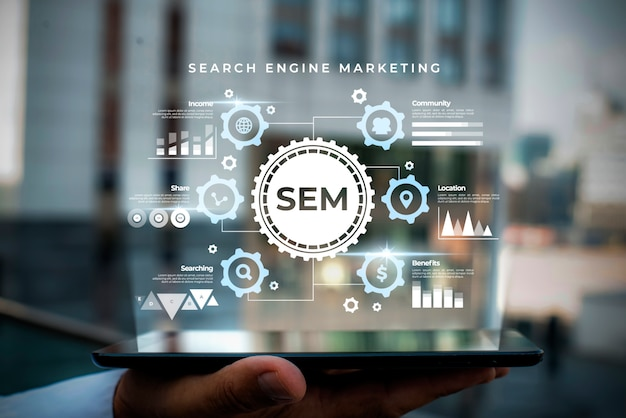
Search Engine Marketing (SEM) allows businesses to appear at the top of search results when users are actively looking for products, services, or information. But behind every sponsored result is a complex system of auctions, algorithms, quality evaluations, and bidding strategies working in real time.
In 2026, platforms such as Google Ads and Microsoft Advertising power most paid search campaigns worldwide. These systems process billions of auctions every day, matching advertisers with users in milliseconds.
This article explains exactly how SEM works—from keyword selection to bidding, ad ranking, placement, and performance optimization.
What Does “How SEM Works” Really Mean?
When people ask how SEM works, they usually want to understand:
-
How ads appear in search results
-
How bidding works
-
Why some ads rank higher than others
-
How costs are calculated
-
How conversions are tracked
SEM is not simply “paying for clicks.” It is a structured marketplace governed by algorithms and competition.
Overview: The SEM Process
At a high level, SEM works in six stages:
-
Keyword targeting
-
Campaign creation
-
User search
-
Real-time auction
-
Ad placement
-
Performance measurement
This entire process happens in less than a second.
Step 1: Keyword Selection
What Are Keywords?
Keywords are the words or phrases that users type into search engines.
Examples:
-
“buy running shoes”
-
“best CRM software”
-
“emergency plumber near me”
Advertisers choose which keywords will trigger their ads.
Types of Keywords
1. Branded Keywords
Include your brand name.
Example: “Nike shoes”
2. Non-Branded Keywords
Generic product terms.
Example: “sports shoes”
3. Commercial Keywords
Show buying intent.
Example: “order laptop online”
4. Informational Keywords
Research-focused.
Example: “what is cloud hosting”
SEM focuses mainly on commercial and transactional keywords.
Keyword Match Types
Advertisers control how closely searches must match keywords.
Common match types:
-
Exact match
-
Phrase match
-
Broad match
These determine reach and relevance.
Step 2: Campaign and Account Structure
Why Structure Matters
SEM accounts are organized into:
-
Accounts
-
Campaigns
-
Ad groups
-
Keywords
-
Ads
Good structure improves relevance and lowers costs.
Typical Structure Example
Account
→ Campaign (Shoes)
→ Ad Group (Running Shoes)
→ Keywords (“running shoes men”)
→ Ads
Each level has its own settings.
Campaign-Level Settings
Advertisers define:
-
Budget
-
Location targeting
-
Language
-
Devices
-
Schedule
-
Bidding strategy
These settings control where and when ads appear.
Step 3: Creating Search Ads
Components of a Search Ad
Most text ads include:
-
Headlines
-
Descriptions
-
Display URL
-
Extensions
Each element affects performance.
Example Ad Structure
Headline: Buy Running Shoes Today
Description: Free Shipping & Returns
URL: www.brand.com/shoes
Ads must match user intent.
Ad Extensions
Extensions expand ads with extra information.
Examples:
-
Call buttons
-
Location info
-
Sitelinks
-
Prices
-
Promotions
Extensions improve visibility and click-through rates.
Step 4: The User Search Event
What Happens When Someone Searches?
When a user enters a query on Google or Bing, the search engine instantly:
-
Analyzes the query
-
Identifies relevant keywords
-
Finds eligible advertisers
-
Launches an auction
This process takes milliseconds.
Eligibility Filtering
Before the auction, platforms filter ads by:
-
Keyword match
-
Location
-
Budget availability
-
Policy compliance
-
Bid limits
Only eligible ads enter the auction.
Step 5: The SEM Auction System
What Is the Ad Auction?
The ad auction is a real-time competition where advertisers bid for placement.
Each search triggers a new auction.
No two auctions are exactly the same.
Key Auction Factors
Three main elements determine winners:
-
Bid amount
-
Quality score
-
Ad extensions and format
Money alone is not enough.
Understanding Bidding in SEM
What Is a Bid?
A bid is the maximum amount you’re willing to pay for a click.
Example:
“I will pay up to $2.00 for this keyword.”
This is not always what you actually pay.
Types of Bidding Strategies
Manual Bidding
Advertiser sets bids manually.
Automated Bidding
Platform adjusts bids using AI.
Smart Bidding
Uses machine learning to optimize conversions.
By 2026, most campaigns use automated systems.
Common Automated Strategies
-
Maximize clicks
-
Maximize conversions
-
Target CPA
-
Target ROAS
-
Maximize conversion value
These optimize toward business goals.
Quality Score: The Hidden Power Factor
What Is Quality Score?
Quality Score measures how relevant and useful your ad is.
It is based on:
-
Expected click-through rate
-
Ad relevance
-
Landing page experience
Scores typically range from 1 to 10.
Why Quality Score Matters
High Quality Score means:
-
Lower costs
-
Higher rankings
-
Better exposure
Low Quality Score means:
-
Higher CPC
-
Limited reach
-
Lower profitability
Relevance beats budget.
Step 6: Ad Rank Calculation
What Is Ad Rank?
Ad Rank determines where your ad appears.
It decides:
-
Whether your ad shows
-
Position on page
-
Visibility level
Simplified Formula
Ad Rank = Bid × Quality Score × Format Impact
Higher Ad Rank = better placement.
Example
| Advertiser | Bid | Quality Score | Ad Rank |
|---|---|---|---|
| A | $3.00 | 4 | 12 |
| B | $2.00 | 7 | 14 |
Advertiser B wins despite lower bid.
Step 7: Ad Placement
Where Ads Appear
Ads may show:
-
At top of results
-
Below organic listings
-
At bottom of page
-
In shopping sections
-
In local packs
Top positions get most clicks.
Position Is Not Fixed
Your position changes based on:
-
Competition
-
Time
-
Location
-
Device
-
User behavior
SEM rankings are dynamic.
Step 8: Cost Calculation (How Much You Pay)
Pay-Per-Click Model
You pay only when someone clicks.
No charge for impressions (usually).
Actual CPC Formula
Actual CPC = (Next Ad Rank ÷ Your Quality Score) + $0.01
You pay just enough to beat the next competitor.
Example
Your Ad Rank: 20
Next Ad Rank: 16
Your Quality Score: 8
Cost = (16 ÷ 8) + 0.01 = $2.01
You bid $3, but pay $2.01.
Step 9: Landing Page Experience
Why Landing Pages Matter
After clicking, users visit your site.
Platforms evaluate:
-
Page speed
-
Relevance
-
Mobile usability
-
Content quality
-
Transparency
Poor pages hurt Quality Score.
Role in Conversion
Good landing pages:
-
Reduce bounce rates
-
Increase conversions
-
Improve ROI
SEM success depends heavily on landing pages.
Step 10: Conversion Tracking
What Is a Conversion?
A conversion is a valuable action, such as:
-
Purchase
-
Form submission
-
Phone call
-
Download
-
Signup
Conversions measure success.
How Tracking Works
Tracking uses:
-
Tags
-
Server-side events
-
APIs
-
Platform pixels
These record user actions.
Attribution Models
Platforms assign credit using:
-
Last click
-
Data-driven models
-
Position-based models
By 2026, AI-driven attribution dominates.
Step 11: Reporting and Optimization
Performance Data
SEM platforms provide data on:
-
Clicks
-
Impressions
-
Conversions
-
Costs
-
ROAS
-
Search terms
This guides decisions.
Ongoing Optimization
Advertisers continuously:
-
Add negative keywords
-
Adjust bids
-
Test ads
-
Improve landing pages
-
Refine audiences
SEM is never “set and forget.”
How Automation Shapes SEM in 2026
Role of Artificial Intelligence
Modern SEM relies heavily on AI for:
-
Bid adjustments
-
Keyword expansion
-
Audience modeling
-
Creative testing
-
Fraud detection
Humans focus more on strategy.
Smart Campaigns
Many campaigns now:
-
Choose keywords automatically
-
Optimize placements
-
Test creatives
-
Allocate budgets
Automation improves scale but requires oversight.
SEM in Mobile, Voice, and Visual Search
Mobile Search
Most searches are now mobile.
Ads are optimized for:
-
Calls
-
Maps
-
Quick actions
Voice Search
Voice queries are longer and conversational.
Example:
“Where can I buy running shoes near me?”
SEM adapts keyword targeting.
Visual Search
Users search with images.
SEM increasingly integrates with shopping ads.
Common Problems in SEM Execution
1. Overbidding
Paying too much for low-value clicks.
2. Poor Keyword Selection
Targeting irrelevant searches.
3. Weak Quality Score
Low relevance increases costs.
4. Bad Landing Pages
Traffic wasted after clicks.
5. Lack of Tracking
No visibility into performance.
Best Practices for How SEM Should Work
Build Intent-Focused Keyword Lists
Target buying signals.
Maintain Tight Structure
Improve relevance.
Optimize Quality Score
Focus on user experience.
Combine Automation and Control
Let AI work—but monitor it.
Track Business Outcomes
Measure revenue, not just clicks.
Test Continuously
SEM rewards experimentation.
Real-World Example: How SEM Works in Practice
Scenario: Online Shoe Store
-
Business selects “buy running shoes”
-
Creates ads and landing page
-
Sets $2.50 bid
-
User searches keyword
-
Auction runs
-
Ad ranks second
-
User clicks
-
Pays $1.85
-
User buys shoes
-
Conversion recorded
This cycle repeats thousands of times daily.
The Future of SEM Mechanics
By 2030, SEM will likely be:
-
Fully AI-managed
-
Context-aware
-
Privacy-native
-
Cross-device integrated
-
Predictive
Manual bidding and keyword management will continue to decline.
Conclusion
Search Engine Marketing works through a sophisticated system of keyword targeting, real-time auctions, bidding strategies, quality evaluation, and automated optimization.
When a user searches, platforms instantly evaluate eligible ads, calculate Ad Rank using bids and relevance, display the best options, and charge advertisers only when clicks occur. Performance is then measured and refined continuously.
In 2026, successful SEM depends not on spending the most money, but on building high-quality, relevant, data-driven campaigns that serve users effectively.
Understanding how SEM works gives businesses the power to compete, scale, and profit in the world’s most valuable digital marketplace: search.
- Arts
- Business
- Computers
- Giochi
- Health
- Home
- Kids and Teens
- Money
- News
- Personal Development
- Recreation
- Regional
- Reference
- Science
- Shopping
- Society
- Sports
- Бизнес
- Деньги
- Дом
- Досуг
- Здоровье
- Игры
- Искусство
- Источники информации
- Компьютеры
- Личное развитие
- Наука
- Новости и СМИ
- Общество
- Покупки
- Спорт
- Страны и регионы
- World

 English
 Russian
 French
 Spanish
 Portuguese
 Deutsch
 Turkish
 Dutch
Dutch
 Arabic
 Romaian
 Portuguese (Brazil)
 Greek
Greek