
How Do I Target the Right Audience for User Acquisition?
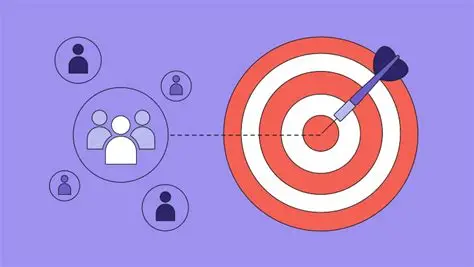
Targeting the right audience is the foundation of successful user acquisition. You can have excellent creatives, a strong product, and a generous budget — but if your targeting is wrong, your campaigns will underperform.
In 2026, audience targeting has become both more sophisticated and more privacy-focused. Platforms rely heavily on machine learning, behavioral data, contextual signals, and first-party insights to help advertisers reach relevant users.
But effective targeting still begins with strategic clarity — not just platform settings.
This in-depth guide explains how to target the right audience using demographic, geographic, behavioral, and advanced data-driven strategies.
Why Audience Targeting Matters
Poor targeting leads to:
-
High CAC (Customer Acquisition Cost)
-
Low conversion rates
-
Weak retention
-
Wasted ad spend
-
Poor LTV (Lifetime Value)
Strong targeting leads to:
-
Lower CPA (Cost per Acquisition)
-
Higher engagement
-
Better retention
-
Stronger profitability
-
Easier scaling
Targeting is not about reaching the most people.
It’s about reaching the right people.
Step 1: Define Your Ideal Customer Profile (ICP)
Before using any advertising platform, define your Ideal Customer Profile.
Ask:
-
Who benefits most from your product?
-
Who is most likely to pay?
-
Who retains the longest?
-
Who refers others?
Create a detailed ICP that includes:
-
Age range
-
Gender (if relevant)
-
Income level
-
Education level
-
Job role
-
Industry
-
Interests
-
Digital behavior
The clearer your ICP, the more precise your targeting can be.
Step 2: Use Demographic Targeting
Demographic targeting focuses on measurable characteristics.
Common demographic filters include:
-
Age
-
Gender
-
Income
-
Education
-
Occupation
-
Family status
For example:
-
A retirement planning app may target users 45+.
-
A student productivity tool may focus on 18–25 year olds.
Platforms like Meta and Google allow granular demographic segmentation.
However, demographics alone are not enough.
Two users of the same age can behave very differently.
Step 3: Apply Geographic Targeting
Geographic targeting allows you to narrow campaigns by:
-
Country
-
Region
-
City
-
Postal code
-
Radius targeting
Geography affects:
-
Purchasing power
-
Language
-
Culture
-
Demand
-
Competition
-
Legal compliance
Example scenarios:
-
A local service business may target within a 20-mile radius.
-
A global SaaS product may start with English-speaking countries.
-
An eCommerce brand may focus on high-income metro areas.
Testing geography separately helps control costs and performance.
Step 4: Leverage Behavioral Targeting
Behavioral targeting focuses on what users actually do.
It is often more powerful than demographic targeting.
Behavioral signals include:
-
Search history
-
Purchase behavior
-
Website visits
-
App usage patterns
-
Content consumption
-
Device type
For example:
-
Users who recently searched for “best budgeting apps” show purchase intent.
-
Users who visited a competitor’s site are high-intent prospects.
Platforms analyze these patterns using machine learning.
Behavioral targeting often produces stronger conversion rates.
Step 5: Use Interest-Based Targeting
Interest targeting allows advertisers to reach users based on hobbies, preferences, and content engagement.
Examples:
-
Fitness enthusiasts
-
Crypto investors
-
Small business owners
-
Gamers
-
Parents
Interest targeting works well at the awareness stage.
However, it must be refined to avoid overly broad audiences.
Step 6: Build Lookalike Audiences
Lookalike audiences are created using existing customer data.
You upload or connect:
-
Email lists
-
Website visitors
-
App users
-
Paying customers
Platforms then find users with similar behavior patterns.
Lookalike targeting is powerful because it is based on real conversion data.
Platforms like LinkedIn and Meta offer advanced lookalike modeling.
Lookalikes often outperform cold targeting.
Step 7: Implement Retargeting Campaigns
Retargeting focuses on users who already interacted with your brand.
Examples:
-
Website visitors
-
Cart abandoners
-
Trial users
-
Video viewers
Retargeting campaigns typically:
-
Have lower CPA
-
Convert at higher rates
-
Improve ROI
This is because users are already familiar with your brand.
Retargeting is essential for mid- and bottom-of-funnel performance.
Step 8: Segment by Funnel Stage
Different audiences require different messaging.
Segment by:
Top-of-Funnel:
-
Broad interest audiences
-
Lookalikes
Mid-Funnel:
-
Website visitors
-
Email subscribers
Bottom-of-Funnel:
-
Trial users
-
Cart abandoners
Each stage should have:
-
Different creatives
-
Different calls-to-action
-
Different value propositions
Targeting without funnel alignment reduces effectiveness.
Step 9: Use First-Party Data
In 2026, privacy regulations limit third-party tracking.
First-party data has become critical.
This includes:
-
Email lists
-
CRM data
-
In-app behavior
-
Purchase history
-
Customer surveys
First-party data improves:
-
Personalization
-
Targeting accuracy
-
Campaign performance
Owning your data reduces dependence on external algorithms.
Step 10: Test and Refine Audience Segments
Targeting is not static.
Test:
-
Broad audiences vs narrow audiences
-
Different age ranges
-
Interest variations
-
Geographic splits
-
Lookalike percentages
Analyze:
-
CPA
-
Retention
-
LTV
-
Engagement rates
Scale only the segments that deliver profitable users.
Advanced Targeting Strategies in 2026
Modern targeting strategies include:
AI-Based Target Expansion
Platforms automatically expand audiences based on performance signals.
Contextual Targeting
Ads are shown based on content context rather than user tracking.
Predictive Analytics
Machine learning predicts which users are likely to convert.
Cohort Analysis
Target users who behave similarly to high-LTV cohorts.
These methods enhance performance without violating privacy rules.
Common Targeting Mistakes
-
Targeting too broadly
-
Targeting too narrowly
-
Ignoring retention data
-
Not separating funnel stages
-
Failing to exclude existing customers
-
Scaling before testing
Audience precision must be balanced with scalability.
Example: Targeting Strategy for a SaaS App
Step 1:
Upload paying customer list to create lookalike audience.
Step 2:
Run search ads on Google targeting high-intent keywords.
Step 3:
Run retargeting ads to website visitors on YouTube.
Step 4:
Segment by industry and job title on LinkedIn.
Step 5:
Analyze which segment delivers highest LTV.
Step 6:
Scale profitable audiences gradually.
This layered approach improves efficiency.
Measuring Targeting Effectiveness
Key metrics include:
-
Conversion rate by audience
-
CAC by segment
-
LTV by segment
-
Retention rate
-
ROAS
If one audience has:
-
Lower CPA but poor retention → Not ideal
-
Slightly higher CPA but strong LTV → Better long-term investment
Targeting must consider lifetime value, not just initial conversion.
Balancing Precision and Scale
Overly narrow targeting:
-
Limits growth
-
Increases CPM
-
Reduces learning data
Overly broad targeting:
-
Increases wasted spend
-
Lowers relevance
-
Reduces conversion rate
The ideal approach:
Start focused → Validate → Gradually expand.
Targeting Across Different Channels
Different platforms offer different strengths:
Search:
Intent-based targeting.
Social:
Interest and behavioral targeting.
Video:
Contextual and engagement targeting.
Professional networks:
Job title and industry targeting.
Combining channels increases coverage while maintaining relevance.
Align Targeting With Messaging
Audience targeting must align with creative.
For example:
Busy professionals:
Highlight time-saving benefits.
Students:
Emphasize affordability.
Parents:
Focus on safety and convenience.
The same product may require multiple audience-specific messages.
Long-Term Targeting Strategy
Over time, refine targeting by:
-
Analyzing top-performing cohorts
-
Excluding low-retention segments
-
Prioritizing high-LTV customers
-
Using feedback to refine messaging
Targeting evolves with product growth.
Final Thoughts
Targeting the right audience for user acquisition requires:
-
Clear ICP definition
-
Demographic precision
-
Geographic segmentation
-
Behavioral insights
-
Lookalike modeling
-
Retargeting strategy
-
Funnel alignment
-
Continuous optimization
In 2026, successful targeting blends human strategy with machine learning intelligence.
The goal is not just acquiring users — but acquiring the right users who convert, retain, and generate long-term value.
When audience targeting is strategic, data-driven, and continuously refined, user acquisition becomes efficient, scalable, and profitable.
- Arts
- Business
- Computers
- Игры
- Health
- Главная
- Kids and Teens
- Деньги
- News
- Personal Development
- Recreation
- Regional
- Reference
- Science
- Shopping
- Society
- Sports
- Бизнес
- Деньги
- Дом
- Досуг
- Здоровье
- Игры
- Искусство
- Источники информации
- Компьютеры
- Личное развитие
- Наука
- Новости и СМИ
- Общество
- Покупки
- Спорт
- Страны и регионы
- World

 English
 French
 Spanish
 Portuguese
 Deutsch
 Turkish
 Dutch
Dutch
 Italiano
 Arabic
 Romaian
 Portuguese (Brazil)
 Greek
Greek