
How do I deal with distractions?
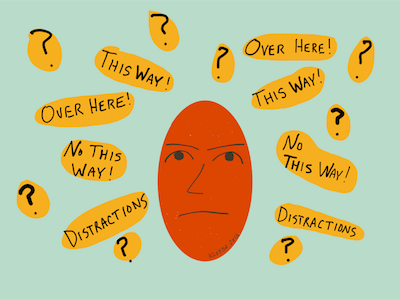
Distractions are not simply interruptions — they are cognitive disruptions that fragment attention, reduce efficiency, and erode performance over time. Whether you are a student, professional, entrepreneur, or remote worker, the ability to manage distractions is directly correlated with productivity, learning capacity, and output quality.
Eliminating all distractions is unrealistic. Managing them strategically is achievable.
This comprehensive guide explains how distractions work, why they occur, and how to control them systematically.
1. Understand What Distractions Actually Are
A distraction is anything that pulls your attention away from your intended task.
They fall into two primary categories:
External Distractions
-
Phone notifications
-
Emails
-
Messaging apps
-
Social media
-
Office noise
-
Interruptions from others
Internal Distractions
-
Daydreaming
-
Worry
-
Stress
-
Boredom
-
Fatigue
-
Urges to check devices
Most people focus only on external distractions. However, internal distractions are often more powerful and harder to manage.
Effective distraction control addresses both.
2. Recognize the Cost of Context Switching
Every time you switch tasks, your brain incurs a cognitive penalty.
Consequences include:
-
Reduced processing speed
-
Lower quality output
-
Increased errors
-
Delayed task completion
Research consistently shows that task switching reduces overall efficiency. Even brief interruptions can require several minutes of recovery before deep focus resumes.
If you are frequently distracted, your effective productive time may be far lower than you assume.
3. Identify Your Personal Distraction Patterns
Before solving the problem, diagnose it.
Track for one week:
-
When distractions occur
-
What triggers them
-
How long recovery takes
-
Emotional state at the time
Common patterns:
-
Checking social media during difficult tasks
-
Email refreshing when uncertain
-
Messaging during boredom
-
Online browsing during fatigue
Distractions are often emotional avoidance mechanisms.
Awareness reduces unconscious repetition.
4. Design Your Environment for Focus
Willpower alone is insufficient.
Modify your physical and digital environment to reduce temptation.
Physical Environment
-
Clear your desk.
-
Use noise-canceling headphones if needed.
-
Choose quiet work locations.
-
Keep only necessary materials visible.
Digital Environment
-
Close unused tabs.
-
Disable non-essential notifications.
-
Use website blockers during work sessions.
-
Log out of distracting platforms.
Environment design reduces reliance on self-control.
5. Use Structured Focus Blocks
Open-ended work invites distraction.
Instead, work in defined focus sessions.
Example:
-
50 minutes focused work
-
10 minutes break
During focus blocks:
-
No phone.
-
No email.
-
No multitasking.
-
No social media.
Structured intervals create psychological boundaries.
6. Manage Internal Distractions
Internal distractions often stem from:
-
Stress
-
Anxiety
-
Lack of clarity
-
Fatigue
-
Overwhelm
Address them directly.
Reduce Overwhelm
Break tasks into small, specific actions.
Instead of:
“Write research paper”
Use:
-
Draft introduction outline
-
Write first paragraph
-
Find three supporting sources
Clarity reduces avoidance.
Manage Anxiety
If your mind drifts due to worry:
-
Write down concerns.
-
Schedule a specific time to address them.
-
Return to task.
Externalizing thoughts prevents mental loops.
Address Fatigue
Low energy increases distraction susceptibility.
Prioritize:
-
7–9 hours of sleep
-
Regular exercise
-
Balanced nutrition
-
Hydration
Focus is biological, not purely psychological.
7. Control Notification Overload
Notifications are engineered to capture attention.
Strategies:
-
Turn off non-essential push notifications.
-
Batch-check email 2–3 times daily.
-
Silence group chats during work blocks.
-
Keep phone out of reach during deep work.
Proximity increases temptation.
Even seeing your phone reduces available cognitive capacity.
8. Practice Single-Tasking
Multitasking is a distraction amplifier.
Commit to:
-
One task.
-
One goal.
-
One focus block.
If another task arises:
-
Write it down.
-
Continue current task.
-
Address it later.
This prevents attention fragmentation.
9. Create Friction for Bad Habits
Make distractions harder to access.
Examples:
-
Log out of social media accounts.
-
Use app blockers.
-
Delete unnecessary apps.
-
Place phone in another room.
Increasing friction reduces impulsive behavior.
10. Use the “Delay” Technique
When tempted to check something:
Tell yourself:
“I’ll check in 10 minutes.”
Often, the urge fades.
Most distractions are impulse-driven, not necessity-driven.
11. Clarify Your “Why”
Distraction resistance strengthens when purpose is clear.
Ask:
-
Why does this task matter?
-
What happens if I delay it?
-
What benefit comes from completion?
Strong internal motivation reduces susceptibility to trivial interruptions.
12. Reduce Meeting and Communication Interruptions
In professional environments:
-
Schedule communication windows.
-
Protect deep work hours.
-
Use asynchronous updates when possible.
-
Decline non-essential meetings.
Control accessibility strategically.
13. Build Focus as a Skill
Focus is trainable.
Start with:
-
20-minute distraction-free blocks.
-
Gradually increase duration.
-
Track daily focused hours.
Just as muscles strengthen through training, attention improves through consistent practice.
14. Accept That Some Distractions Are Inevitable
Total elimination is unrealistic.
Instead:
-
Minimize avoidable distractions.
-
Recover quickly from unavoidable ones.
-
Avoid frustration when interrupted.
-
Resume task deliberately.
The speed of recovery matters more than total avoidance.
15. Protect Peak Cognitive Hours
Most people have 2–4 peak hours daily.
Schedule:
-
Complex tasks
-
Analytical work
-
Creative projects
Avoid scheduling low-value activities during high-performance windows.
16. Avoid Emotional Avoidance
Often, distractions are not random.
They occur when:
-
A task feels difficult.
-
Fear of failure appears.
-
Perfectionism activates.
-
Motivation drops.
Instead of escaping:
-
Reduce task size.
-
Accept imperfect progress.
-
Commit to short bursts of effort.
Distraction is often disguised procrastination.
17. Use Visual Progress Tracking
Seeing progress reduces temptation to quit.
Methods:
-
Task checklists
-
Progress bars
-
Study hour logs
-
Daily accomplishment lists
Momentum strengthens focus.
18. Take Strategic Breaks
Continuous work without rest reduces attention control.
Effective breaks:
-
Physical movement
-
Stretching
-
Brief walk
-
Hydration
Ineffective breaks:
-
Social media scrolling
-
News browsing
-
Content consumption
Choose breaks that restore energy rather than consume it.
19. Reduce Information Overload
Constant content consumption weakens attention span.
Limit:
-
News frequency
-
Social media browsing
-
Short-form content
-
Random video consumption
Information dieting improves cognitive stamina.
20. Build Long-Term Discipline
Distraction control is not a one-time fix.
It requires:
-
Habit reinforcement
-
Consistent environment design
-
Ongoing review
-
Self-awareness
Over time:
-
Impulse checking decreases.
-
Focus duration increases.
-
Recovery from interruption improves.
Common Mistakes When Dealing With Distractions
-
Relying solely on willpower.
-
Attempting total elimination immediately.
-
Ignoring internal emotional triggers.
-
Overworking without breaks.
-
Being overly self-critical after interruptions.
Improvement is incremental.
Example Focus System
Morning:
-
90-minute deep work block (phone in another room)
-
10-minute break
Midday:
-
Communication batch
-
Short administrative tasks
Afternoon:
-
60-minute project block
-
Review and planning
Evening:
-
No work-related notifications
Structure reduces decision fatigue.
Final Perspective
Distractions are not a sign of weakness. They are a normal part of modern cognitive environments.
However, unmanaged distractions lead to:
-
Lower productivity
-
Increased stress
-
Reduced quality work
-
Delayed goals
Effective distraction management involves:
-
Awareness of patterns.
-
Environmental control.
-
Structured focus intervals.
-
Emotional regulation.
-
Sustainable habits.
The objective is not perfection.
It is consistent improvement in attention control.
Attention is your most valuable cognitive resource.
Protect it deliberately.
- Arts
- Business
- Computers
- Spiele
- Health
- Startseite
- Kids and Teens
- Geld
- News
- Personal Development
- Recreation
- Regional
- Reference
- Science
- Shopping
- Society
- Sports
- Бизнес
- Деньги
- Дом
- Досуг
- Здоровье
- Игры
- Искусство
- Источники информации
- Компьютеры
- Личное развитие
- Наука
- Новости и СМИ
- Общество
- Покупки
- Спорт
- Страны и регионы
- World

 English
 Russian
 French
 Spanish
 Portuguese
 Turkish
 Dutch
Dutch
 Italiano
 Arabic
 Romaian
 Portuguese (Brazil)
 Greek
Greek