
How do you balance short-term tasks with long-term goals?
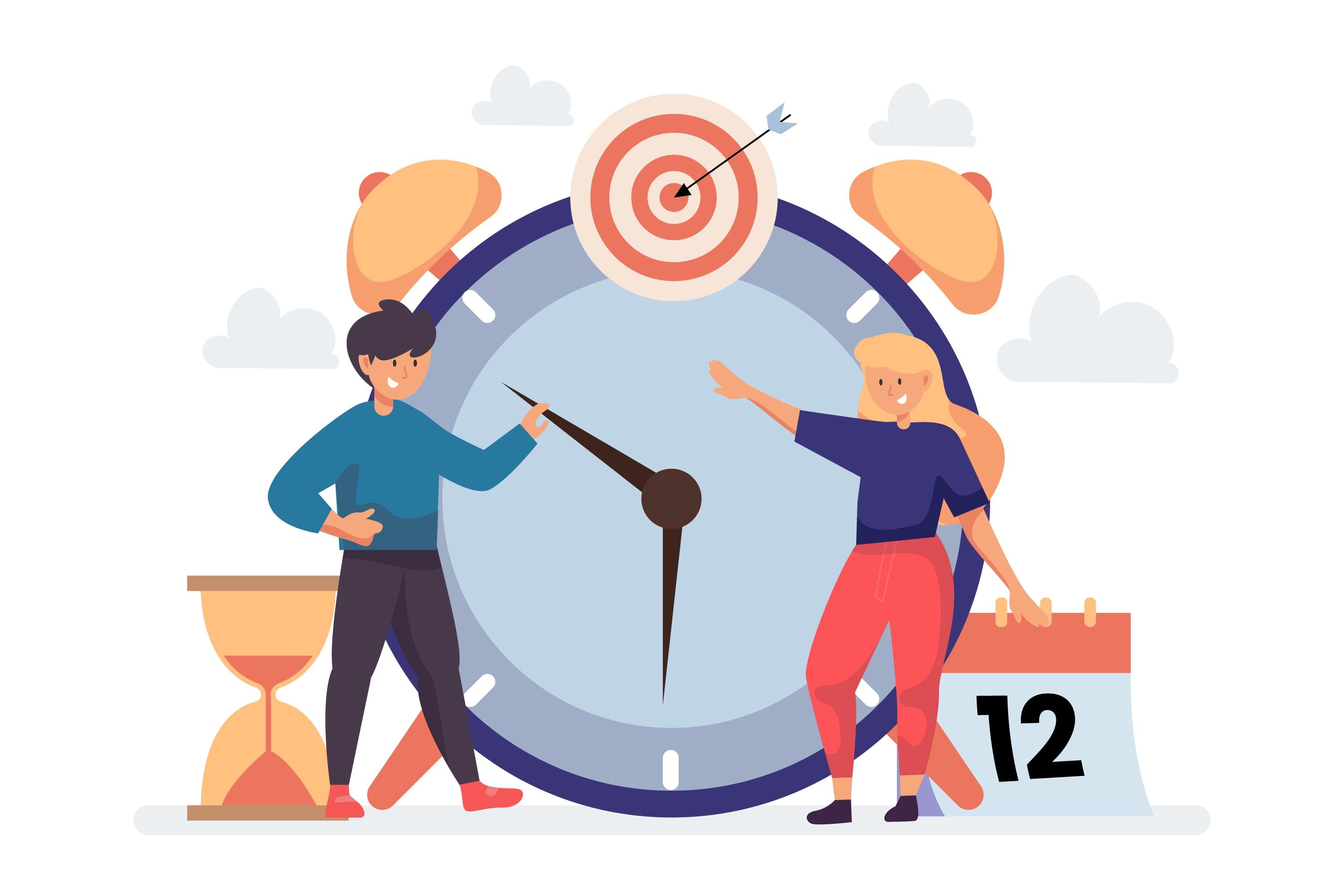
Balancing short-term tasks with long-term goals is one of the most critical—and often misunderstood—skills in productivity, strategy, and personal or organizational success. Short-term tasks demand immediate attention, while long-term goals require sustained focus and intentional progress over time. The challenge lies in ensuring that day-to-day execution aligns with broader ambitions, rather than drifting into reactive, short-sighted work.
This article provides a comprehensive, structured approach to balancing short-term tasks with long-term goals, covering frameworks, planning systems, prioritization models, and behavioral strategies.
Understanding the Tension Between Short-Term and Long-Term Thinking
At the core of this challenge is a fundamental tension:
Short-Term Tasks
-
Immediate, actionable items
-
Often urgent
-
Provide quick feedback or results
-
Driven by deadlines and external demands
Long-Term Goals
-
Strategic, outcome-oriented objectives
-
Require sustained effort over time
-
Often lack immediate urgency
-
Provide high-value impact
The Core Problem
Short-term tasks tend to dominate attention because they are urgent and visible, while long-term goals are frequently neglected because they lack immediacy. This leads to a reactive workflow where individuals or teams are constantly “busy” but not necessarily making meaningful progress toward their goals.
The Principle of Alignment
The key to balance is not treating short-term tasks and long-term goals as separate entities, but as interconnected layers of the same system.
Alignment Defined
Every short-term task should ideally contribute to a long-term goal.
Misalignment Example
-
Spending hours responding to low-priority emails (short-term)
-
Ignoring strategic planning for business growth (long-term)
Alignment Example
-
Breaking a long-term goal (e.g., “launch a product”) into actionable daily tasks
Step 1: Clearly Define Long-Term Goals
You cannot balance what is undefined.
Characteristics of Effective Long-Term Goals
-
Specific
-
Measurable
-
Time-bound
-
Outcome-focused
Example
Instead of:
-
“Improve business”
Use:
-
“Increase revenue by 30% within 12 months”
Frameworks for Goal Setting
1. SMART Goals
-
Specific
-
Measurable
-
Achievable
-
Relevant
-
Time-bound
2. OKRs (Objectives and Key Results)
-
Objective: High-level goal
-
Key Results: Measurable milestones
Step 2: Break Long-Term Goals into Milestones
Large goals are not actionable in their raw form.
Decomposition Process
-
Define the end goal
-
Identify major milestones
-
Break milestones into smaller deliverables
-
Convert deliverables into tasks
Example
Goal: Launch a mobile app
Milestones:
-
Design completed
-
Development finished
-
Testing completed
-
Launch executed
Tasks:
-
Create wireframes
-
Develop login system
-
Conduct QA testing
Step 3: Integrate Goals into Daily Task Management
Long-term goals must be embedded into your daily workflow.
Techniques
1. Goal-Linked Tasking
Every task should be tagged or linked to a goal.
2. Priority Weighting
Tasks contributing to long-term goals should receive higher priority.
3. Daily Goal Alignment Check
Ask:
-
Does today’s work move me closer to my goals?
Step 4: Use Time Allocation Strategies
Time is the bridge between short-term execution and long-term success.
1. Time Blocking
Allocate dedicated time slots for goal-related work.
Example
-
9:00–11:00 → Strategic project work
-
11:00–13:00 → Operational tasks
2. The 80/20 Rule (Pareto Principle)
-
20% of tasks produce 80% of results
-
Focus on high-impact tasks aligned with long-term goals
3. Fixed vs Flexible Scheduling
-
Fixed: Non-negotiable time for strategic work
-
Flexible: Reactive or low-priority tasks
Step 5: Prioritize Effectively
Balancing requires intelligent prioritization.
The Eisenhower Matrix
Categorize tasks into:
-
Urgent & Important → Do immediately
-
Important, Not Urgent → Schedule (this is where long-term goals live)
-
Urgent, Not Important → Delegate
-
Neither → Eliminate
Key Insight
Long-term goals typically fall into “Important but Not Urgent,” making them easy to neglect unless deliberately scheduled.
Step 6: Manage Urgency Bias
Humans are naturally biased toward urgent tasks.
Symptoms
-
Constant firefighting
-
Neglecting strategic work
-
Feeling busy but unproductive
Solutions
-
Schedule goal work in advance
-
Limit reactive time windows
-
Use notifications sparingly
Step 7: Build Systems, Not Just Plans
Plans are static; systems are dynamic.
System Components
-
Task capture mechanism
-
Prioritization rules
-
Workflow stages
-
Review cycles
Benefit
A system ensures continuous alignment without requiring constant decision-making.
Step 8: Track Progress on Both Levels
You need visibility into both short-term execution and long-term progress.
Short-Term Metrics
-
Tasks completed
-
Deadlines met
-
Daily output
Long-Term Metrics
-
Milestones achieved
-
Goal progress percentage
-
Outcome-based results
Example
-
Short-term: Completed 10 tasks this week
-
Long-term: Reached 40% completion of project
Step 9: Conduct Regular Reviews
Balancing requires continuous adjustment.
Daily Review
-
Check task list
-
Adjust priorities
Weekly Review
-
Evaluate progress toward goals
-
Plan next steps
Monthly Review
-
Assess overall alignment
-
Adjust goals if necessary
Step 10: Avoid Overcommitment
Trying to do too much disrupts balance.
Signs
-
Constant backlog growth
-
Missed deadlines
-
Reduced quality
Solution
-
Limit tasks per day
-
Focus on high-impact work
-
Say no to low-value tasks
Step 11: Use Strategic Buffering
Unexpected tasks will arise.
Buffer Strategies
-
Leave gaps in your schedule
-
Allocate contingency time
-
Avoid fully packed calendars
Step 12: Delegate and Automate
Free up time for long-term work.
Delegation
-
Assign low-impact tasks to others
Automation
-
Automate repetitive processes
Result
More time for strategic thinking and execution
Step 13: Maintain Focus and Discipline
Balancing is not just structural—it’s behavioral.
Techniques
-
Deep work sessions
-
Minimizing distractions
-
Setting clear boundaries
Step 14: Align Team Efforts (For Organizations)
In teams, alignment must scale.
Strategies
-
Communicate goals clearly
-
Link team tasks to organizational objectives
-
Use shared dashboards
Step 15: Adapt to Changing Priorities
Long-term goals may evolve.
When to Adjust
-
Market changes
-
New opportunities
-
Shifting priorities
Approach
-
Reassess goals periodically
-
Realign tasks accordingly
Common Mistakes
1. Ignoring Long-Term Goals
Leads to stagnation and lack of direction.
2. Overplanning
Spending too much time planning instead of executing.
3. Poor Task Breakdown
Makes goals feel overwhelming.
4. Lack of Review
Results in drift and misalignment.
Real-World Example
Scenario: Startup Founder
Short-term tasks:
-
Respond to emails
-
Manage team
Long-term goals:
-
Scale business
-
Secure funding
Solution
-
Allocate daily time for strategic work
-
Delegate operational tasks
-
Track both task completion and business growth
Psychological Aspects
Balancing requires mental discipline.
Challenges
-
Instant gratification bias
-
Fear of missing urgent tasks
Solutions
-
Focus on long-term rewards
-
Build habits around strategic work
The Role of Habits
Habits reduce reliance on motivation.
Examples
-
Daily planning routine
-
Weekly goal review
-
Scheduled deep work sessions
Advanced Strategies
1. Goal Layering
Align goals across:
-
Daily
-
Weekly
-
Monthly
-
Yearly
2. Reverse Planning
Start from the goal and work backward.
3. Rolling Planning
Continuously update plans based on progress.
Conclusion
Balancing short-term tasks with long-term goals is not about dividing attention equally—it’s about aligning execution with strategy. Short-term tasks are the building blocks, while long-term goals provide direction and purpose.
The most effective approach combines clear goal definition, structured task breakdown, disciplined prioritization, and consistent review. By embedding long-term goals into daily workflows, managing urgency bias, and maintaining focus, individuals and teams can achieve both immediate productivity and sustained success.
Ultimately, the goal is not to choose between short-term and long-term work, but to integrate them into a cohesive system where every action contributes to meaningful progress.
- Arts
- Business
- Computers
- Jeux
- Health
- Domicile
- Kids and Teens
- Argent
- News
- Personal Development
- Recreation
- Regional
- Reference
- Science
- Shopping
- Society
- Sports
- Бизнес
- Деньги
- Дом
- Досуг
- Здоровье
- Игры
- Искусство
- Источники информации
- Компьютеры
- Личное развитие
- Наука
- Новости и СМИ
- Общество
- Покупки
- Спорт
- Страны и регионы
- World

 English
 Russian
 Spanish
 Portuguese
 Deutsch
 Turkish
 Dutch
Dutch
 Italiano
 Arabic
 Romaian
 Portuguese (Brazil)
 Greek
Greek