
How do I balance work and family life?
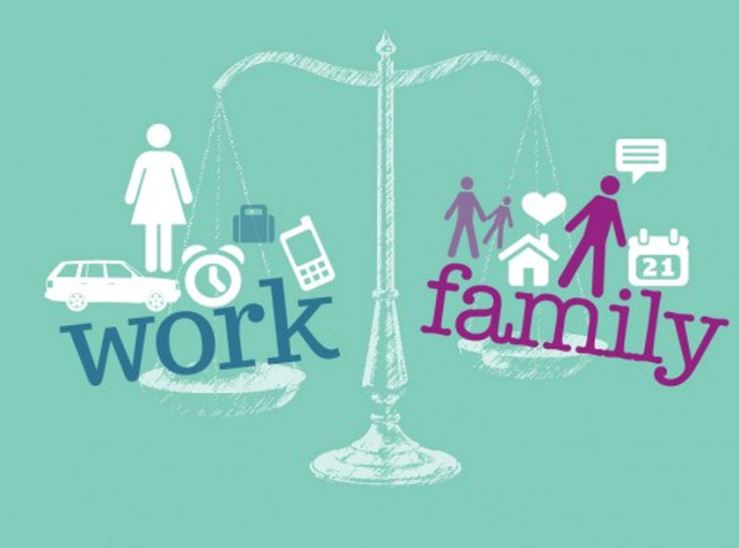
How Do I Balance Work and Family Life?
Balancing work and family life is one of the most persistent challenges in modern life. Unlike simple time management problems, it involves competing systems of responsibility: professional obligations that demand consistency, and family relationships that require presence, emotional availability, and flexibility. The difficulty is not just logistical—it is structural and psychological.
A sustainable balance is not achieved by splitting time evenly. Instead, it is achieved by designing boundaries, prioritization systems, and routines that allow both domains to function without constant conflict.
This article breaks down how work–family balance actually works and how to build a system that reduces friction between the two.
1. Redefine What “Balance” Actually Means
A common misconception is that balance means equal time distribution. In reality, balance is:
-
Stability across long periods, not daily symmetry
-
Flexibility during high-demand phases
-
Reduced conflict between roles
Some weeks will lean heavily toward work; others toward family. The goal is not perfect equilibrium, but sustainable rotation without chronic neglect of either domain.
2. Understand the Core Conflict: Role Switching
Work and family require different cognitive and emotional modes:
-
Work mode: analytical thinking, task execution, performance pressure
-
Family mode: emotional presence, patience, responsiveness
The problem arises when these modes overlap excessively or when transitions are abrupt and unmanaged.
Common issue:
People physically leave work but remain mentally attached to it, reducing their presence at home.
Key insight:
Balance is less about time and more about attention allocation.
3. Establish Clear Boundaries Between Work and Home
Without boundaries, work expands into family life by default.
Types of boundary failures:
-
Checking work messages during family time
-
Working late into evenings regularly
-
Being mentally preoccupied with work during conversations
Practical solutions:
-
Define a strict “end of work” time each day
-
Avoid work communication outside working hours where possible
-
Create a transition routine between work and home
Example transition routine:
-
Finish last task
-
Write tomorrow’s priorities
-
Shut down work devices
-
Engage in a short decompression activity (walk, shower, music)
This signals a psychological shift between roles.
4. Prioritize Time Blocks, Not Scattered Availability
Fragmented attention is one of the biggest threats to family presence.
Problem:
Constant interruptions reduce both work efficiency and family engagement.
Solution:
Use structured time blocks:
-
Work blocks for focused professional output
-
Family blocks for uninterrupted personal presence
Key principle:
When you are with family, you are fully with them—not partially available.
5. Protect Family Time as Non-Negotiable
Family time should not be treated as “optional leftover time.”
Common failure pattern:
Work expands to fill available time, pushing family interactions into residual gaps.
Solution:
-
Schedule family time like meetings
-
Treat it as fixed and protected
-
Avoid last-minute work encroachment
This reframes family time as a priority system rather than a default outcome.
6. Manage Energy, Not Just Hours
Balancing work and family is not purely about hours—it is about energy quality.
Example:
-
High energy → meaningful engagement with children or partner
-
Low energy → passive scrolling or disengagement
Strategy:
-
Align demanding work tasks with peak energy periods
-
Reserve high-quality energy for family interaction
Being physically present is not enough; emotional availability matters more.
7. Avoid the “Always On” Work Culture
Modern work environments often encourage constant availability, which directly conflicts with family life.
Problem:
-
Expectation of instant responses
-
Blurred boundaries via mobile communication
Solution:
-
Set response windows for work communication
-
Disable non-essential notifications during family time
-
Communicate availability clearly to colleagues
You cannot be fully present in two demanding systems simultaneously.
8. Use Planning to Reduce Daily Decision Stress
One of the hidden causes of imbalance is decision fatigue.
Problem:
Repeatedly deciding “work or family right now?” creates mental exhaustion.
Solution:
-
Plan your week in advance
-
Assign dedicated blocks for both domains
-
Reduce daily improvisation
Planning reduces conflict between competing priorities.
9. Communicate Clearly With Family and Work
Misalignment of expectations is a major source of tension.
At work:
-
Clarify availability and boundaries
-
Set realistic expectations about response times
At home:
-
Communicate workload demands in advance
-
Discuss busy periods proactively
Transparency reduces misunderstanding and resentment.
10. Avoid Guilt-Driven Overcompensation
Many people attempt to “make up” for work time by overcompensating at home or vice versa.
Problem:
-
Leads to exhaustion
-
Creates unsustainable cycles
-
Reduces quality of both work and family engagement
Solution:
-
Focus on consistency instead of compensation
-
Quality over quantity applies in both domains
Presence matters more than intensity spikes.
11. Build Rituals for Transition Between Roles
Without transitions, roles blend together, increasing stress.
Work-to-family transition ideas:
-
Short walk after work
-
Changing clothes
-
Listening to music or podcast
Family-to-work transition ideas:
-
Morning planning routine
-
Quiet focus time before starting work
These rituals help the brain switch contexts efficiently.
12. Learn to Say No Strategically
Overcommitment is a direct threat to family time.
Problem:
Accepting too many work responsibilities reduces personal availability.
Solution:
-
Evaluate requests against capacity
-
Decline low-impact commitments
-
Protect family time explicitly
Every “yes” has an opportunity cost.
13. Optimize Work Efficiency to Protect Family Time
Work-life balance improves when work becomes more efficient, not just shorter.
Strategies:
-
Prioritize high-impact tasks
-
Reduce unnecessary meetings
-
Automate or delegate repetitive tasks
Higher efficiency creates more protected family space.
14. Accept Seasonal Imbalance
Life is not static. Some periods will be work-heavy, others family-heavy.
Examples:
-
Project deadlines → work-heavy weeks
-
Holidays → family-heavy periods
Key insight:
Balance should be evaluated over months, not days.
15. Protect Sleep as Shared Foundation
Sleep is not just personal recovery—it affects both work performance and family presence.
Effects of poor sleep:
-
Irritability at home
-
Reduced cognitive performance at work
-
Lower emotional patience
Strategy:
-
Maintain consistent sleep schedule
-
Avoid sacrificing sleep for work or leisure
Sleep is a stabilizing factor for both domains.
16. Create Meaningful Family Engagement, Not Just Time
Time alone is not enough—quality matters.
Low-quality presence:
-
Being physically present but distracted
-
Multitasking during family interaction
High-quality presence:
-
Focused attention
-
Active listening
-
Shared activities
Short, high-quality interactions are often more valuable than long distracted ones.
17. Reduce Cognitive Overload Through Simplification
Too many responsibilities create constant mental pressure.
Solution:
-
Simplify daily routines
-
Reduce unnecessary obligations
-
Focus on core priorities
Less complexity means more mental availability for family.
18. Involve Family in Your Life Context
Balance improves when work is not completely disconnected from family understanding.
Examples:
-
Sharing general work challenges
-
Explaining busy periods
-
Involving family in planning awareness
This reduces emotional distance between domains.
19. Monitor and Adjust Regularly
Work-family balance is not static—it requires ongoing calibration.
Weekly reflection questions:
-
Did I feel present with my family this week?
-
Did work interfere with personal time?
-
Where did I lose control of my schedule?
Adjustment prevents long-term drift.
20. Accept Imperfection Without Losing Direction
No one achieves perfect balance at all times.
Reality:
-
Conflicts will happen
-
Work will sometimes dominate
-
Family demands will fluctuate
Key mindset:
The goal is not perfection—it is continuous correction toward equilibrium.
Conclusion
Balancing work and family life is not about dividing hours equally—it is about designing systems that protect attention, energy, and emotional presence across both domains.
The most effective principles are:
-
Strong boundaries between work and home
-
Structured time blocks for both domains
-
Energy-aware scheduling
-
Clear communication and expectation setting
-
Reduction of unnecessary commitments
If you start with three immediate actions:
-
Define a fixed daily work cutoff time
-
Schedule non-negotiable family time blocks
-
Stop work communication outside working hours where possible
you will already begin shifting toward a more stable and sustainable balance.
Ultimately, balance is not a destination—it is a continuous practice of protecting what matters most in each moment.
- Arts
- Business
- Computers
- Игры
- Health
- Главная
- Kids and Teens
- Деньги
- News
- Personal Development
- Recreation
- Regional
- Reference
- Science
- Shopping
- Society
- Sports
- Бизнес
- Деньги
- Дом
- Досуг
- Здоровье
- Игры
- Искусство
- Источники информации
- Компьютеры
- Личное развитие
- Наука
- Новости и СМИ
- Общество
- Покупки
- Спорт
- Страны и регионы
- World

 English
 French
 Spanish
 Portuguese
 Deutsch
 Turkish
 Dutch
Dutch
 Italiano
 Arabic
 Romaian
 Portuguese (Brazil)
 Greek
Greek