
What Is Stagflation?
What Is Stagflation?
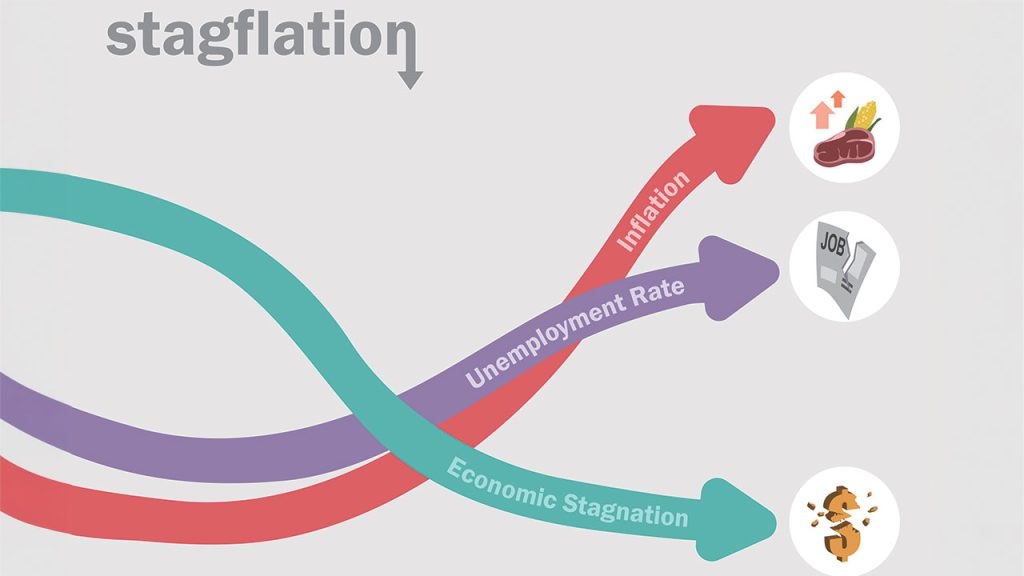
Stagflation is one of the most puzzling and challenging economic conditions a country can face. It combines three negative trends that do not typically occur together: slow economic growth (stagnation), high unemployment, and rising prices (inflation). Under normal circumstances, inflation tends to rise when an economy is growing and demand is strong. Conversely, when growth slows and unemployment rises, inflation usually falls. Stagflation breaks this conventional pattern, making it difficult for policymakers to respond effectively.
Understanding the Core Components
To grasp stagflation fully, it is important to break down its three main elements:
1. Stagnation
Economic stagnation refers to a prolonged period of little or no growth in an economy. Businesses produce less, investment slows, and overall economic activity weakens. As a result, job creation declines, and incomes may stagnate or fall.
2. Inflation
Inflation is the general increase in prices of goods and services over time. Moderate inflation is often a sign of a healthy economy, but when it becomes excessive, it reduces purchasing power. Consumers find that their money buys less than before.
3. Unemployment
High unemployment occurs when a significant portion of the workforce cannot find jobs. During stagnation, companies often cut costs by reducing their workforce, worsening the situation.
When all three occur simultaneously, the result is stagflation—a rare and difficult economic scenario.
Why Is Stagflation So Problematic?
Stagflation is especially troublesome because the tools used to fix one problem often worsen another.
-
To fight inflation, central banks may raise interest rates. However, higher rates can further slow economic growth and increase unemployment.
-
To stimulate growth, governments may increase spending or cut interest rates, but this can fuel even higher inflation.
This creates a policy dilemma where any solution risks making part of the problem worse.
Causes of Stagflation
There is no single cause of stagflation. Instead, it usually arises from a combination of factors:
1. Supply Shocks
A sudden disruption in the supply of essential goods—especially energy—can drive up costs across the economy. For example, a sharp rise in oil prices increases transportation and production costs, leading to higher prices for many goods while reducing output.
2. Poor Economic Policies
In some cases, stagflation can result from misguided fiscal or monetary policies. For instance, excessive money supply growth can trigger inflation, while weak economic planning may fail to support growth.
3. Wage-Price Spiral
When workers demand higher wages to keep up with rising prices, businesses may raise prices further to maintain profits. This cycle can contribute to persistent inflation even when economic growth is weak.
4. Structural Economic Problems
Long-term inefficiencies—such as outdated infrastructure, lack of innovation, or rigid labor markets—can limit growth while costs continue to rise.
Historical Example: The 1970s Crisis
The most well-known example of stagflation occurred during the 1970s in many advanced economies, particularly in the United States and Europe.
Two major oil shocks—caused by geopolitical tensions and supply restrictions—led to a sharp increase in energy prices. At the same time, economic growth slowed, and unemployment rose. Governments initially struggled to respond effectively, as traditional economic models had not anticipated this combination of problems.
This period forced economists to rethink their understanding of inflation and unemployment, leading to new approaches in economic policy.
How Stagflation Affects Individuals and Businesses
Stagflation has widespread consequences for both households and companies.
For Individuals:
-
Reduced purchasing power due to rising prices
-
Job insecurity or unemployment
-
Lower real wages, even if nominal wages increase
For Businesses:
-
Higher production costs, especially for raw materials and energy
-
Lower consumer demand, as people cut spending
-
Uncertainty, making investment decisions more difficult
The combination of these effects can create a cycle of economic hardship that is difficult to break.
How Governments and Central Banks Respond
Addressing stagflation requires a careful balance of policies. Some common approaches include:
1. Tight Monetary Policy
Central banks may raise interest rates to control inflation. While this can help stabilize prices, it may also deepen the economic slowdown in the short term.
2. Supply-Side Policies
Governments may focus on improving productivity and efficiency. This can include:
-
Investing in infrastructure
-
Encouraging innovation
-
Reducing regulatory barriers
These measures aim to increase output and reduce costs over time.
3. Fiscal Discipline
Reducing excessive government spending can help control inflation, though it may limit short-term economic growth.
4. Energy and Resource Management
Since supply shocks often trigger stagflation, diversifying energy sources and improving resource management can reduce vulnerability.
Can Stagflation Be Prevented?
While it cannot always be prevented, the risk of stagflation can be reduced through:
-
Sound monetary policy that avoids excessive inflation
-
Flexible economic structures that adapt to changes
-
Diversified energy sources to minimize supply shocks
-
Strong institutions that respond quickly to economic challenges
Preparation and adaptability are key to minimizing the impact.
Stagflation in the Modern Context
In recent years, concerns about stagflation have resurfaced, especially during periods of global uncertainty. Events such as pandemics, geopolitical conflicts, and supply chain disruptions have shown how quickly economic conditions can shift.
While modern central banks are better equipped with tools and experience, the risk remains whenever inflation rises alongside slowing growth.
Conclusion
Stagflation is a complex and challenging economic phenomenon characterized by the unusual combination of stagnation, inflation, and unemployment. Its rarity makes it difficult to manage, and its impact can be severe for both individuals and businesses.
Understanding stagflation is important because it highlights the delicate balance within an economy. It also underscores the need for thoughtful and flexible policymaking, especially in a world where unexpected shocks can disrupt even the most stable economic systems.
Although history shows that economies can recover from stagflation, doing so often requires time, discipline, and coordinated efforts across governments, central banks, and industries.
- Arts
- Business
- Computers
- Games
- Health
- Home
- Kids and Teens
- Money
- News
- Personal Development
- Recreation
- Regional
- Reference
- Science
- Shopping
- Society
- Sports
- Бизнес
- Деньги
- Дом
- Досуг
- Здоровье
- Игры
- Искусство
- Источники информации
- Компьютеры
- Личное развитие
- Наука
- Новости и СМИ
- Общество
- Покупки
- Спорт
- Страны и регионы
- World

 Russian
 French
 Spanish
 Portuguese
 Deutsch
 Turkish
 Dutch
Dutch
 Italiano
 Arabic
 Romaian
 Portuguese (Brazil)
 Greek
Greek