
How many items should a minimalist own?
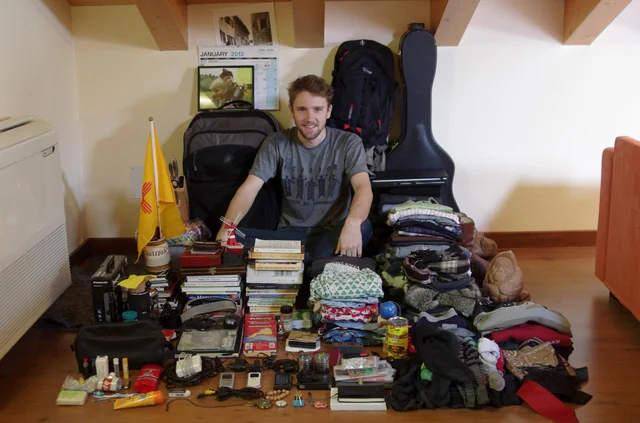
How Many Items Should a Minimalist Own?
One of the most common questions people ask when exploring minimalism is: “How many items should I own?” It’s an understandable question. In a culture that often measures success through accumulation, the idea of reducing possessions naturally invites curiosity about limits, numbers, and benchmarks.
However, minimalism resists rigid quantification. There is no universally correct number of items that defines a minimalist lifestyle. Instead, minimalism is a principle-driven approach centered on intentional ownership, functional efficiency, and alignment with personal values. The number of items you own is a byproduct of those principles—not the goal itself.
This article explores the concept in depth: why minimalism isn’t about numbers, what influences how much you should own, how to determine your own ideal quantity, and practical frameworks you can use to find balance.
The Myth of a “Magic Number”
Many people search for a specific number—100 items, 300 items, or some other arbitrary threshold—hoping it will provide clarity. While these benchmarks can be useful as thought experiments, they often create unnecessary constraints.
The idea of a fixed number fails for several reasons:
-
Different lifestyles require different tools
A software developer, a chef, and a traveler will each need vastly different sets of items. -
Life circumstances vary
A single individual living in a small apartment has different needs than a family with children. -
Values differ
Some people prioritize hobbies, collections, or creative tools, which may increase item count but still align with minimalism.
Minimalism is not about achieving a specific number—it is about eliminating excess relative to your life.
What Minimalism Actually Measures
Instead of counting items, minimalism evaluates relationships with possessions. The key variables are:
-
Utility: Does the item serve a clear purpose?
-
Frequency: How often is it used?
-
Value: Does it contribute meaningfully to your life?
-
Redundancy: Is it duplicated unnecessarily?
A minimalist does not aim to minimize quantity alone, but to optimize the ratio of value to ownership.
For example:
-
Owning 50 highly useful items is more minimalist than owning 20 items that are rarely used.
-
Owning 200 items that all serve clear purposes may still be minimalist, depending on context.
Factors That Determine How Many Items You Should Own
Your ideal number of possessions depends on several variables. Understanding these helps you avoid unrealistic expectations.
1. Lifestyle and Daily Activities
Your daily routines dictate your needs.
Examples:
-
A remote worker may need a dedicated workspace with equipment.
-
A fitness enthusiast may own exercise gear.
-
A traveler may reduce possessions to maximize mobility.
The more specialized your activities, the more tools you may require.
2. Profession and Skillset
Certain professions require a higher item count.
-
Photographers need cameras, lenses, and accessories
-
Musicians need instruments and equipment
-
Developers may have multiple devices and peripherals
In these cases, a higher number of items does not contradict minimalism—it reflects functional necessity.
3. Living Space
Your physical environment influences how much you can reasonably own.
-
Smaller spaces naturally limit possessions
-
Larger homes can accommodate more, but also invite accumulation
Minimalism in a small apartment might involve strict constraints, while minimalism in a larger home requires stronger intentionality.
4. Family and Household Size
Minimalism scales with household complexity.
-
A single individual may own fewer items
-
Families require shared and individual items (clothing, tools, furniture, etc.)
The goal is not to match someone else’s numbers but to reduce unnecessary duplication and clutter within your context.
5. Personal Values and Priorities
Minimalism is deeply personal.
If you value:
-
Creativity → you may own art supplies
-
Learning → you may own books or tools
-
Fitness → you may own equipment
Owning more items in areas that matter to you is consistent with minimalist principles, as long as those items are intentional.
Different Approaches to Minimalist Item Counts
While there is no universal number, several frameworks can help guide your thinking.
The “Extreme Minimalism” Approach
This approach aims for very low item counts—sometimes under 100 items.
Characteristics:
-
Highly mobile lifestyle
-
Focus on essentials only
-
Often associated with travel or nomadic living
Pros:
-
Maximum simplicity
-
Minimal maintenance
Cons:
-
Can be restrictive
-
Not practical for most lifestyles
The “Functional Minimalism” Approach
This is the most practical and widely applicable model.
Characteristics:
-
Own what you use and value
-
Eliminate redundancy and excess
-
No fixed numerical target
Pros:
-
Flexible and sustainable
-
Adapts to different lifestyles
Cons:
-
Requires ongoing evaluation
The “Comfort Minimalism” Approach
This approach prioritizes simplicity while allowing for comfort and convenience.
Characteristics:
-
Balanced ownership
-
Retains some “nice-to-have” items
-
Focuses on reducing stress rather than strict reduction
Pros:
-
Easy to maintain
-
Less psychologically demanding
Cons:
-
May drift toward excess without discipline
Practical Benchmarks (Without Fixation)
Although strict numbers are not necessary, approximate ranges can provide context:
-
Wardrobe: 30–60 items (capsule wardrobe concept)
-
Personal items (non-furniture): 100–300 items for many individuals
-
Digital items: As few as possible while maintaining function
These are not rules—they are reference points. The key is whether each item serves a purpose.
How to Determine Your Ideal Number
Instead of adopting external benchmarks, use a systematic process to define your own optimal level of ownership.
Step 1: Audit Your Current Possessions
Start by assessing what you already own.
-
Identify categories (clothing, tools, electronics, etc.)
-
Estimate volume
-
Note unused or redundant items
This creates awareness of your baseline.
Step 2: Apply Value-Based Filtering
Evaluate each item using consistent criteria:
-
Do I use this regularly?
-
Does it add value?
-
Would I replace it if it were gone?
Remove items that fail these tests.
Step 3: Identify Redundancies
Look for duplication:
-
Multiple similar tools
-
Excess clothing
-
Unused alternatives
Keep the best version and remove the rest.
Step 4: Define Functional Boundaries
Set limits based on function rather than arbitrary numbers.
Examples:
-
“Enough kitchen tools to cook efficiently”
-
“Clothing that covers all weekly activities”
This creates natural constraints.
Step 5: Test and Adjust
Minimalism is iterative.
-
Live with fewer items
-
Identify gaps or inefficiencies
-
Adjust accordingly
Your ideal number emerges through experience, not theory.
The Role of Constraints
While minimalism is flexible, constraints can be useful tools.
Examples:
-
One-in, one-out rule
-
Fixed storage limits (e.g., one closet, one shelf)
-
Capsule wardrobe limits
Constraints force prioritization and prevent accumulation.
However, they should remain tools—not rigid rules.
Quality vs. Quantity
A critical principle in minimalism is prioritizing quality over quantity.
Owning fewer, higher-quality items:
-
Reduces replacement frequency
-
Improves usability
-
Enhances satisfaction
For example:
-
One durable jacket is better than multiple low-quality ones
-
A reliable tool replaces several ineffective alternatives
This often results in a lower item count naturally.
Digital Minimalism and Item Count
Item count is not limited to physical possessions.
Digital clutter includes:
-
Files
-
Apps
-
Emails
-
Subscriptions
Reducing digital items:
-
Improves focus
-
Reduces cognitive load
-
Simplifies workflows
A minimalist approach to digital life mirrors physical decluttering—keep only what serves a purpose.
Common Mistakes When Counting Items
When people focus too much on numbers, several issues arise:
1. Over-Optimization
Trying to minimize item count at all costs can lead to:
-
Inconvenience
-
Rebuying items
-
Reduced efficiency
2. Ignoring Context
Comparing your item count to others ignores differences in lifestyle and needs.
3. Emotional Stress
Strict limits can create anxiety rather than freedom.
Minimalism should reduce stress—not introduce new forms of pressure.
A Better Question to Ask
Instead of asking:
“How many items should I own?”
Ask:
-
Do I use what I own?
-
Does everything I own serve a purpose or bring value?
-
Is there unnecessary duplication?
-
Does my environment feel manageable and intentional?
These questions are more effective than any numerical target.
The End Goal: Enough
Minimalism ultimately aims for a state of “enough.”
Enough means:
-
You have what you need
-
You are not burdened by excess
-
Your environment supports your life
This state is dynamic—it evolves as your life changes.
Conclusion
There is no universal number of items that defines a minimalist. The concept of minimalism is not about counting possessions but about optimizing them.
Your ideal number of items depends on:
-
Your lifestyle
-
Your profession
-
Your values
-
Your environment
-
Your responsibilities
Rather than chasing a specific number, focus on principles:
-
Intentional ownership
-
Functional efficiency
-
Value-based decision-making
-
Continuous refinement
When applied consistently, these principles naturally lead to a level of ownership that feels balanced, manageable, and aligned with your life.
In the end, minimalism is not about having less—it is about having exactly what you need, and nothing that you don’t. That number will be different for everyone, and that is precisely the point.
- Arts
- Business
- Computers
- Giochi
- Health
- Home
- Kids and Teens
- Money
- News
- Personal Development
- Recreation
- Regional
- Reference
- Science
- Shopping
- Society
- Sports
- Бизнес
- Деньги
- Дом
- Досуг
- Здоровье
- Игры
- Искусство
- Источники информации
- Компьютеры
- Личное развитие
- Наука
- Новости и СМИ
- Общество
- Покупки
- Спорт
- Страны и регионы
- World

 English
 Russian
 French
 Spanish
 Portuguese
 Deutsch
 Turkish
 Dutch
Dutch
 Arabic
 Romaian
 Portuguese (Brazil)
 Greek
Greek