
What Are Performance Appraisal Methods?
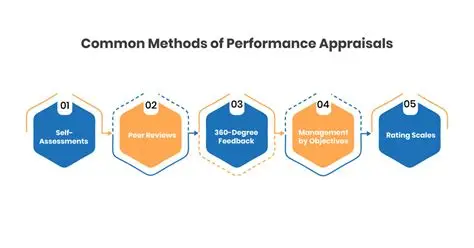
Performance appraisal is a key function of personnel management that involves systematically evaluating employee performance. It helps organizations measure productivity, identify strengths and weaknesses, and make important decisions related to promotions, compensation, training, and career development.
To conduct fair and effective evaluations, personnel managers use various performance appraisal methods. These methods provide structured ways to assess employees based on objective and subjective criteria.
In this comprehensive article, we’ll explore the different performance appraisal methods, how they work, their advantages and disadvantages, and best practices for implementation.
Understanding Performance Appraisal Methods
Performance appraisal methods are techniques used to evaluate employee performance over a specific period.
Key Objectives:
- Measure performance
- Provide feedback
- Identify development needs
- Support decision-making
Different methods are used depending on organizational needs and job roles.
Classification of Performance Appraisal Methods
Performance appraisal methods can be broadly divided into:
1. Traditional Methods
2. Modern Methods
Each category has its own characteristics and applications.
Traditional Performance Appraisal Methods
These methods are simpler and have been used for many years.
1. Rating Scale Method
Employees are rated on a scale (e.g., 1 to 5) for various criteria.
Criteria May Include:
- Job knowledge
- Quality of work
- Attendance
Advantages:
- Simple to use
- Easy to compare employees
Disadvantages:
- May be subjective
- Lacks detailed feedback
2. Ranking Method
Employees are ranked from best to worst.
Advantages:
- Simple and straightforward
Disadvantages:
- Can create unhealthy competition
- Does not show performance gaps clearly
3. Paired Comparison Method
Employees are compared in pairs to determine better performance.
Advantages:
- More precise than ranking
Disadvantages:
- Time-consuming for large teams
4. Checklist Method
Managers use a checklist of performance criteria.
Advantages:
- Structured evaluation
Disadvantages:
- Limited flexibility
5. Critical Incident Method
Focuses on specific positive or negative behaviors.
Advantages:
- Provides detailed feedback
Disadvantages:
- Requires continuous observation
Modern Performance Appraisal Methods
These methods are more comprehensive and employee-focused.
1. 360-Degree Feedback
Feedback is collected from multiple sources.
Sources:
- Managers
- Peers
- Subordinates
- Self
Advantages:
- Comprehensive evaluation
- Reduces bias
Disadvantages:
- Time-consuming
- Requires coordination
2. Management by Objectives (MBO)
Employees are evaluated based on goal achievement.
Process:
- Set clear objectives
- Measure performance against goals
Advantages:
- Objective and measurable
Disadvantages:
- May ignore qualitative factors
3. Balanced Scorecard
Evaluates performance from multiple perspectives.
Areas:
- Financial performance
- Customer satisfaction
- Internal processes
- Learning and growth
Advantages:
- Holistic approach
Disadvantages:
- Complex to implement
4. Assessment Centers
Employees are evaluated through simulations and exercises.
Activities:
- Role-playing
- Group discussions
- Case studies
Advantages:
- Realistic evaluation
Disadvantages:
- Expensive and time-consuming
5. Self-Assessment Method
Employees evaluate their own performance.
Advantages:
- Encourages self-reflection
Disadvantages:
- May be biased
Choosing the Right Appraisal Method
Personnel managers select methods based on:
- Organizational goals
- Nature of job roles
- Company size
- Available resources
Often, a combination of methods is used.
Importance of Performance Appraisal Methods
1. Improves Employee Performance
Feedback helps employees improve.
2. Supports Decision-Making
Used for promotions, rewards, and training.
3. Enhances Communication
Encourages dialogue between employees and managers.
4. Identifies Skill Gaps
Helps plan training programs.
Challenges in Performance Appraisal
1. Bias and Subjectivity
Personal opinions may affect results.
2. Lack of Clear Criteria
Unclear standards reduce accuracy.
3. Employee Resistance
Some employees may not accept evaluations.
4. Time Constraints
Appraisals can be time-consuming.
Role of Technology in Performance Appraisal
Technology enhances appraisal processes.
Tools:
- Performance management software
- HR analytics tools
- Feedback platforms
Benefits:
- Real-time tracking
- Data-driven decisions
- Reduced bias
Best Practices for Effective Appraisal
1. Use Multiple Methods
2. Set Clear Evaluation Criteria
3. Provide Regular Feedback
4. Ensure Fairness and Transparency
5. Focus on Development
Future Trends in Performance Appraisal
1. Continuous Feedback Systems
2. AI-Based Performance Analysis
3. Employee-Centric Evaluations
4. Data-Driven Decision-Making
Conclusion
Performance appraisal methods are essential tools in personnel management that help evaluate employee performance, provide feedback, and support organizational decision-making. From traditional methods like rating scales and ranking to modern approaches like 360-degree feedback and MBO, each method offers unique advantages.
Organizations that use the right combination of appraisal methods can create fair, effective, and development-focused evaluation systems. As technology continues to evolve, performance appraisal is becoming more accurate, continuous, and aligned with employee growth.
Ultimately, performance appraisal is not just about measuring performance—it’s about improving it and helping employees reach their full potential.
- Arts
- Business
- Computers
- الألعاب
- Health
- الرئيسية
- Kids and Teens
- مال
- News
- Personal Development
- Recreation
- Regional
- Reference
- Science
- Shopping
- Society
- Sports
- Бизнес
- Деньги
- Дом
- Досуг
- Здоровье
- Игры
- Искусство
- Источники информации
- Компьютеры
- Личное развитие
- Наука
- Новости и СМИ
- Общество
- Покупки
- Спорт
- Страны и регионы
- World

 English
 Russian
 French
 Spanish
 Portuguese
 Deutsch
 Turkish
 Dutch
Dutch
 Italiano
 Romaian
 Portuguese (Brazil)
 Greek
Greek